NJ Realtors weigh in on the pipeline

Cindy Marsh-Tichy, the President of the NJ Realtors association, wrote a letter on behalf of all 43,000 members of her organization opposing the pipeline:

I am writing to you today on behalf of the approximately 43,000 members of the New Jersey REALTORS® as well as the Hunterdon/Somerset Association of REALTORS® (HSAR) and Mercer County Association of REALTORS® (MCAR) to express our opposition to the proposed PennEast Pipeline Project. We understand the proposed pipeline originates in Luzerne County, PA and enters New Jersey in Holland Township, Hunterdon County before terminating at the Transco pipeline interconnection near Pennington, NJ in Mercer County.

The NJ REALTORS® are the only organization in New Jersey fighting for the rights of property owners. At this point, it appears the construction of the pipeline will infringe on private property rights as it remains unclear what the consequences of denying PennEast Pipeline Company, LLC the right to inspect or drill on your property would be. Along with HSAR and MCAR, the NJ REALTORS® strongly believe that where possible, this pipeline should be placed on existing rights-of-way and easements where other sources of power run through, whether they be other pipelines or power lines for example.

While the NJ REALTORS®, HSAR and MCAR appreciates the need to bring affordable natural gas to consumers in our area, we also have grave concerns regarding the risks that both pipeline construction and the existence a pipeline itself brings to the ability of homeowners to sell their properties in the area. This pipeline could have severe impacts not only on private property rights, but also home and land values. Disclosure issues could also arise as it would be possible for a REALTOR® representing a buyer or seller in a transaction involving a property that that is affected by the proposed project, leaving local REALTORS®, as well as sellers, possibly open to liability.

I feel there are a few points here to consider.

First, PennEast has stated that there are no studies showing that natural gas pipelines affect property values or the ability of people to sell their homes. On the flip side, NJ Realtors saying it is concerned that the pipeline “could have severe impacts not only on private property rights, but also home and land values”. Do you believe the pipeline company or the professional realtors?

The second issue to me is whether co-location makes sense or not. From what I’ve read co-locating pipelines with each other is common and probably the least-impactful way to run a new pipeline. Co-locating other types of easements, however, may not be such a good idea. As it is, the alternate route established by PennEast in January 2015 uses a power line easement for much of the route in NJ. This…isn’t as good as it sounds. They can’t physically build the pipeline under the power lines so they’re going to have to run them next to the lines a certain distance away from them. From what I’ve seen this means the power line easements would have to be widened.  So eye sores cutting across our mountains in Hunterdon County are going to get even wider.  Even worse, a pipeline easement is not the same as a high voltage power line system.  It might be tolerable to have high voltage lines going over your farm, or driveway, or farm land.  It’s something altogether different to bury a pipeline across the entire length.

From what I’ve read PennEast jumped on a few comments like this about co-location and are trying to show the FERC what good guys they are and that they “listened” to the comments.  And now we have a truly terrible route as a result.

Send in your pics, tell us your story

If you’d like to highlight any pictures of what’s along or near the proposed pipeline route please send them in to thecostofthepipeline@gmail.com and I’ll be sure they’re published here. Better yet, tell your story and how the pipeline will impact you!

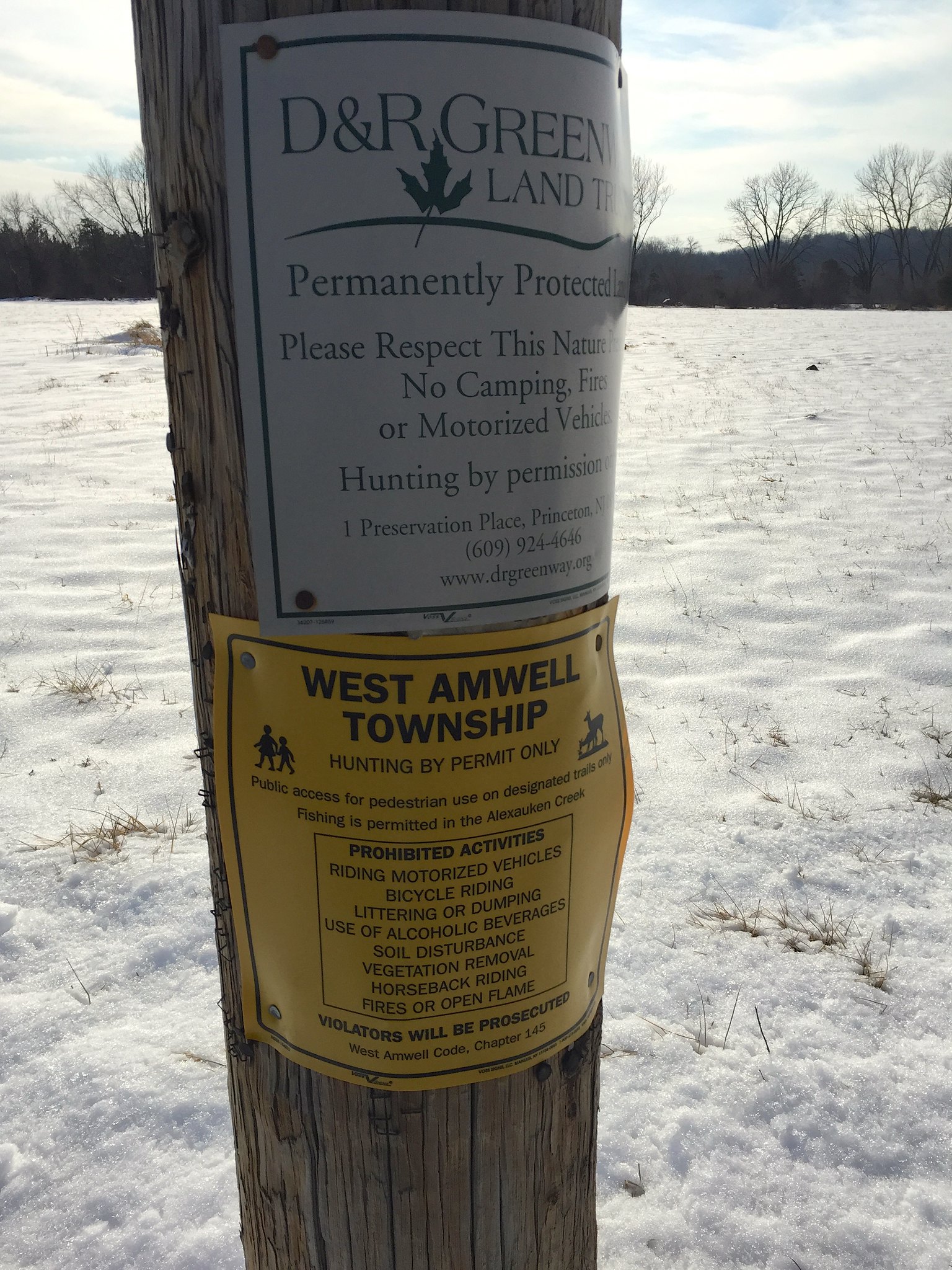
There are many Delaware and Raritan Greenways in the vicinity due to the proximity to the D&R Canal next to the river. The pipeline comes quite close to several of them and could be in jeopardy if the route changes even just a little.

The sign for this one is only a few thousand feet from the proposed pipeline:

Sadly I have to write “Permanently Protected Open Space” in quotes thanks to threats like PennEast using eminent domain.

This one is also within a quarter mile from the proposed route, it was just acquired for permanent protection last year as a joint project between West Amwell NJ and the D&R Greenway Land Trust.

A view of Baldpate Mountain from Woodens Lane in West Amwell. You see where the high tension power line towers are? That’s where the pipeline’s going through, straight up the mountain.

Sunset over Valley Road. That tree line is going to have a bigger gap for the pipeline to go through it.

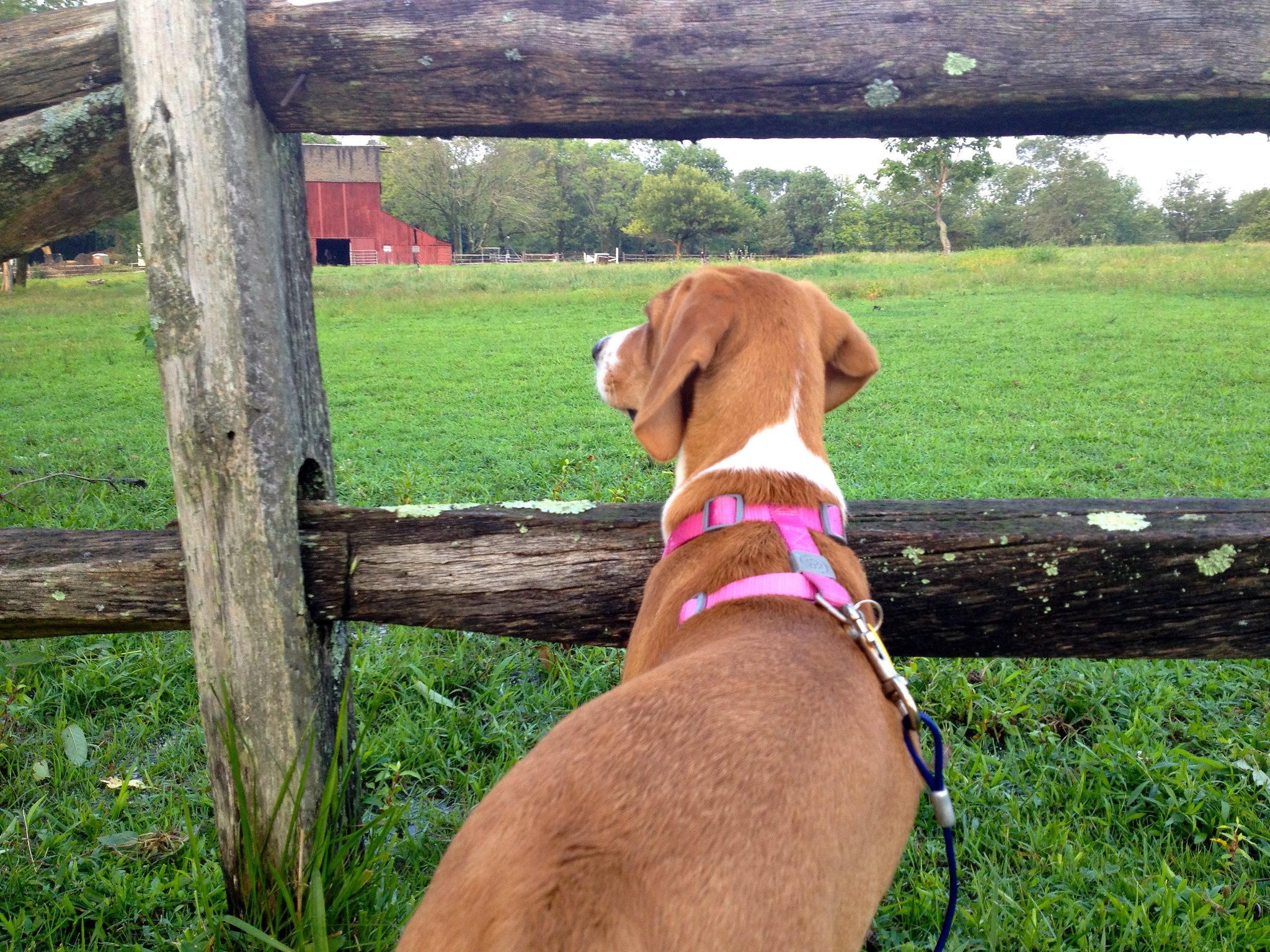
The horse farm my Foxhound is looking at is going to have the pipeline go right through its center. The pipeline will be less than a hundred feet from the house being built on it.

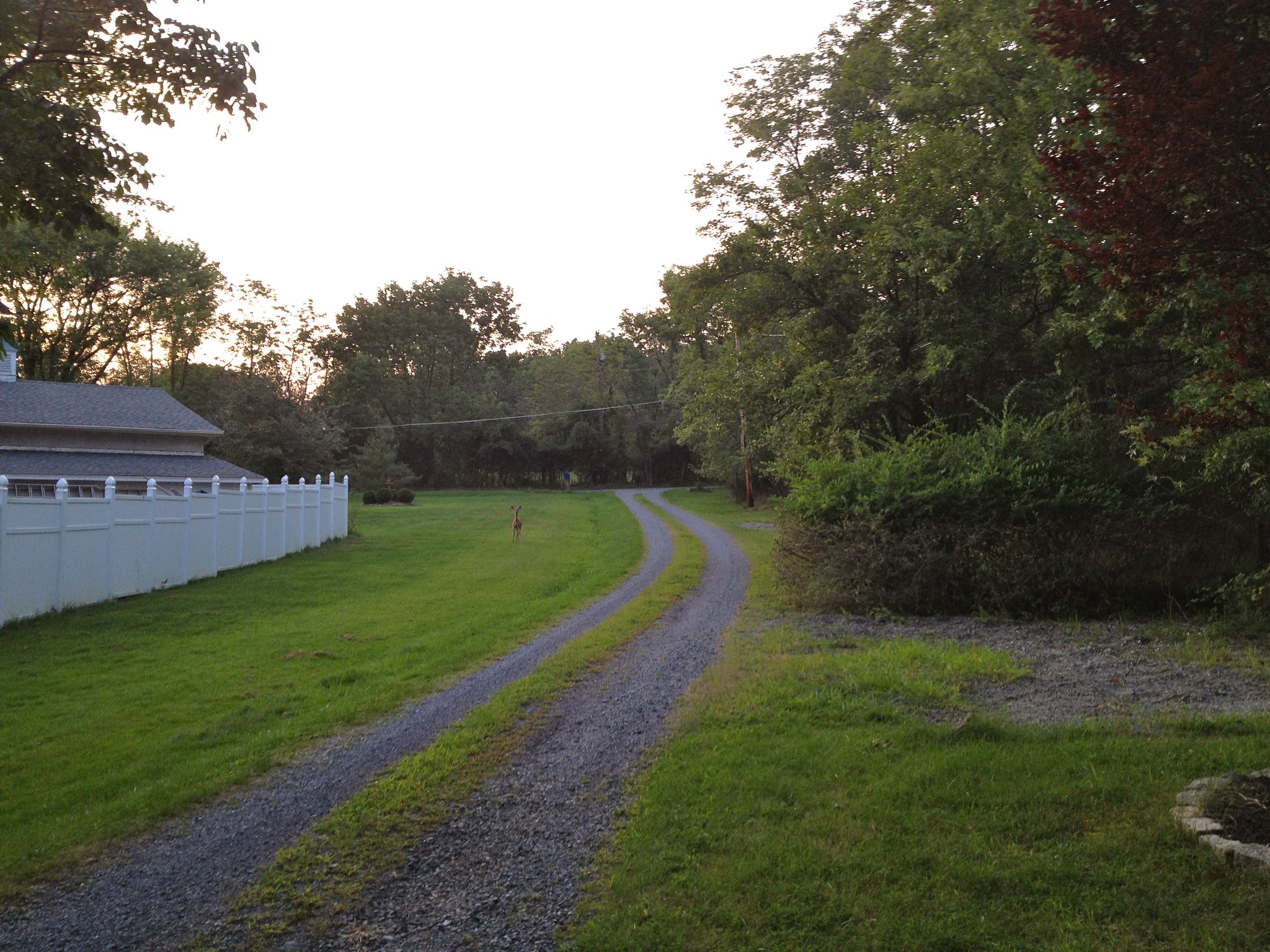
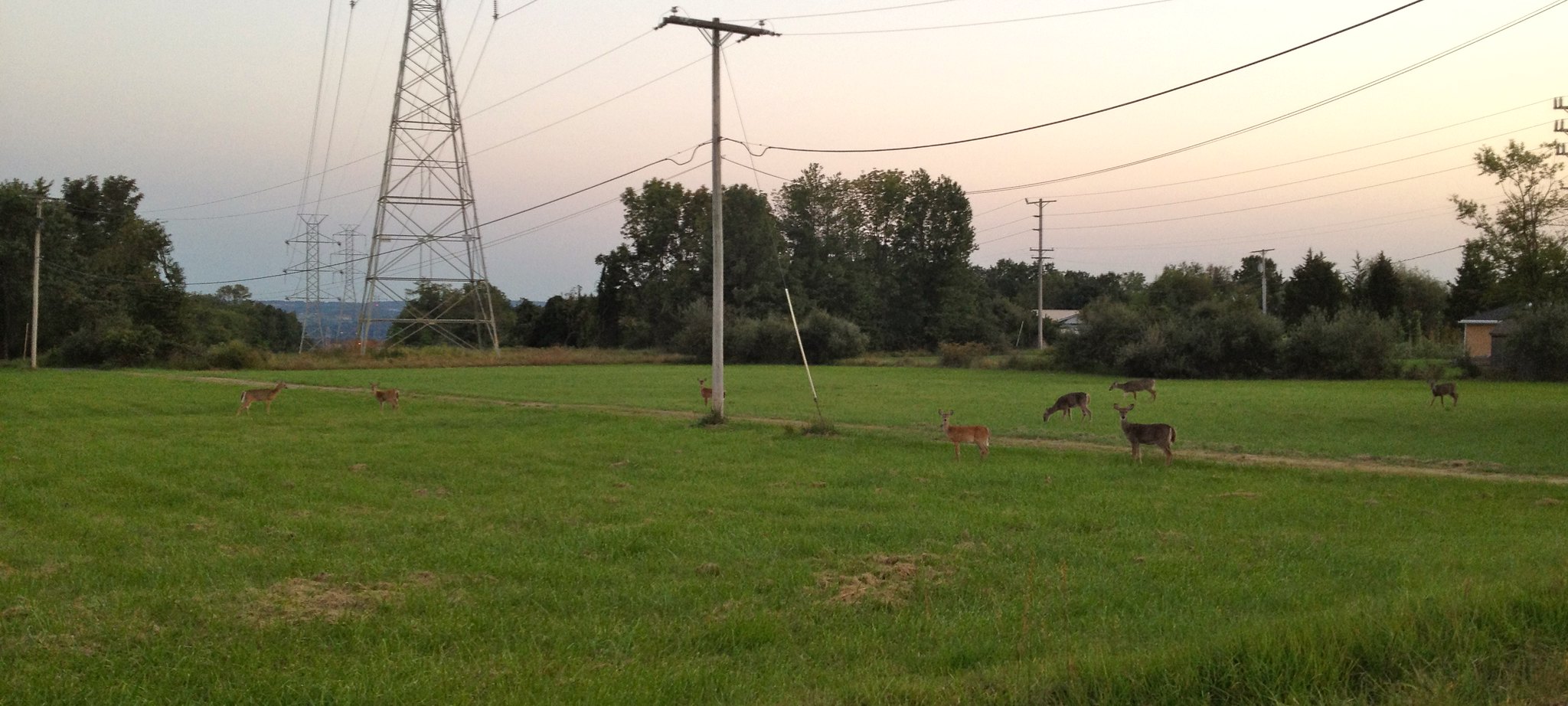
See the trees behind the deer? Some of them will be coming down to make room for the pipeline corridor.

Across the street from the horse farm. Pipeline’s going right through the middle of this shot.

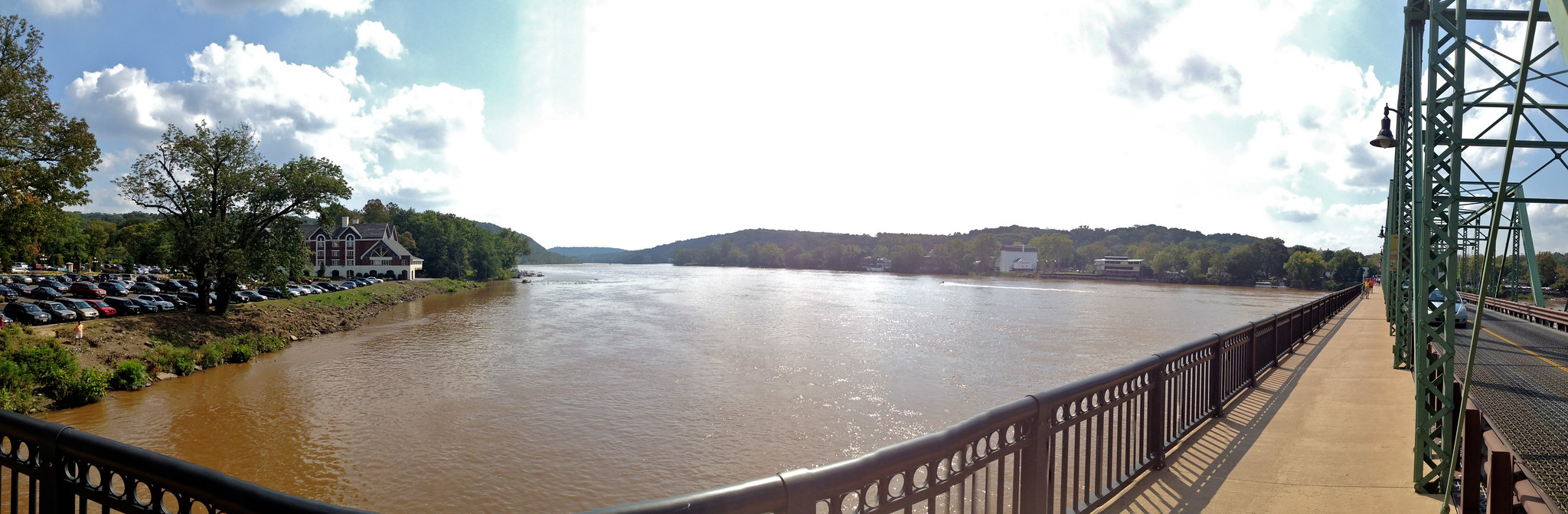
The Delaware river seen from the Lambertville/New Hope bridge. This was taken the day after torrential storms, see how brown the water is from all the runoff. This is why we worry about runoff and what’s on the ground. Whatever it is is going to end up in the Delaware.

The D&R canal. Also downstream from the pipeline construction route.

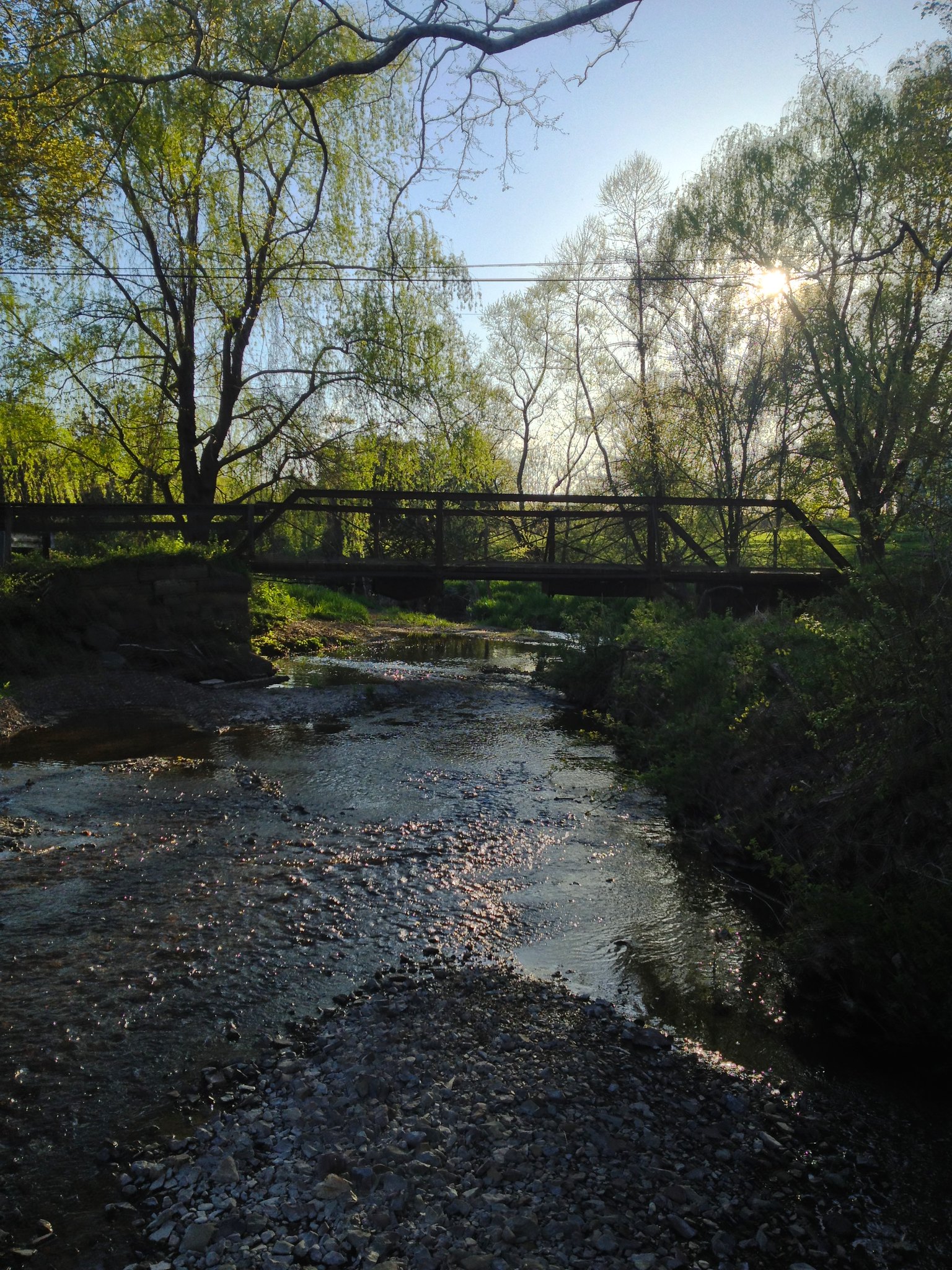
Moore’s Creek. The pipeline is running right through it. It’s a tributary of the Delaware River.

More on Baldpate Mountain

C. Sharyn Magee, President of the Washington Crossing Audubon Society, wrote to the FERC backing up the formal submission from her organization:

Because of the extreme ecological sensitivity of Baldpate Mountain, Washington Crossing Audubon Society opposes routing the PennEast pipeline through the JCP&L power line cut that bisects Baldpate
Mountain. An outlier of the Sourland Mountains, Baldpate Mountain contains some of the richest biodiversity in New Jersey. Southern and northern species meet at Baldpate, enriching the flora and fauna. Due to the high quality habitat and the mingling of southern and northern species, Baldpate Mountain has the highest concentration of breeding Neotropical migrants in New Jersey. The thirty-one Neotropical breeding breeding species include thirteen warblers and the Yellow-breasted Chat, two tanagers, three vireos and two Catharus thrushes. Four species are Audubon Watchlist species and twenty-three species are ranked by the American Bird Conservancy (ABC) as birds of conservation concern. An additional 1 39 species use Baldpate Mountain as a migratory stopover in spring and fall or are winter or permanent residents.

Because Baldpate Mountain is long and narrow, it is highly sensitive to disruption from activity on the power line cut that bisects the forest lengthwise. Of special concern is noise from blasting and construction that would penetrate deeply into the forest, interfering with vocal communication between birds at a critical time during the breeding season.

Extending the width of the power line cut would destroy or degrade adjacent breeding habitat along the length of the mountain. Because Baldpate breeding territories are saturated, these birds cannot move further back into the interior forest if disturbed. There is no place for the displaced birds to go. Blue- winged and Chestnut-sided Warblers, species of conservation concern that breed at the forest-power line ecotone, would be especially affected.

The blasting necessary to penetrate the extremely hard diabase substrate has the potential to affect the springs that feed the creeks that originate on Baldpate, disrupting their flow and the animals that depend on them, including the breeding Louisiana Waterthrush, a species of conservation concern.

Given the ecological sensitivity cf Baldpate Mountain, the power line cut should have never been placed there. A through biological inventory and environmental impact statement would dearly show why. The damage to Baldpate should not be compounded by allowing PennEast access for their pipeline.

To get an idea of what’s being described, here’s a google Earth terrain view of the pipeline route going through Baldpate Mountain:

As you can see the pipeline route is cutting right through the preserve along the power line easement – an easement that will also probably have to be widened. You can also see the how the route doesn’t bother to avoid steep slopes but instead just barrels along in a straight line up and down the mountain.

Due to the composition of the bedrock that makes up the Sourland mountains, including Baldpate, PennEast building crews would likely have to blast along much of the route, particularly on the slopes. This will compound the damage significantly both in terms of immediate ecological damage and long term issues such a worsening runoff from rain storms.

A mile or two away from Baldpate we also have the Swan Creek Reservoir, which serves as a primary source of drinking water for Lambertville, NJ. As with Baldpate, there are very steep slopes in this area that would likely require blasting. Take a look at where the pipeline route is in relation to the reservoir:

In fact, Google Earth shows that the pipeline study corridor is less than 200 feet from the reservoir:

Can you imagine blasting into bedrock and then custom welding a 3′ wide high pressure gas pipeline a couple of hundred feet from a drinking water reservoir?

C. Sharyn Magee – FERC Generated PDF

C. Sharyn Magee – FERC Generated PDF Alternate Site

The Rolling Hills Farm

Like so many people, Jane and Jason of the Rolling Hills Farm in Lambertville NJ had a dream. They moved from NYC to Hunterdon County in search of a rural life. Now eminent domain is being threatened to run a 3 foot wide high pressure pipeline through their organic farm.

2 years ago, my husband and I left Manhattan to start an organic farm in Hunterdon county. We have worked hard, are conscious stewards of the land, and grow clean food for our community in the midst of a country-wide epidemic of health problems due to lack of healthy product in America. Our farm happens to have the electrical easement on it that PennEast proposes to use. It goes straight through the farm, 10 feet from our historic home; an old area orphanage built in 1840, and directly through a registered historic Lenape settlement in the woods below our fields.

As you can imagine, the land would be decimated by the 100ft wide cuts- and we would no longer be able to farm organically. I could go on, but it boils down to the fact that we as family fundamentally oppose the practice of fracking and this pipeline proposal. Instead, perhaps FERC could support research and development into sustainable energy- to put us back on the map with countries like Germany, who have initiatives that bring them into the future, and not push us farther back by poisoning the land and putting citizen’s health on the line in order to take part in the Fracking bubble?

It is the fact that a giant conglomerate company could possibly undermine the efforts of individual citizens to make our country a better and healthier place, that disappoints me so greatly.
This farm is our American dream. Please give me faith that the government will support us, and it’s citizens, and refuse to let this tragic pipeline befall our families, communities, and ecology when it comes time for you to review the Penn East proposal.

I am counting on you.

You can see their web site here:

Rolling Hills Farm web site

Their FERC Submission is below:

Jane and Jason – FERC Generated PDF

Jane and Jason – FERC Generated PDF Alternate Site

Delaware Township Citizens Against the Pipeline

There are a number of “CAP” organizations (Citizens Against the Pipeline) that have risen up against the PennEast Pipeline since it’s been proposed. One of them is DT-CAP – the Delaware Township chapter. Their submission states:

The Delaware Township Citizens Against the Pipeline, Inc. (DT-CAP) is a New Jersey not-for-profit furthering the following mission:

“To preserve and protect an irreplaceable community rich in farming and historic culture; to prevent the destruction of endangered species’ habitats and fragile watershed ecosystems; to defend our thriving agricultural and recreational economies; to safeguard our citizens’ proactive investment in conserved and preserved farms and woodlands; and to oppose PennEast pipeline as it will irrevocably impact the safety and integrity of our human environment.”

Our constituents include numerous property owners located within the path of the proposed pipeline route identified in PennEast’s January 13, 2015 Notice of Intent to Prepare an Environmental Impact Statement for the Planned PennEast Pipeline Project, Request for Comments on Environmental Issues, and Notice of Public Scoping Meetings (NOI). Additionally, our constituents include numerous property owners located within the path of the preferred alternative route, submitted to FERC on January 16, 2015. Members of DT-CAP participated in the open meetings conducted by PennEast in Delaware Township on September 29, 2014 and at South Hunterdon High School on November 13, 2014, and have attended additional public meetings and requested further information directly from PennEast regarding this application. Accordingly, DT-CAP is an interested party in this matter and direct notification to DT-CAP is required.

First, please be advised that DT-CAP does not support either the “preferred alternative route” or the proposed original route due to the detrimental impacts both routes will cause to the environment, watershed, local economies, homeowner property rights, and taxpayer investments in the preserved and conserved lands of Delaware Township. DT-CAP opposes any additional natural gas pipelines in Delaware Township.

PennEast has not identified how the pipeline would be located with respect to the existing utility easement within Delaware Township. It is DT-CAP’s understanding that “co-location” is misleading in that the existing electrical utility easement must be widened, and in some locations, the pipeline may be near and not within the existing easement for power lines. Additionally, the existing above-ground utility within this easement is maintained in a different manner than is required for underground pipelines, and does not currently have the subsurface impacts which would occur when locating a pipeline. Therefore, co-location is inadequate to reduce negative environmental impacts. Additionally, the widening or nearby location of the pipeline as well as temporary constructions areas will impact lands currently not utilized for utility easements, and will have negative impacts on groundwater quality, farmland, and numerous additional resource values within Delaware Township. Additionally, the proposed alternative route requires the taking of property rights from property owners not in support of this project.

Second, the location, timing, and number of scoping meetings are inadequate and inconsistent with FERC regulations for the EIS scoping process.

The proposed alternative route has been submitted to FERC on January 15, 2015, only 12 days prior to the one and only scoping meeting to be held in New Jersey and only 28 days prior to the deadline for written comment as stated in the NOI. The January 27, 2015 New Jersey scoping meeting is not situated within the project area. And the announcement for the scoping meeting identifies the original route, with no reference to the proposed alternative route. Landowners and interested parties have not been provided adequate time to evaluate the proposed alternative route. The NOI must be re-issued to identify the proposed route and to provide further opportunity for public input. The coping period must be significantly extended with additional meetings scheduled, including meetings within the project area, and including at least one meeting scheduled in Hunterdon County, New Jersey.

DT-CAP and its members are prejudiced by PennEast’s failure to engage in a meaningful opportunity for discussion. PennEast submitted the proposed alternative route after announcing its intent to conduct scoping. PennEast provided inadequate time for scoping and inadequate advance notice of scoping meetings. And PennEast is engaging in scoping without identifying whether there are known safety and engineering constraints which would necessitate a widening of the existing utility easement, which is narrower in Delaware Township than it is in other affected municipalities. These errors cause material prejudice to those interested parties seeking to provide meaningful input during the scoping process.

Their submission is below:

DT-CAP Submission – FERC Generated PDF

DT-CAP Submission – FERC Generated PDF Alternate Site

From Brooklyn to Hunterdon

Annalisa from Delaware Township tells of her family moving to NJ to build a better life for themselves.

I am a resident of Delaware Township who is strongly opposed to allowing a 36”, or the newly proposed, 42” natural gas pipeline to be constructed through this precious, preserved area of Hunterdon County. My family and I have lived in Delaware Township since 1959 when my parents purchased 73 acres on Pine Hill Rd for 20,000 dollars. They were working class, first generation Italian-Americans who moved originally from Brooklyn, NY to Princeton, New Jersey, in hopes of building a better life for themselves and their 5 children in the beautiful “Garden” state. Over these 56 years in Delaware TWP, our family members all worked, sold land, in to renovate, as we could afford, our 1725 historic stone home, including an 1850 frame colonial section added to the original structure. Over five decades we have worked to upgrade our home to make it more energy efficient and functional by modern standards. As working- class/struggling middle class citizens, we have farmed, recycled, gardened and otherwise maintained what we can of our remaining property. This gem of bucolic, pristine forest we love, was earned through many personal and economic trials. As members of this community, we are invested in protecting our personal investment, as well as, the community’s rights and investment in maintaining this culturally and ecologically rich, yet delicate, land.

Our family has worked together, repaired, restored and invested our love, bodily strength and hard-earned dollars in maintaining this historic property. The 10 acres of land my family has been able to hold onto is aptly named “The Pines” –pine trees planted by the “Civilian Conservation Corps” in the 1940’s. President Roosevelt’s plan promoted both economic and ecological restoration to our country’s political and physical landscape. Several early American artifacts have been uncovered and proudly displayed upon (rare) hand-hewn chestnut beams and massive jingle stone fire place mantels for all to see. This is but one small, sentimental example of what exists across our historic Hunterdon County. Even though the proposed Penn East Pipeline routes do not appear to directly cut through our land, it is representative of what thousands of citizens hold near and dear to their hearts- and of what could be at risk. We will stand with our fellow citizens to protect their lives, family legacies and lands. We are all the same: Vulnerable to exploitation, marginalization and complete disenfranchisement in this rapidly growing trend to control and ultimately deplete our natural resources, for profit. The financial short-term gains for the very few will bankrupt our ecology, destroy a multitude of wildlife species, denature presently cultivated lands to become unproductive and useless; and, ultimately, to break the spirits of many humans. The Delaware water shed will not continue to maintain balance or be able to continue to supply clean water to millions of households and industries if constant encroachment and depletion of protected lands in our small state escalates. There is also some discussion that the pipeline may actually end up as an overseas project to provide gas to Europe. I do not know this to be fact, but I do believe we must be hyper-vigilant in preparing for such a possibility. Based on the dishonesty and efforts of Penn East interests to this point, I feel we will need unrelenting accountability as the application process moves forward. The magnitude of such a project would further prove that this stretch of damaging pipeline and concomitant interference with geologic, botanic and soil integrity, among the many aforementioned destruction of nature, will serve to prove that our community would be employed simply as means to someone else’s end. Proposing that any large energy company be allowed to ravage the “preserved” and protected farmlands, forest, still –viable natural water supplies, and dwindling species of wildlife native to our small state, is unconscionable. Once again, a few powerful, avaricious players in big business will benefit financially to a level of obscene proportions, while thousands of citizens will lose the values of their own hard-earned investments. Middle class and working class people are still hanging on in this egregiously –bloated economic climate of high taxes, diminished economic returns via employment and cost of living demands. Now, to have a life-time’s worth of toil and careful investment in their piece of the American pie, so to speak, be denatured and devalued, is barbaric.

It is time to invest in cleaner, life and land-preserving energy production and preservation. This historically rich area of New Jersey also serves as a thriving ecosystem and living testament to what our beautiful country can provide for generations to come. We are one community of many who will fall prey to rampant, planet- altering destruction if energy production and delivery is not carefully monitored, regulated and analyzed in service to the long term effects for all.
I would also like to add, that the scoping meetings arranged by the Federal Energy Regulatory Committee for the proposed Penn East pipeline are not located in or near Hunterdon County, across which a majority of the pipeline would be laid, if approved. Our community finds this to be insensitive at best, and wanton disregard, at worst, for the very residents who live in the path of this proposed pipeline. This project could prove to have potentially dangerous and devastating impacts on our community.

My family and I ask that you do not fast-track any scoping or application processes toward potential approval of the Penn East Pipeline. We ask that FERC please address our concerns and arrange for scoping meetings within Hunterdon County.

To give an idea of what Delaware Township is like, here’s a Google image of Lower Creek Road where the pipeline is proposed to go through:

Annalisa’s FERC submission is available below:

Annalisa from Delaware Township – FERC Generated PDF

Annalisa from Delaware Township – FERC Generated PDF Alternate site