In a surprise twist, FERC admits a bit of truth

The PennEast Draft Environmental Impact Statement (DEIS) is an example of a wretched copy-and-paste bureaucracy run amok in many ways.  In the past month since it’s dropped we’ve heard endless stories of incomplete entries, missing information, inaccurate data, lack of references and citations, and areas where the DEIS is flat out simply wrong.

But we must give the Devil his due, and admit that sometimes a glimmer of truth fights it way out of the twisty passages of this commission.  One such glimmer jumped out at me as I searched through the DEIS about the project’s supposed purpose and need.  I searched high and wide in eleventy different areas of the DEIS, using various tools to ensure I wasn’t missing a hidden nook or cranny.  I could scarcely believe it, but it was true.

The  Concentric study, stating that the region would have saved $890 million if PennEast had existed several years ago during the Polar Vortex winter” IS NOT IN THE DEIS.

That’s right.  PennEast’s magical time-machine study, where they have their consultants close their eyes and imagine a world where PennEast existed several years before it was even proposed, used a lot of hand waving and bogus math to somehow conclude that PennEast would have saved us $890 million if it had been around to save all our butts during that bitter, bitter winter.  PennEast spokes people and champions made a HUGE deal out of this study, it was cited by many, many people, and even exaggerated out to <a href=”http://www.nj.com/mercer/index.ssf/2015/03/study_sasy_penneast_pipeline_if_already_built_woul.html”>$1 BILLION DOLLARS!”</a>by some.

But, quietly and without fanfare, FERC decided not to reference that report anywhere in the DEIS.  There are no mentions of Concentric.  No $890 million in savings.  No mentions of the Polar Vortex of related items.  None.  Zip.  Nada.

What this means is that FERC realized that the report was utter and complete Grade-A Bull Shit, and decided that including it in the DEIS would leave FERC open to attack.  So they dropped it.

As a result, the “Purpose and Need” section of the DEIS is a bare page and a half long.  The PennEast raison d’être has been dramatically and powerfully weakened by this move.

Now skeptics will rightfully point out that FERC being FERC, they might have just left out all reports in the name of efficient rubber-stamping.  But that is not the case.  They do in fact cite other PennEast studies.  Most notably, they did include the EConsult Solutions/Drexel University Jobs study in the DEIS (pages 4-155 4-158 in the DEIS, Socioeconomics section). I happen to disagree with this report as well, but FERC is saying they have enough confidence in it to include it in their report.

By leaving out the Concentric study, FERC is telling the world that the $890 million time machine study was a sham, a fake, and would not hold up to scrutiny.  It’s time to go to all the politicians, legislators, and economic leaders in the region and let them know the truth.  PennEast lied, the supposed savings are bogus, and this project is in fact going to cost everybody in the region plenty of money if it gets approved.
 

A bunch of comments a day will help keep PennEast away

Please, if you haven’t already begun, please start commenting on the DEIS.  See here for more details:

http://www.pipeinfo.org/#!comment-on-the-deis/ez7ly

Just spend 5 minutes looking at the DEIS on your computer and I guarantee you will find something wrong.

Here’s comments on two winners I found today during lunch.  Take some time out during lunch, or a break period, or while your kids are watching Teen Titans or whatever.  Take ten minutes, find a DEIS error and send it in.

And if you’re at a loss, feel free to re-use these comments or any others that you agree with.

Unacceptable notice periods to farmers

I am writing on behalf of HALT PennEast on the PennEast Draft EIS, docket CP15-558.  HALT PennEast is an intervenor in this proceeding, and has a number of concerns about impacts to landowners if this project is approved.

On page D-2, “Agricultural Impact Minimization Plan”, Section 1.3 on Communication states:

“Prior to construction, PennEast will provide landowners and tenant farmers of active agricultural lands with as much advance notice as possible, but not less than 24 hours prior to entry”.

A 24 hour minimum notice period for construction is completely and totally unacceptable for personal and commercial agricultural lands.  Planned routine construction activities should have no less than 90 days prior notice for agricultural areas to allow farmers to plan their crops and land use appropriately , and a minimum of 10 days notice for unforeseen occurrences.

This completely unacceptable notice period demonstrates that this DEIS is severely underestimating impacts of this proposed project to the region and is not a realistic estimate in any way, shape, or form.  This DEIS should be withdrawn until such time as it is reasonably complete, accurate, and realistic.

Inaccurate Distribution List

I am commenting on the Draft EIS (DEIS) on behalf of HALT PennEast and West Amwell Citizens Against the Pipeline.  Both are intervenors on this docket CP15-558.

Appendix A of the DEIS is supposed to contain the distribution list of agencies, organizations, individuals, and intervenors in this matter.  However, a cursory review shows many of the parties who should be on this list as missing or incorrectly named.

For example, both West Amwell Citizens Against the Pipeline and Home Owners Against Land Taking: Penneast (HALT PennEast) are missing from this list, and other names are captured incorrectly.

This means that a number of organizations and individuals who were supposed to receive notice of the DEIS in fact may not have been notified.  This is a violation of due process rights.

FERC and Tetra Tech must revisit this list in its entirety and ensure it’s accurate and complete.  In addition, given the errors and omissions it must extend its comment period to allow missed organizations or individuals a minimum 45 days of time to review and comment on the DEIS from the time when they are actually notified by FERC.

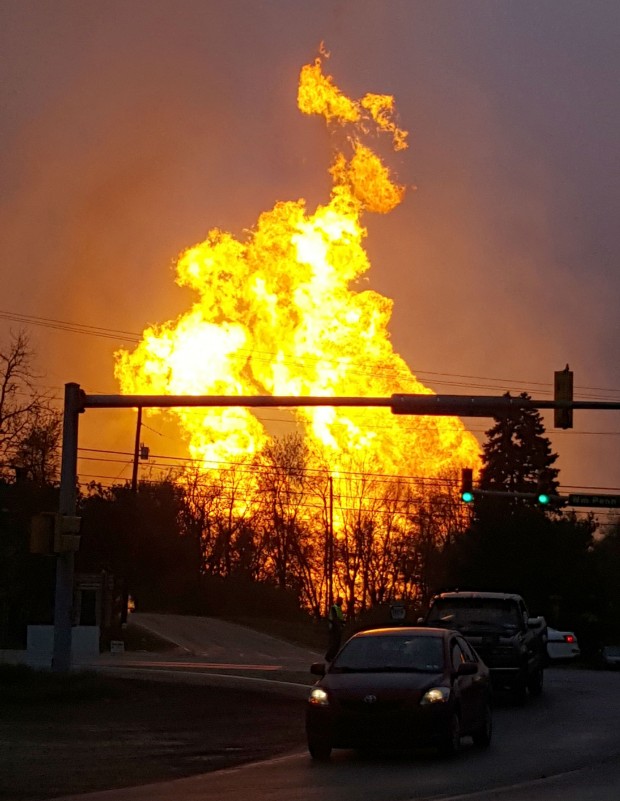
The April Pipeline blast near Pittsburgh

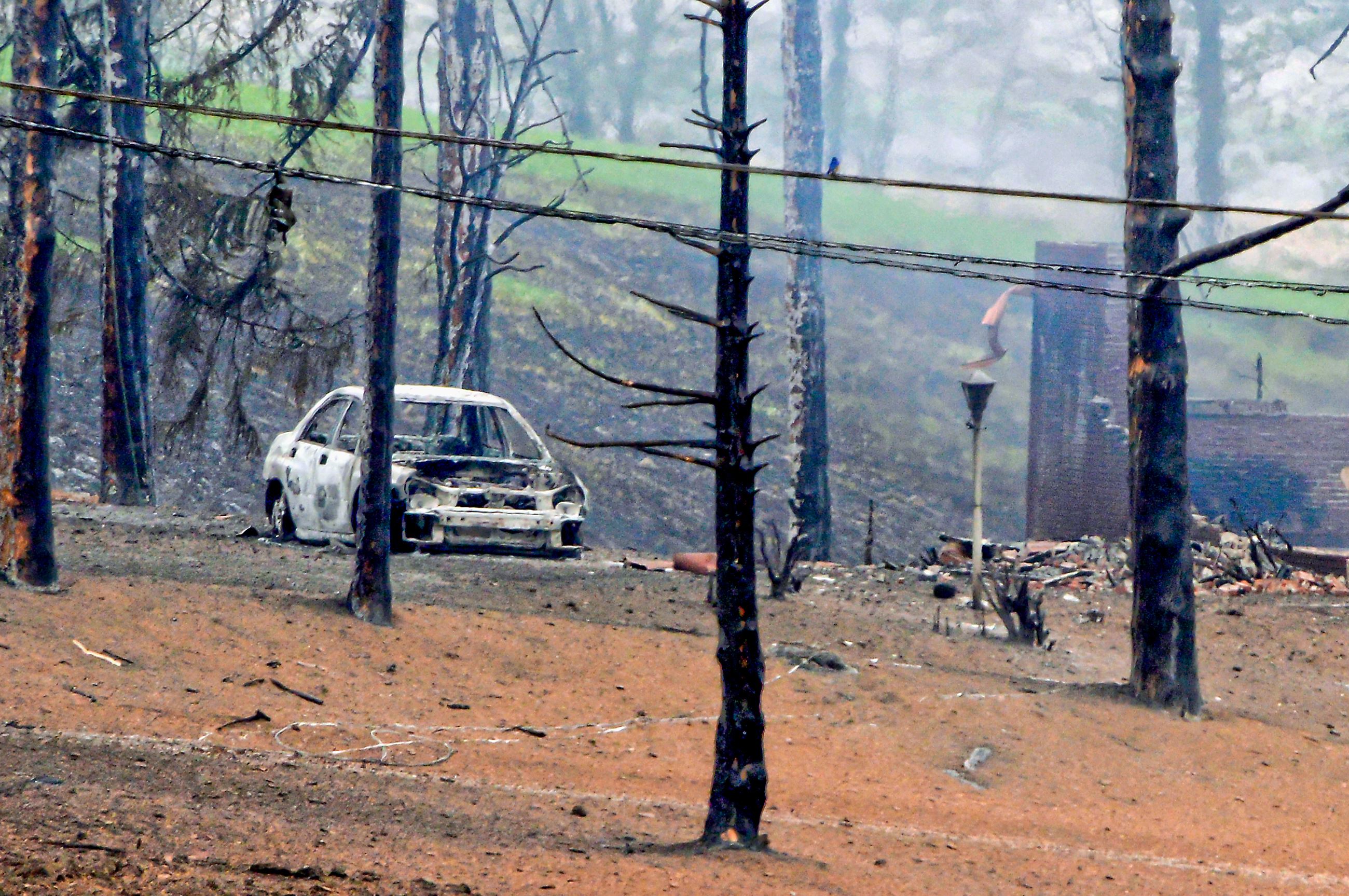
Yet another large interstate pipeline blew in April 2016.  As with several other recent events, this blast was not due to construction activity or anyone digging near the pipeline. It was yet another case of corrosion eating through the pipeline and having the pipe itself ultimately fail.

The Pittsburgh Post-Gazette has some graphic pictures of the scene.
 

The explosion was to a 30″ Texas Eastern line (Texas Eastern’s owner, Spectra Energy, is a 10% owner in PennEast). It sent a man to the hospital with severe burns, burned down homes, and even melted a road.

First responders cordoned off a 1/4 mile zone around the breach and evacuated over a dozen homes from the area.

The pipeline was last inspected by Texas Eastern in 2012, when they found no areas that required any repairs or remediation. But when PIMSA (the agency in charge of pipeline safety) did a post mortem on the blown pipe, they found two areas that were significantly corroded near the breach.

A contributing factor may have been the fact that a compressor station feeding the pipeline was updated in 2014 to pump more gas through the line.

Did FERC approval of Delmont Compressor station contribute to blast?

The natural gas plume from the breach was so huge that weather forecasters mistook the methane discharge for a storm event coming into the region, stretching over 22 miles long.

For reference, the PennEast route is proposed to go within just a few dozen feet of many homes (including my own), and is only about 122 yards from several schools in the region – far less than the 1/4 mile evacuation zone. In addition, this pipeline was only 30″. The PennEast pipeline is 36″ and thus would have a far greater impact if breached (remember we are talking volumes here, so a 6″ greater radius is much bigger than it sounds).

If you want to learn how to help stop these projects, please visit the link below:

The pipeinfo.org page on stopping the PennEast Pipeline

West Amwell Citizens Against the Pipeline DEIS Comment on Impacted Wells

Yesterday WACAP submitted a comment to FERC about wells in proximity of the proposed PennEast Pipeline preferred route (full disclosure: I’m the primary author). The full comment is available at the link below:

WACAPDEISCommentWells.docx

The comment tries to make something abundantly clear to PennEast and FERC, something that everybody who lives here knows: just about everybody here is on well water. There are no public water sources except in a few limited cases.

By ignoring this simple fact, FERC and PennEast are guilty of willful blindness. Wikipedia has a pretty good definition of the term:

Willful blindness (sometimes called ignorance of law, willful ignorance or contrived ignorance or Nelsonian knowledge) is a term used in law to describe a situation in which a person seeks to avoid civil or criminal liability for a wrongful act by intentionally keeping himself or herself unaware of facts that would render him or her liable.

This is exactly the situation with FERC and PennEast.  They don’t wanna know about problems with the route.  They don’t want to hear about wells and septics systems.  They cover their ears and chant “blah blah blah blah I can’t hear you blah blah blah blah” and believe it covers them legally.

Well it doesn’t.  The law is clear that you can’t act dumb or ignorant to get out of liability.

The comment goes on to show that using publicly available information, PennEast’s own filing, and a dash of common sense that it is statistically certain that a number of wells are within 150′ of PennEast construction.

I hope every town along the route submits a similar comment highlighting their own town and impacted properties.


Swan Creek Reservoir Impacts Part II

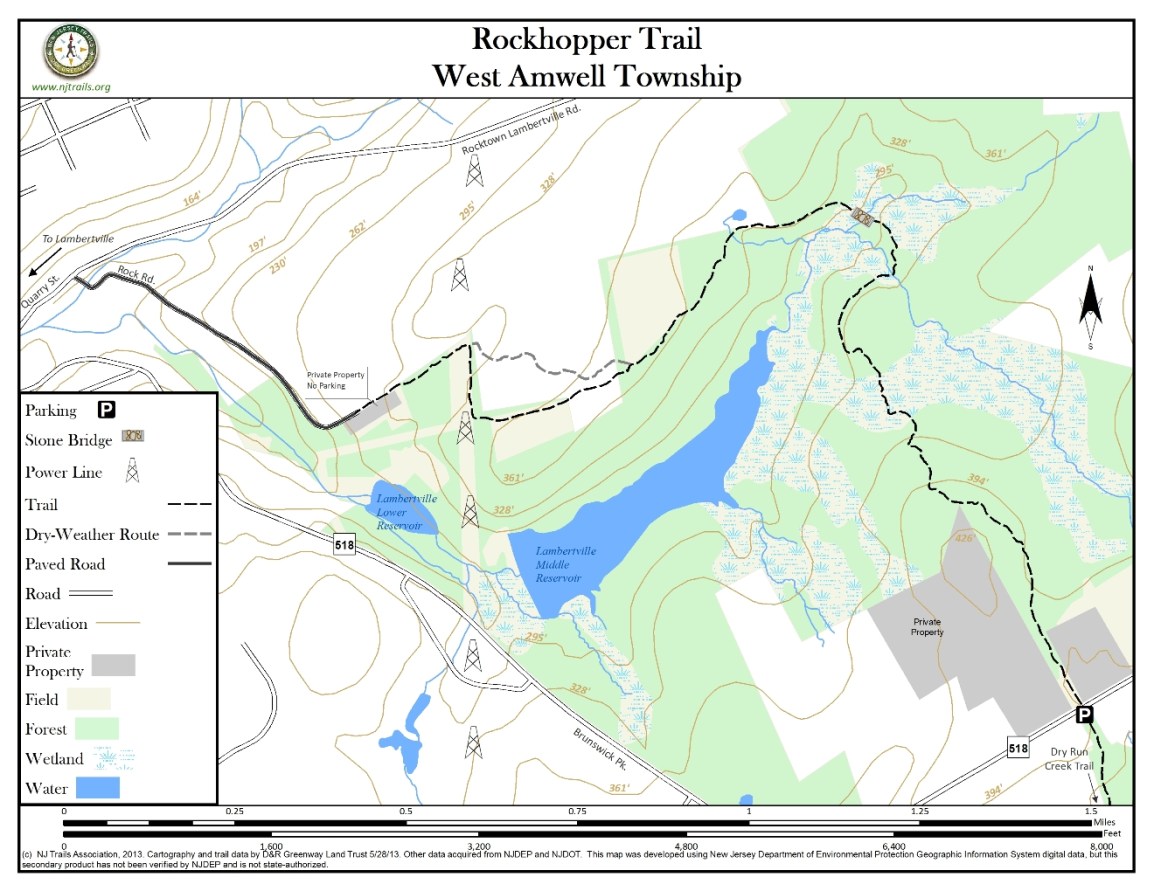
I visited the vicinity of Swan Creek Reservoir again, this time by way of the Rock Hopper Trail.  This is an awesome trail that starts off Route 518, wends through the DEP lands to the north west of 518, goes right by the reservoir, and then hooks off toward Rock Road.

rockhopper2

You can read all about the Rock Hopper over at NJ Trails:

http://njtrails.org/trail/rockhopper-trail/

I highly recommend the hike, it’s around 4 miles round trip (if you don’t take a short cut like I did), and has highly varied terrain.  Many hikes get a little monotonous over time.  Not this one – it changes every few hundred yards.  You’ll see lots of very old hand quarried stone quarries, old stone walls, varying slopes and trees, a whole lot of amphibians and a small stone bridge that’s still standing.

The draw for those concerned about PennEast is that Rock Hopper goes right near the ridge where PennEast’s preferred route is proposed near the Reservoir.  And this is all open land, so you can explore at will.

 
Here’s a Map My Run snapshot of the trail.

Here is near where the trail comes out into the power line cut. The pipeline is not going into the cut – it will be fully within the trees to right of this picture. So imagine this cut doubling in size.

Here is a view of the reservoir itself.

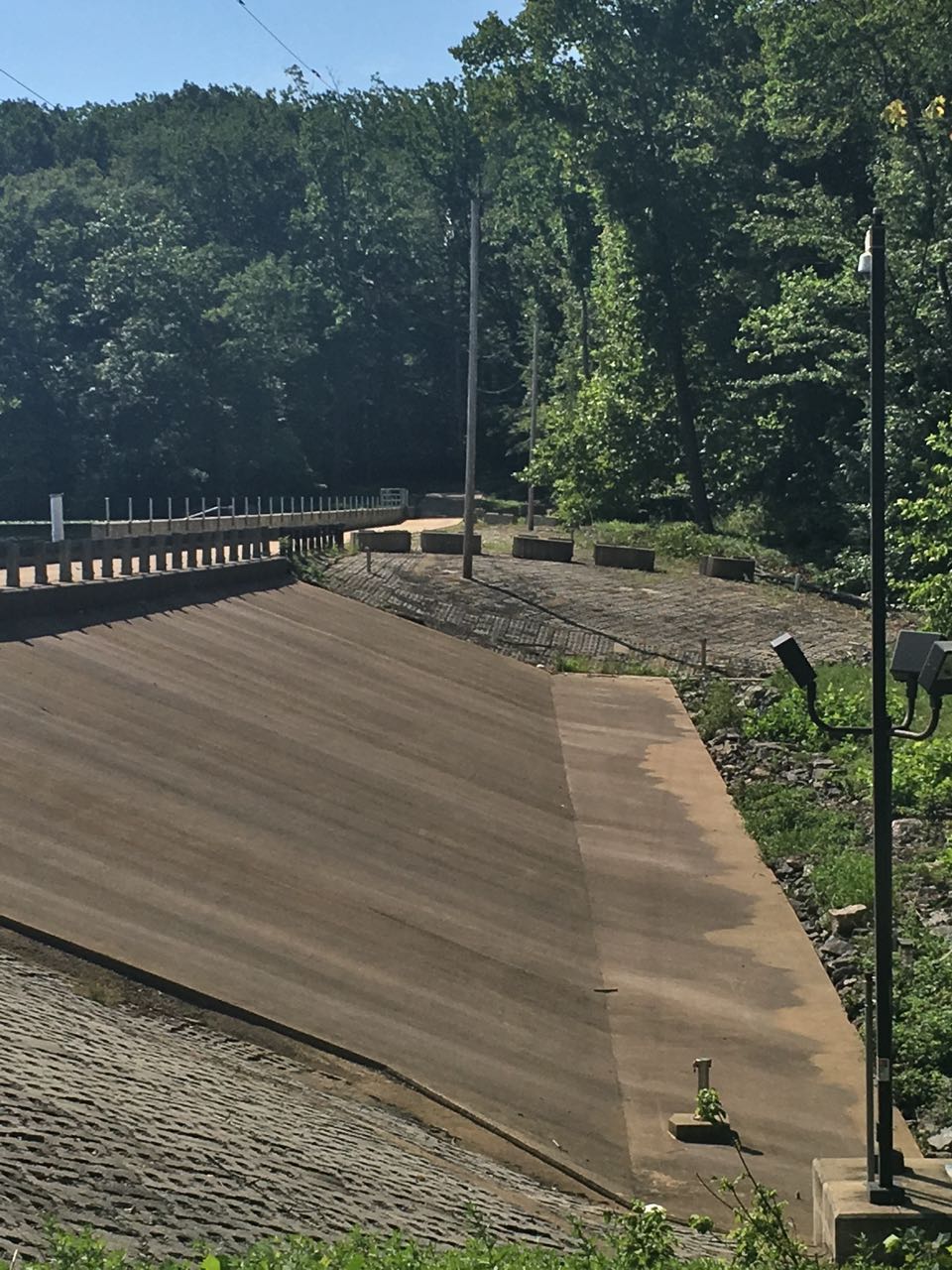
And the dam:

That damn is only 122 yards from the centerline of the pipeline. In an area where bedrock is right at the surface, so they’ll have to blast down to 7′-9′ to actually install the pipe.

As mentioned the construction will not be within the cut, but to the West of it instead. This is unfortunate not only because of the tree cover that will be cut down to the dirt, but also because it is going down the side of the slope instead of just straight down. This makes erosion issues far worse than they would otherwise be. So once again, imagine all those trees on the left of this picture being taken out for the pipeline cut in addition to what’s already been taken for the power lines.

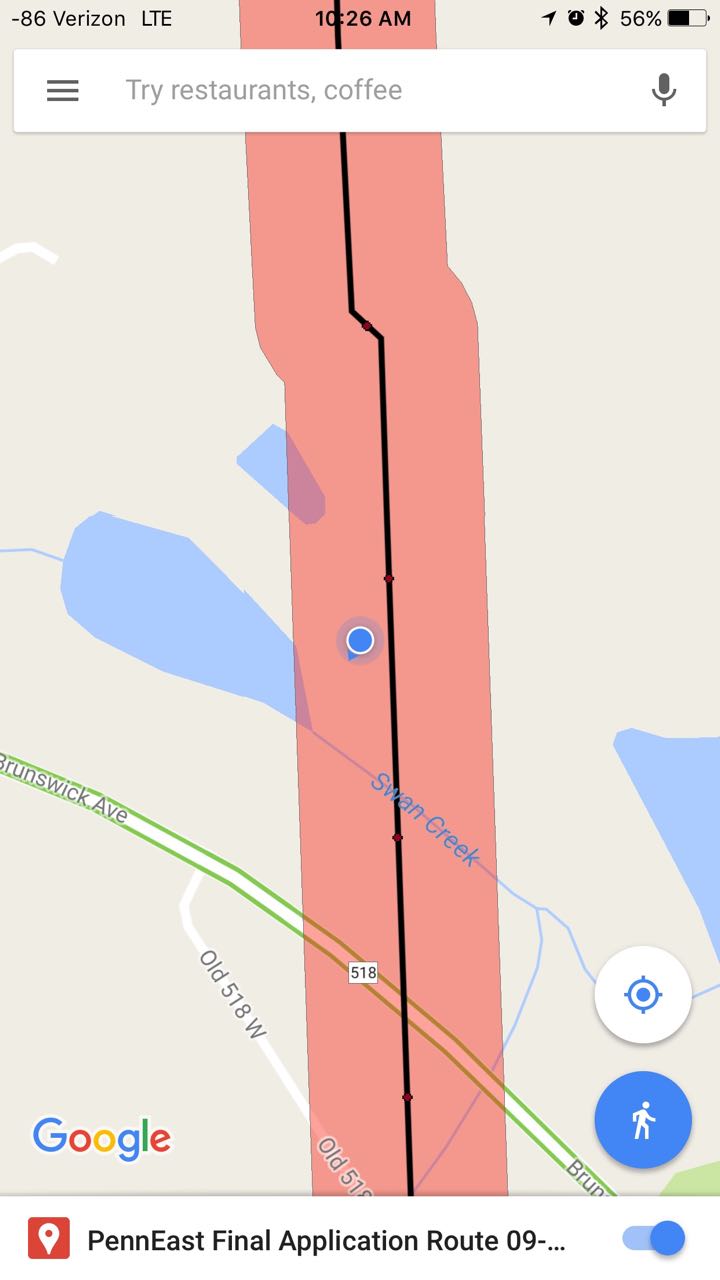
To really bring home the fact that none of this is “co-location”, but is in fact a massive widening of the right of way, I went into the woods and showed my GPS relation to the pipeline, and then snapped a picture of that spot. Here’s one:

And here’s what’s at that location:

As you can see, that’s not co-located. That’s a green field route through old growth trees. The tree pictured above, along with countless others, will be taken out by construction.

This little mini dam is in the same spot. I’m guessing this was man made going back well beyond 50 years. It won’t exist if PennEast is built. How are they going to mitigate this exactly?

Here is another spot on top of the center line. It shows the impacts to the creek and surroundings.

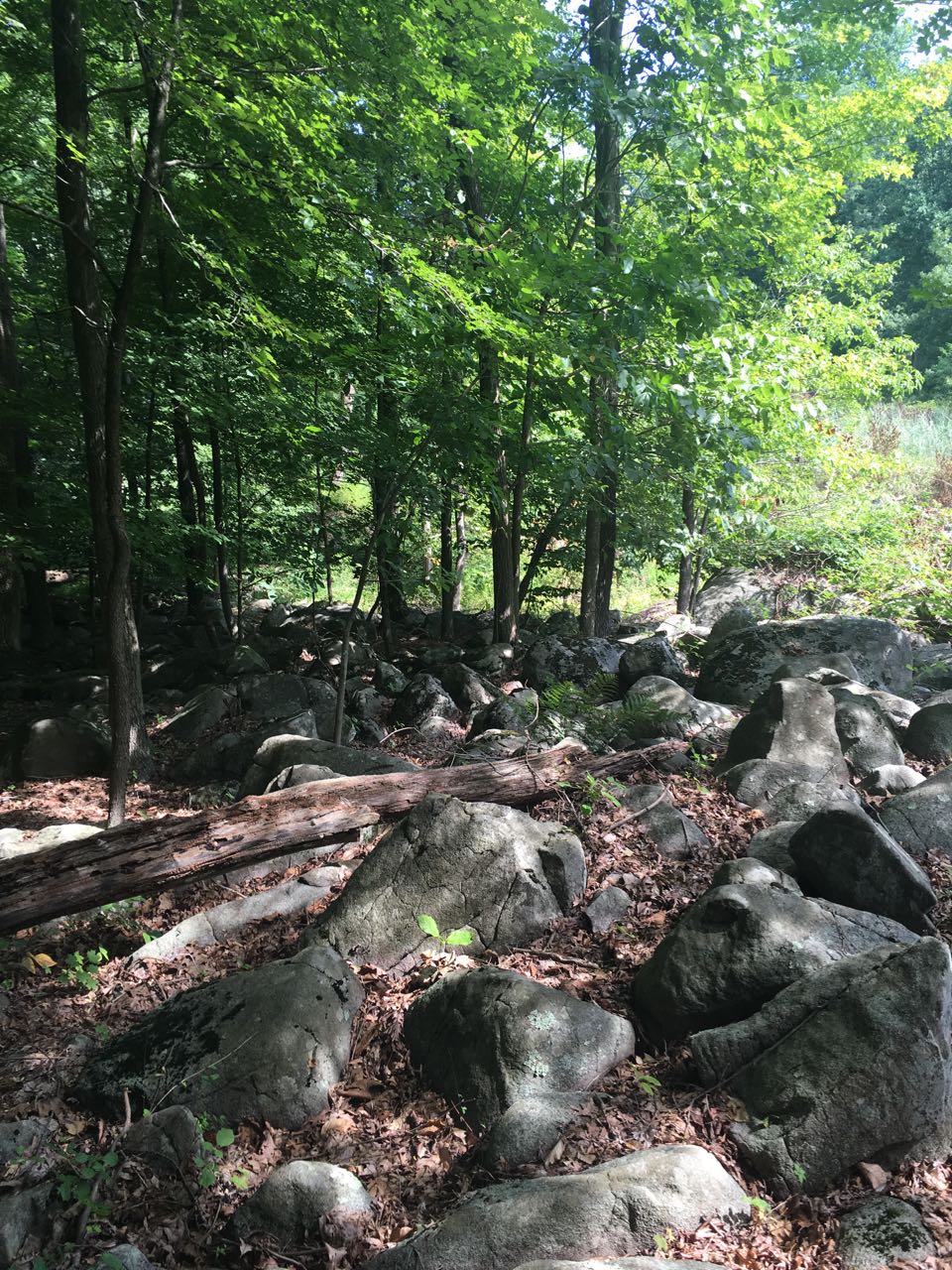
And lest you think they might get away with plain old digging in this area, here’s what the creek bed looks like. Yeah, that’s diabase bedrock. No way they’re getting through this without blasting.

All About the DEIS and Commenting On It

People are running around like their hair is on fire over the DEIS, and with good reason.  It’s thousands of pages long, there’s only about four weeks left in which to comment, everyone’s away on vacation, and the FERC site is about as reliable as a 1980 Ford Pinto.

And hey, no pressure, but we’re trying to get 10,000 comments on the docket.

To try to help out, in cooperation with the CAP groups we’ve repurposed the http://pipeinfo.org site to be DEIS Central.

HTTP://PIPEINFO.ORG

Click the LEARN HOW TO HELP link on the site and you’ll be brought over to the main DEIS workshop page.

The page will tell you:

  • How YOU can help!
  • WHY IT MATTERS.  Why do we care about this?
  • What we’re trying to achieve
  • Topics and boilerplate you should include to ensure your name is heard loud and clear
  • Detailed presentations for the OCD among us (I’m a founding partner of OCD-R-Us)
  • Instructions on filing electronically
  • Dates and locations of DEIS commenting work shops
  • Complete copies of the DEIS
  • Copies of several 3rd party documents that you should reference: the Delaware Riverkeeper’s suit against FERC involving PennEast, the Skipping Stone lack-of-need study, and the NJCF detailed intervenor comments.
  • Sample topics and text.

We will be adding to the site constantly, so if you’re stuck or forget something, just go to:

HTTP://PIPEINFO.ORG

HELP US GET THIS THING VIRAL!  WE WANT 10,000 comments on that DEIS at a minimum.

Note: if you think something is missing from http://pipeinfo.org, send an email to thecostofthepipeline@gmail.com and we’ll get it added immediately.

Note 2: So far the site has never gone down (Fingers crossed).  The files are backed by Amazon Cloud Services and so is highly available and blazingly fast.  Tell us about an important PennEast related file and we’ll get it on pipeinfo in a jiffy so you won’t have to rely on the old creaky FERC hamster-driven website for critical data.