March 30 2015 Route Changes

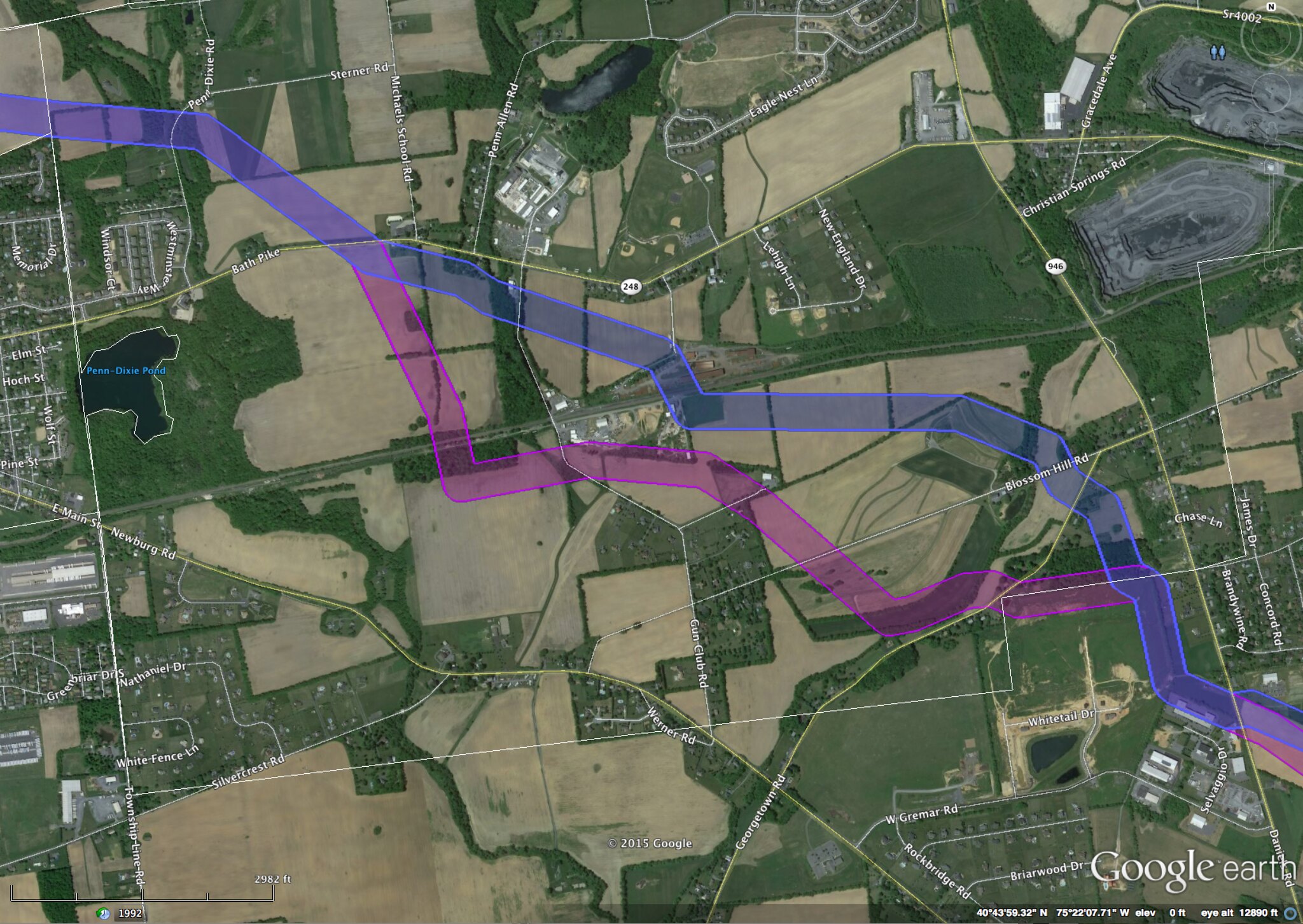
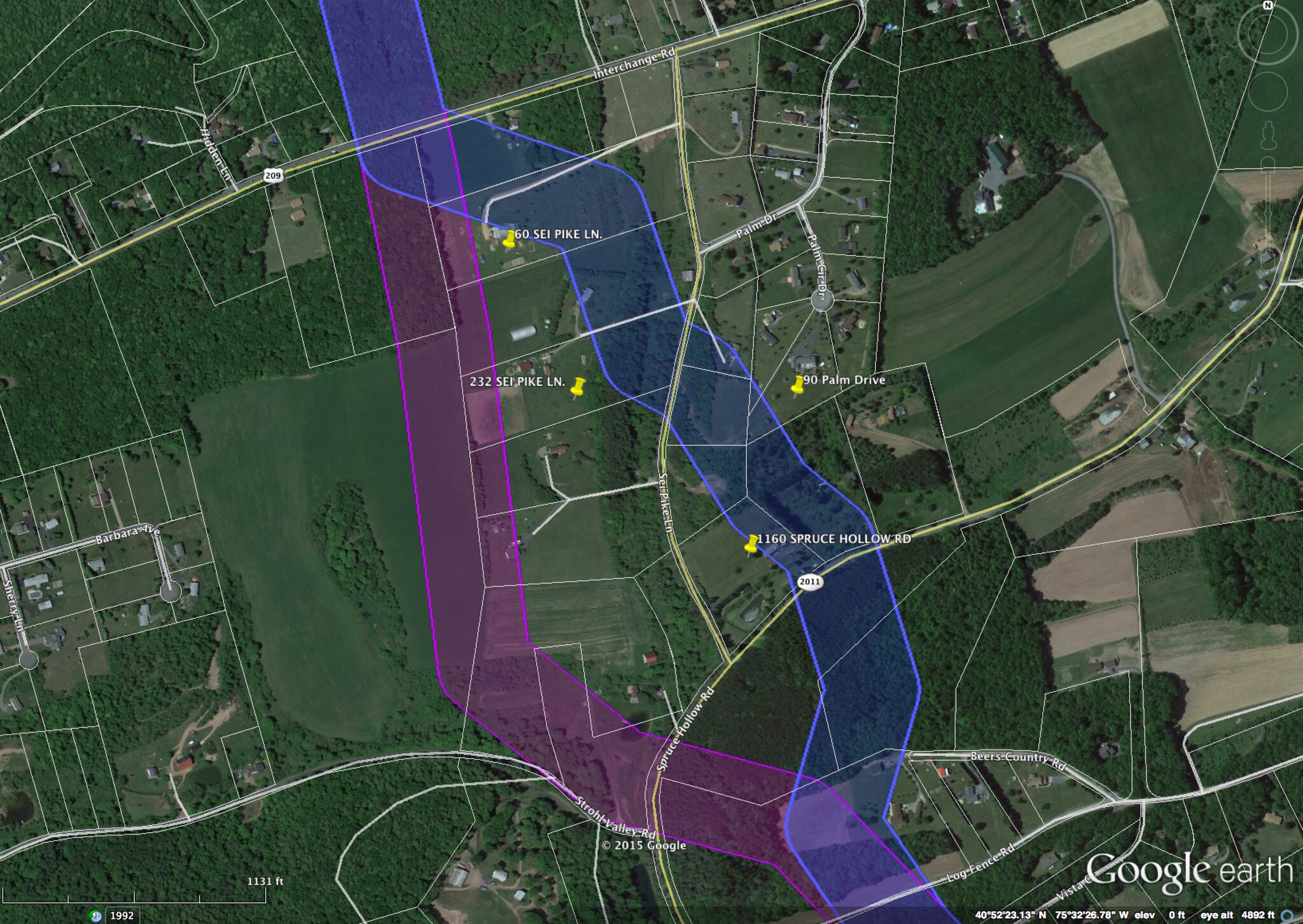
As some are aware, PennEast changed their route yet again in March 2015. The route is mostly the same but there are a few areas that have significant changes. This post shows the changes in the route between the January 2015 and March 2015. I do this by showing both routes in a Google Earth view. The blue shaded area is the new March route, the pinkish-purple area is the January 2015 route. Both are showing the 400′ survey corridor. The construction corridor will shrink down to 100′ (with many exceptions being bigger!), and the final easement being 50′.

West Amwell, NJ
The only change of note in West Amwell is in the area of Hewitt Road in the southern part of the township.

Here’s an overview of the area surrounding the change. Remember blue is the new route, pinkish is the old one:
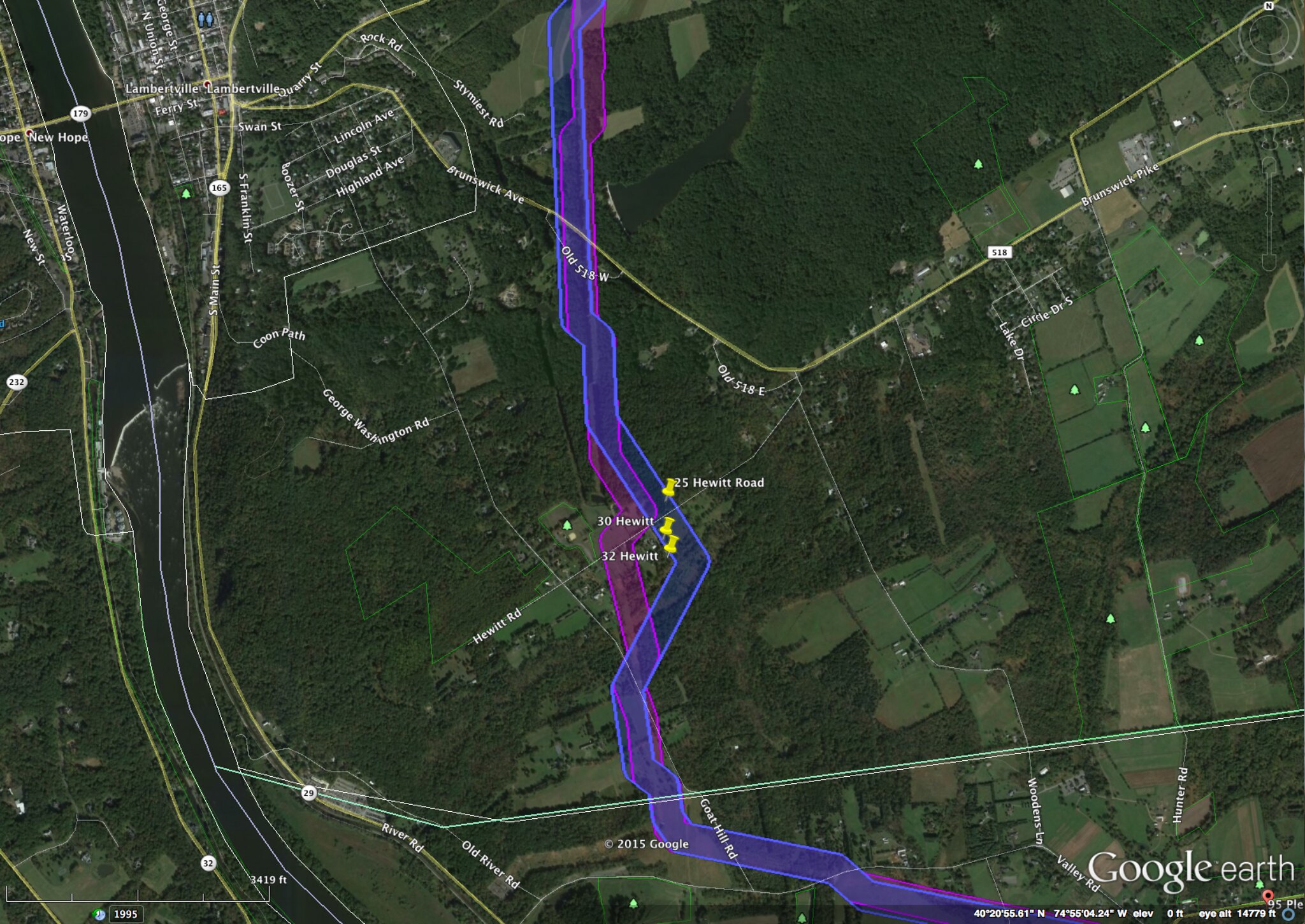
This is the so-called Goat Hill area of West Amwell. Lambertville is to the North West, the Mercer County/Huntertdon County line is the near horizontal line near the bottom of the screenshot.

And here is a zoom in of the affected properties. Note that the white lines outline each parcel so you can see exactly where it is relative to property lines:
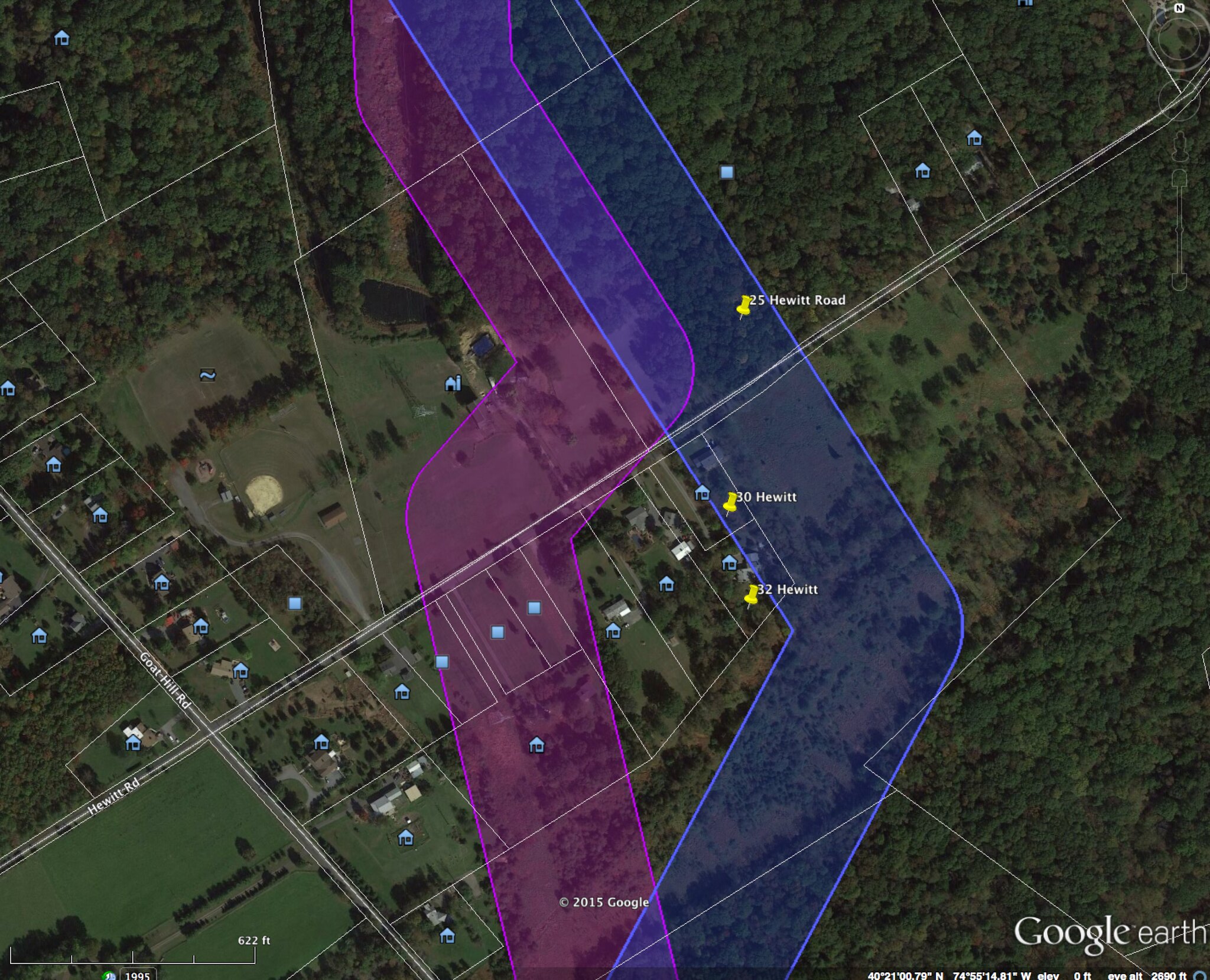
PennEast said this change was done to avoid a new house that was built a couple of years ago around 38 Hewitt Road. So now instead it includes two new houses in the survey corridor – 30 Hewitt and 32 Hewitt (mine, gulp).

The new route now runs through more historical quarry holes to the north west of Hewitt Road, and also runs into extensive west lands to the SouthEast of my property at 32 Hewitt.

This 3D view shows how much worse this new route is. It now has the pipeline going down a steeper slope. In addition, the yellow lines show where there are extensive wetlands. First there is a shelf that runs parallel to Hewitt Road that the pipeline will cut right across. The pipeline then continues into a lowlands area that is also all wetlands (the yellow-line area that is devoid of trees in the imagery).

Holland/Milford area
The next change is in either Holland Township or Milford (not 100% sure which). This change brings the pipeline route closer to the Milford bluffs, which has gotten quite a few residents in the area up in arms. It also includes the new lateral route to the Gilbert generating station. Here’s the overview:
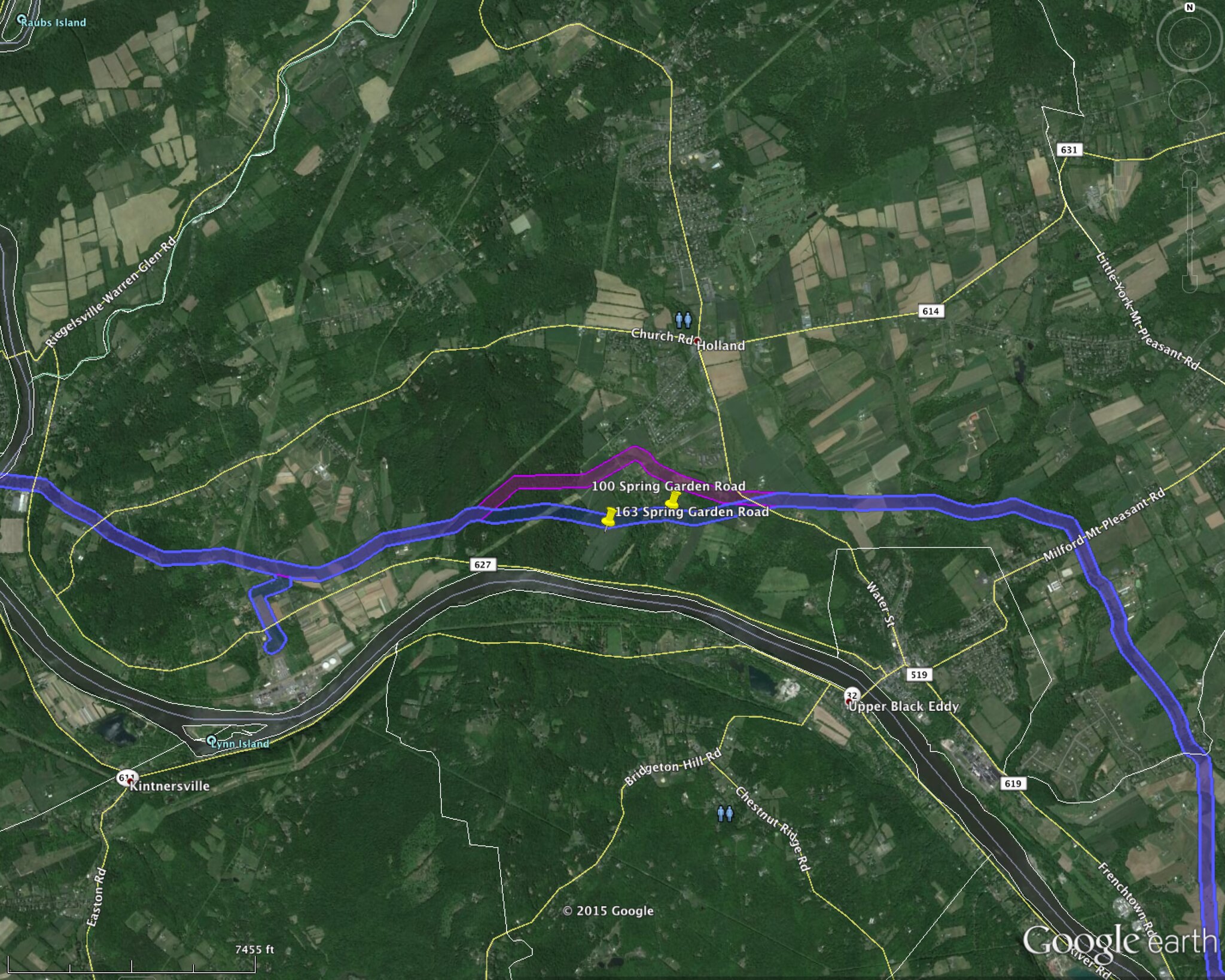
Here’s a closeup of the route changes going across Spring Garden Road. It’s now going through the property of 100 Spring Garden Road and 163 Spring Garden Road. And as I noted above it’s now closer to the Milford bluffs along the Delaware, a highly sensitive region ecologically.
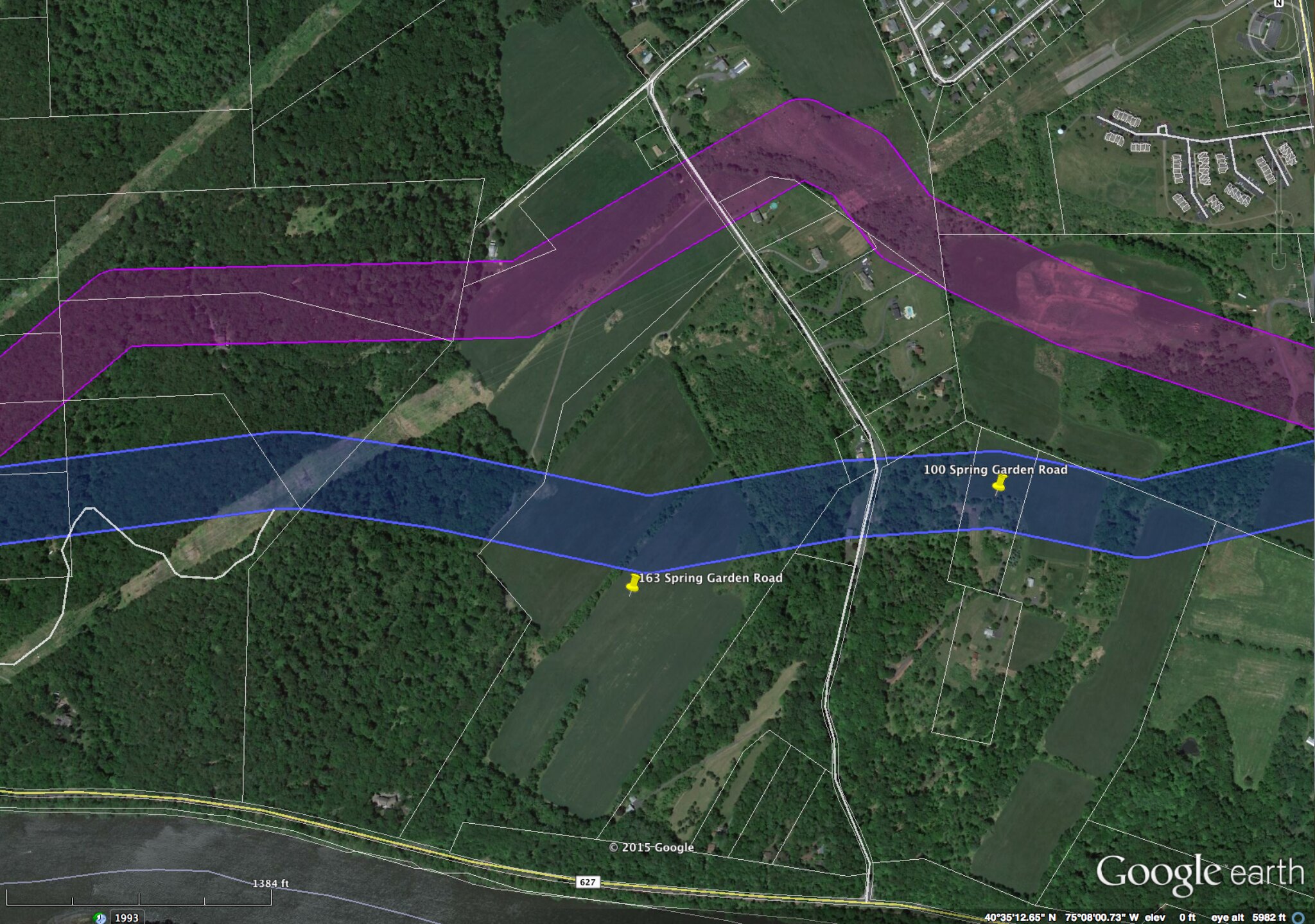
Curious why they call them the Milford “bluffs”? Here’s why:

The bedrock around here comes right to the edge of the Delaware River and then drops down sheer to the water. They are opening up more virgin forest here right near sheer drops into the Delaware. Erosion concerns are very strong here. This is also in the area of high arsenic concentrations. They’ll be blasting and doing their construction in an arsenic hot spot with runoff right into the Delaware River.

And here is a zoom into the Gilbert lateral. 130 Philip’s Road is going to have a very significant impact from this.
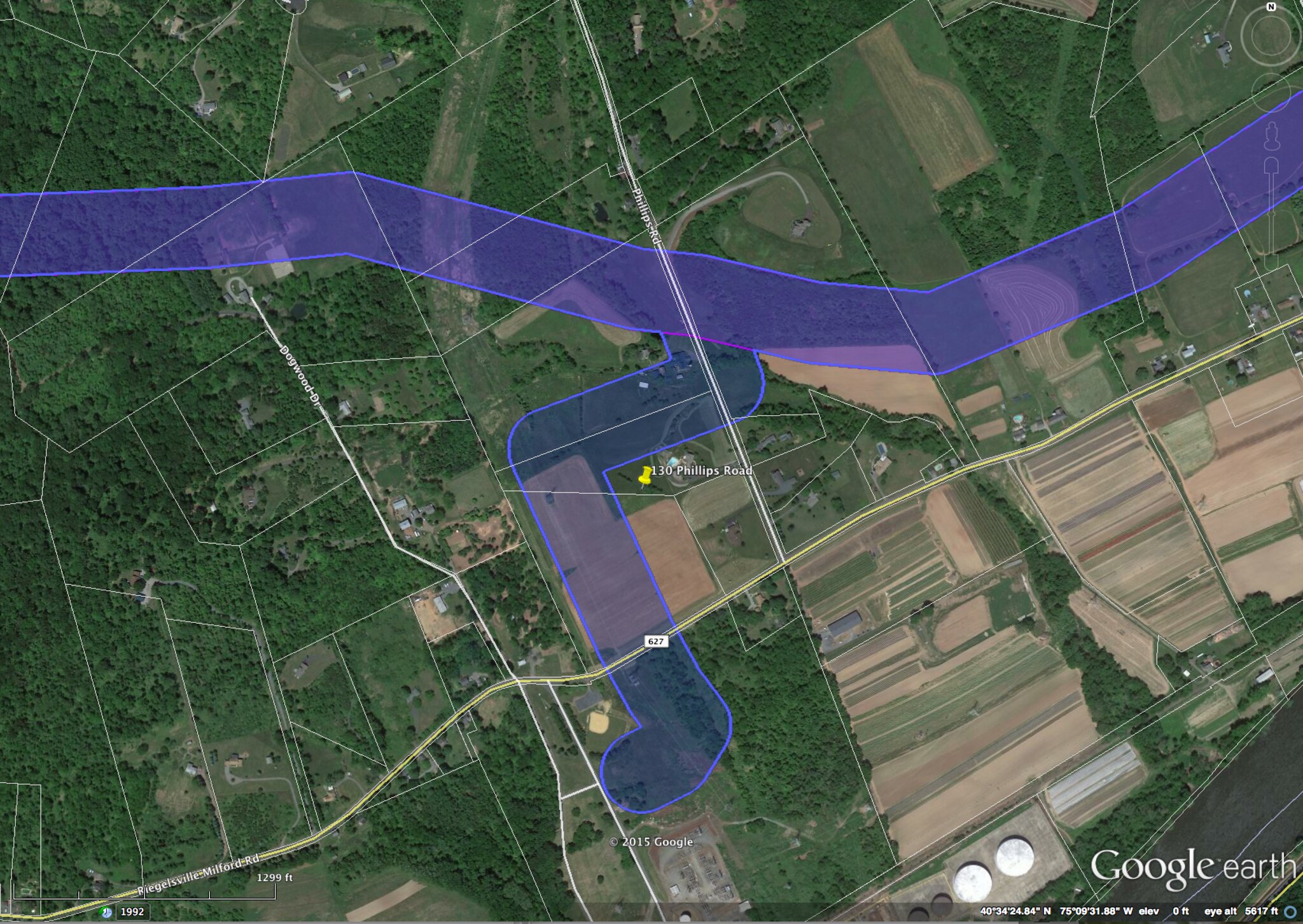
Durham, PA area
Moving over to Pennsylvania there’s a small change near Durham Road. I’m not sure what the purpose of this change was.
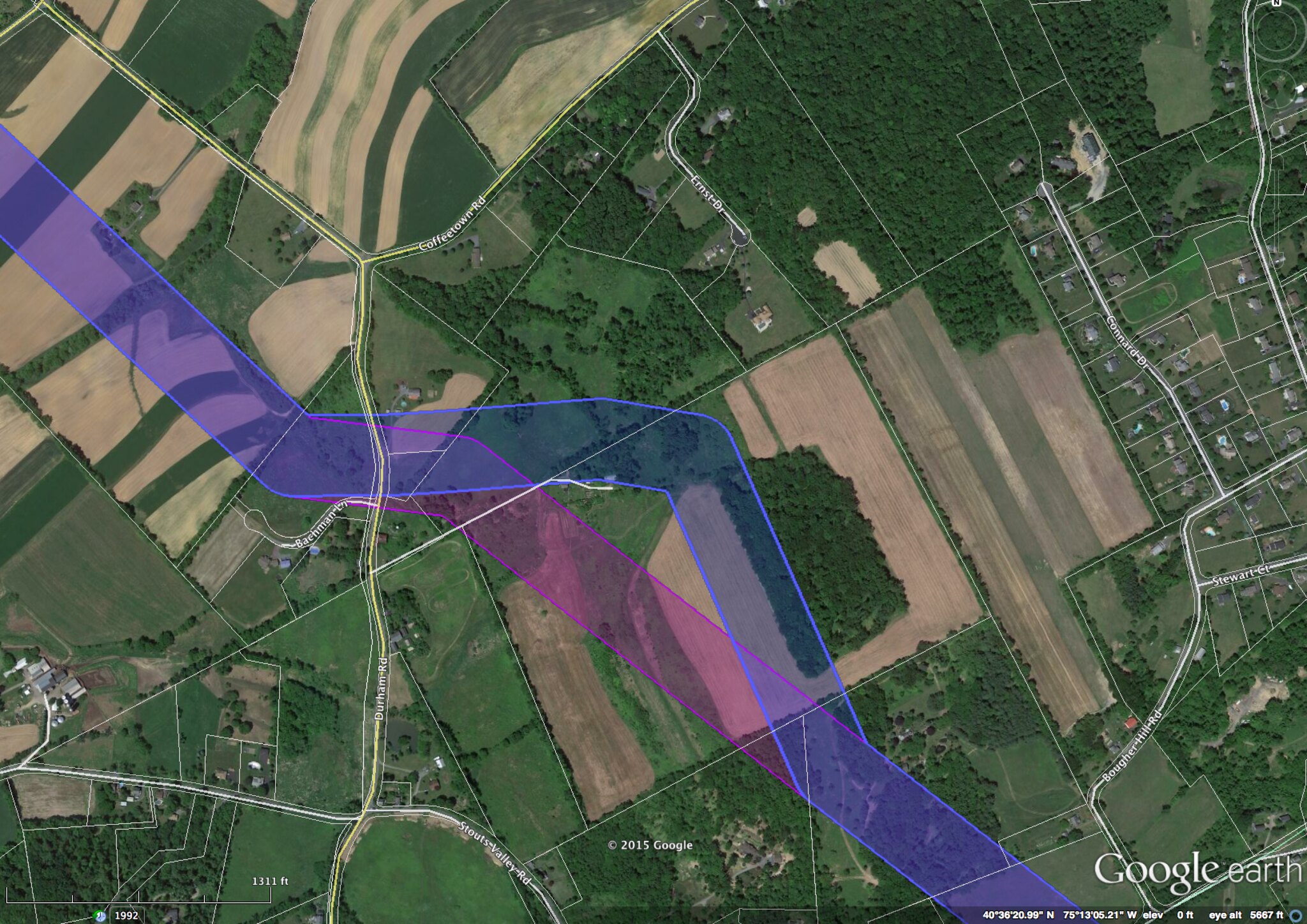
Old Orchard, PA vicinity
Just north of the Lehigh River there’s a Lowes shopping center next to route 33. PennEast is still running their pipeline right through the middle of their parking lot, disrupting a number of stores that are there (Lowes, Best Buy, Barnes and Noble, Pier 1, Texas Roadhouse Restaurant).

But now they have changed their route to be much closer to the PennDot facilities to the north of the strip mall. The PennDot buildings now seem to be within 50′ of the pipeline construction. This is one of the areas where you can clearly see where the route has to go, 400′ survey corridor be damned, because Route 33 cuts them off to the west. The earth movers are going to be practically kissing the PennDot building.

Incidentally I have pictures of this mall from my traversing the pipeline route (I haven’t published up this far yet). From what I can tell the pipeline is going through the approximate middle of this Texas Roadhouse restaurant:
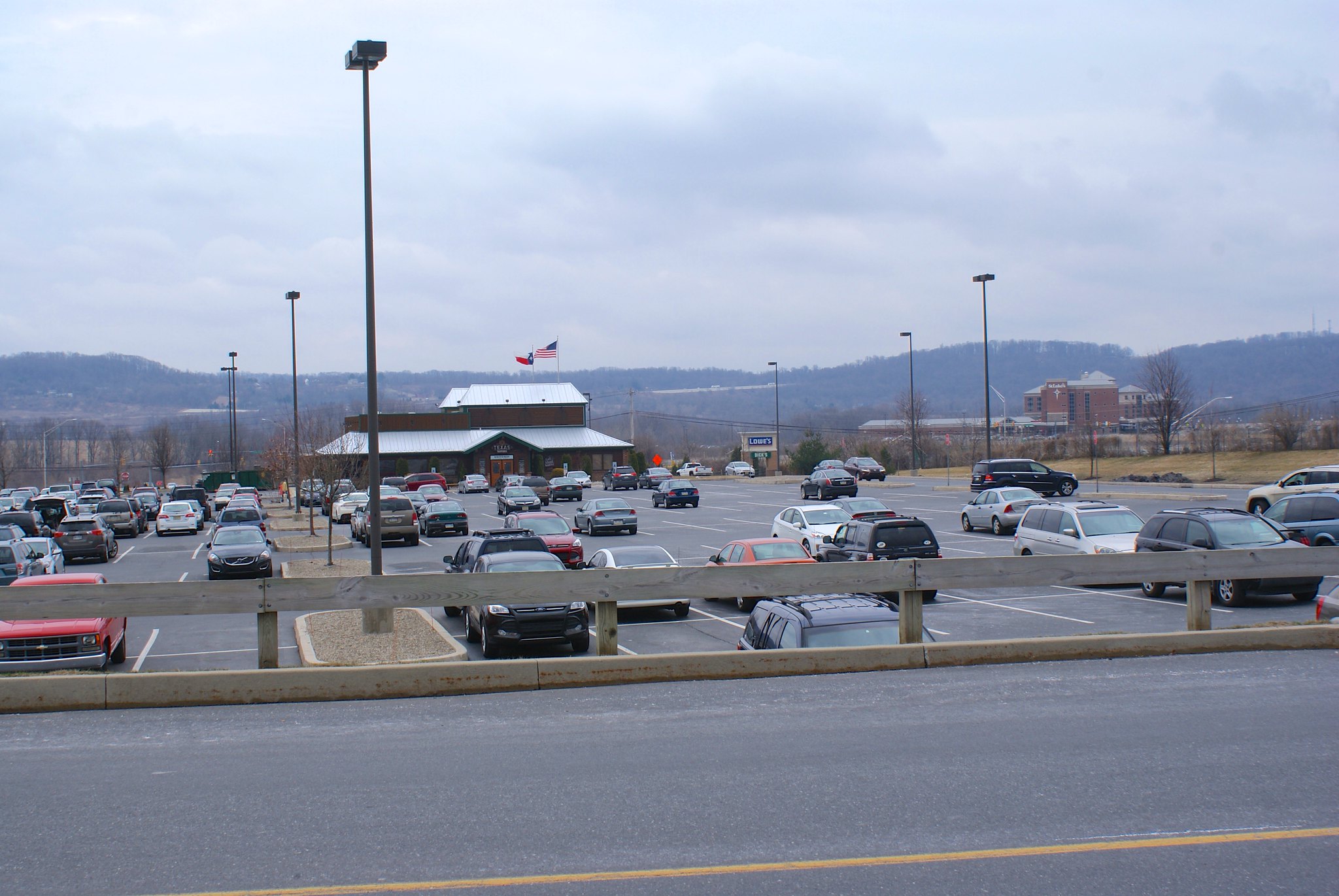
I wonder how much money these businesses will lose to pipeline construction while they demolish the restaurant and rip up half of the parking lot? Whatever it is it certainly was not factored in to the Drexel study touting PennEast’s financial benefits to the region.

Near Bath, PA
The pipeline route has been moved inexplicably further to the north in the area of Gun Club Road. A couple of houses of unknown addresses on Georgetown Road will now be impacted by the pipeline, along with a separate set of farms from the previous route.
Appalachian Trail
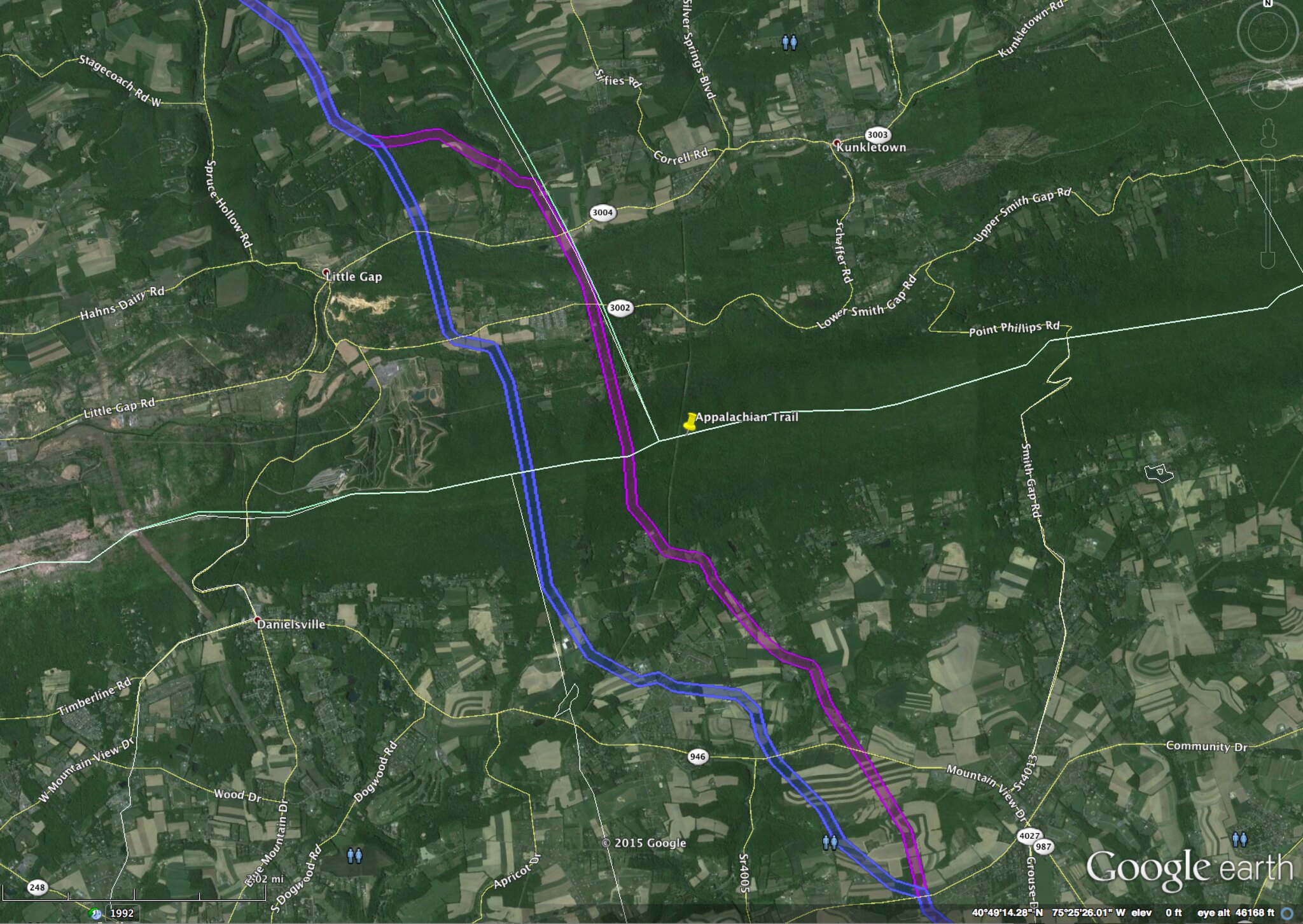
To the northwest the trail diverges significantly for 6 miles to cross the Appalachian Trail at a different point. Originally volunteer trail maintainers of the Appalachian Mountain Club, Delaware Valley Chapter, the AMC, and the Appalachian Trail Conservancy all formally proposed to Penn East that they eliminate a new pipeline crossing of the A.T. and utilize instead an existing area of adverse impact (e.g., existing power line, pipeline or similar clearing already in the area). However, instead of choosing such a point PennEast instead simply moved the pipeline route a half mile to the west.  This new location has the same issues as the old one so it’s unclear why PennEast did this.  It’s possible that it’s related to who owns the land, I’m still looking into this aspect.

This change involves lots of new stakeholders and landowners given how long the change is, and the fact that it’s moved laterally over half a mile to the west.
One of the changes is that the route now crosses Applebutter Road near HillCrest lane. The impact on the owners there can only be described as…appalling.
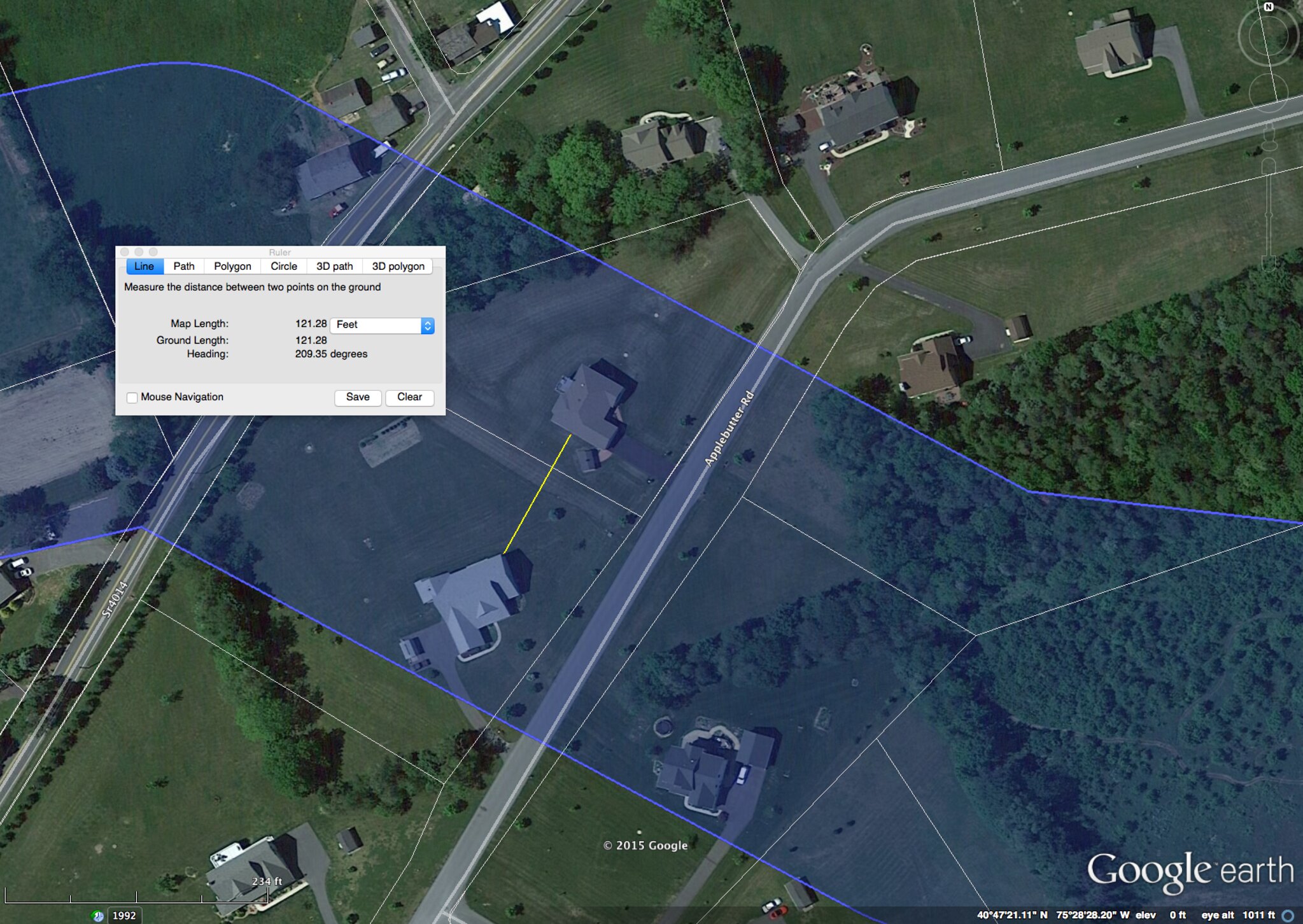
The blue area as always is the new route’s 400′ survey corridor. This is another spot though where we can figure out much more accurately where the pipeline has to go. The only option is between the two houses here. Except the houses themselves are only 121 feet apart (the yellow line between the houses is the Google Earth measuring ruler line). Both properties will be unlivable during construction, and afterwards they won’t just be in the blast zone – they’re basically in the total destruction zone.

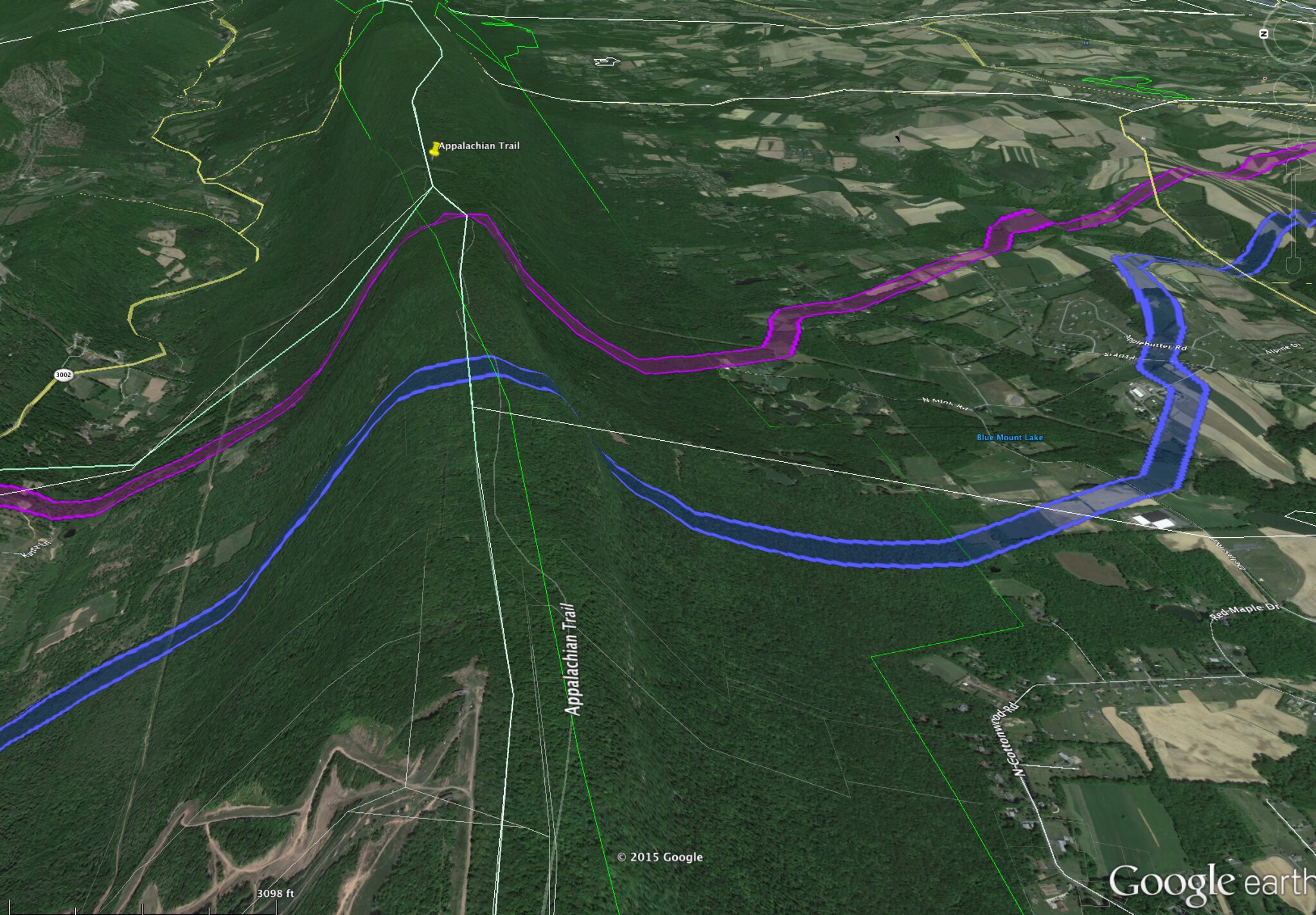
The final insult in this area is where the pipeline crosses the Appalachian trail. It’s now been moved from one area of it to about 1/2 mile to the west. But both are pretty equally bad. Basically PennEast is carving brand new cuts into virgin forest for a distance of about two miles. This includes crossing a very high ridge, so we have two steep inclines (one on either side of the ridge). This will badly segment the the forests and open up the area to significantly worse erosion. Here’s what I’m talking about:
Vicinity of Susquehanna River
The last change is just south of the Susquehanna River around SEI Pike Lane. The route now runs through several parcels instead of along the back of one, not sure why.
Landowner training sessions

From the Delaware Riverkeeper Network and Berks Gas truth. If you’re a landowner impacted by the PennEast pipeline, sign up for this training. It’s very easy and low-hassle, strictly a phone in training session being run by a lawyer volunteering her time to tell you your legal rights in regards to PennEast. Go here to register!

http://bit.ly/LandownerTraining

-=-=-=-=-=-=-=-=-=-=-=-=-=-=-=-=-=-=-=-=-=-=-=-=-=-=-=-=-=-=-=-=-=-=-=-=-=-=-=-=-=-=-=-=-=-=

Landowners Have Rights Despite What PennEast Would Have You Believe

The Delaware Riverkeeper Network and Berks Gas Truth are hosting two sessions of a special training focused on landowner issues. The first will be on Monday, April 27th at 6:30 and the second will be on Thursday, April 30th at 7:00.

Anne Marie Garti, a founder of “Stop the Pipeline” and a volunteer lawyer representing “Stop the Pipeline” through the Pace Environmental Litigation Clinic, will lead the training.

We’re asking that you register for the training. On the form, you’ll be able to select which session you plan to attend. The same material will be covered in both. We’ll send call-in information to all who register.

Register here! bit.ly/LandownerTraining

If you have any questions, let us know! Anyone with questions can contact Maya van Rossum at 215 369 1188 ext 102 or keepermaya@delawareriverkeeper.org or Karen Feridun at 610-678-7726 or karen.feridun@gmail.com.

-=-=-=-=-=-=-=-=-=-=-=-=-=-=-=-=-=-=-=-=-=-=-=-=-=-=-=-=-=-=-=-=-=-=-=-=-=-=-=-=-=-=-=-=-=-=

Shadfest

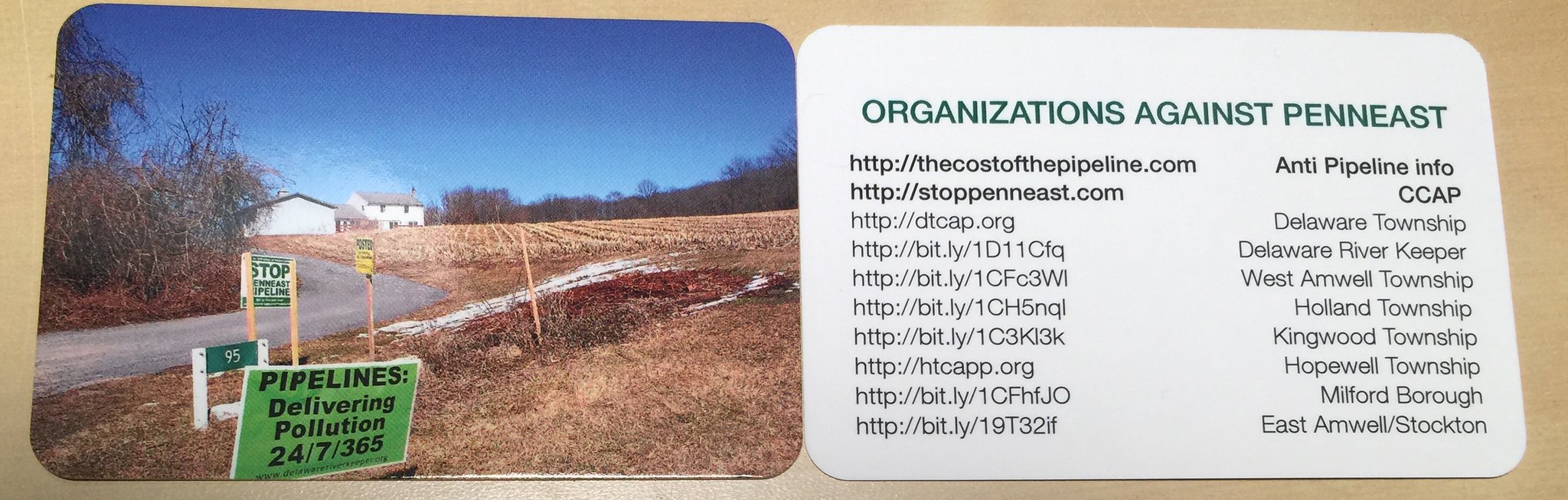
The Shadfest is on today and tomorrow from 12:30pm to 5pm in Lambertville, NJ. Come on down, Delaware Township Citizens Against the Pipeline are running a table in front of Zinc on Bridge Street near Main. They have lots of material from a variety of sources to educate people about the pipeline and what they can do to fight back. I’ve donated business cards to the cause, come on down before they’re all gone!

Come for the shad, stay for valuable information to help you protect your home and community!

eia.gov continues to be a thorn in the side of PennEast

The U.S. Energy Information Administration is a government agency who’s charter is to act as an organization that “collects, analyzes, and disseminates independent and impartial energy information to promote sound policymaking, efficient markets, and public understanding of energy and its interaction with the economy and the environment”. Unlike the FERC they really are fairly neutral parties and they seem to the “independent and impartial” aspects of their functions seriously.

A lot of my research has centered around eia.gov because they give so much raw data – and then they couple it with hundreds of different ways to correlate it, visualize it, and analyze it. Since day one they’ve been a thorn in the side of PennEast because eia.gov data regularly repudiates a number of PennEast’s key justification claims.

One of their handy tools to help make sense of all the information out there is their “Natural Gas Weekly Update“. It’s kind of like a newsletter that snapshots what happened in the week prior in the natural gas markets. They give pricing, capacity, supply, and demand numbers for the week but also provide some light analysis to explain larger forces driving the market and what might be coming up in future weeks or months.

Their most recent on is here:

http://www.eia.gov/naturalgas/weekly/archive/2015/04_23/index.cfm

There are a number of useful nuggets of information in here that taken together land a heavy blow against PennEast’s so-called justification for their pipeline, including:

  • The levels of natural gas going to electrical power generation is more dependent on pricing and the weather than any other factor.  The record for consumption by electrical plants was hit in 2012 when we had fewer natural gas fired plants than we do today.
  • Retirement of coal-fired plants is a red-herring.  EIA notes “It’s important to note that retiring coal-fired capacity does not necessarily result in a significant change in generation; many of the retiring plants are old and not used much.”.

The two above points taken together mean that you shouldn’t put too much credence on people pointing to the retirement of coal-fired plants as a big driver of natural gas consumption.  Yes there will be some uptake but it is fairly moderate in size.  When PennEast talks about natural gas replacing coal or speaks of supplying the Gilbert electrical plant in Holland Township they are not talking about substantial amounts.  Mostly they’re talking about backup generation facilities (e.g. what Gilbert is) that go mostly unused.  Which reinforces the question again – when all of these assets are sitting around not using the gas, where’s it going to go?

There is further data on the overall system’s capacity and the production numbers:

  • There’s already an enormous amount of elasticity in the system.  The generation numbers show that we can already accomodate up to 5 billion cubic feet of day of changes in consumption without significantly impacting the system as a whole.
  • Gross production is up 8% year over year, while LNG imports into the country are down 64%.

In other words we are drowning in natural gas and seem to have adequate pipes to move it around.  This is further underlined by the next piece of data:

  • Price volatility compared to a year prior is down 1100%.  Last year during the polar vortex prices spiked on a couple of days to around $110.  This year prices spiked to….$8.00.

And there you have the gun pointing at PennEast’s head.  Their whole house of cards is really based on that $110 number from a year ago.  It’s what they use to scare the crap out of people and indicate that they are our saviors.

In reality the problems that lead to that $110 have been fixed.  As I’ve mentioned in previous posts, we’ve had new pipelines come on line in 2014 which helped with capacity issues.  And FERC has mandated coordination between major consumers and producers to make the existing infrastructure far more efficient.  The net result: $8 vs. $110.

While most of us hate Mondays, I imagine PennEast dreads Thursdays.  Thursday, the day of the eia.gov Natural Gas Weekly Update that puts yet another nail in PennEast’s coffin.

PA starts to hit their stride

The state of Pennsylvania has a long and difficult history with energy projects. They’ve endured disastrous coal mining incidents such as the infamous Knox Mine Disaster in 1959, where the Susquehanna River broke through and inundated a network of mines, killing a dozen workers. The Centralia mine fire that started in 1962 involves 3,700 acres of land, where coal seams up to 300 feet down keep burning. Today, 53 years later that coal is still burning, and could burn for centuries to come.

And today fracking operations dot their landscape and poison their wells. Pipelines stretch out in all directions to spread the pain away from the immediate fracking wells to engulf people all over the state. Sometimes when I talk to Pennsylvanians on this subject I get a strong vibe akin to talking to a terminal patient in the hospital, there’s a sense of someone who has fought a series of long hard battles and who knows the end isn’t going to go well.

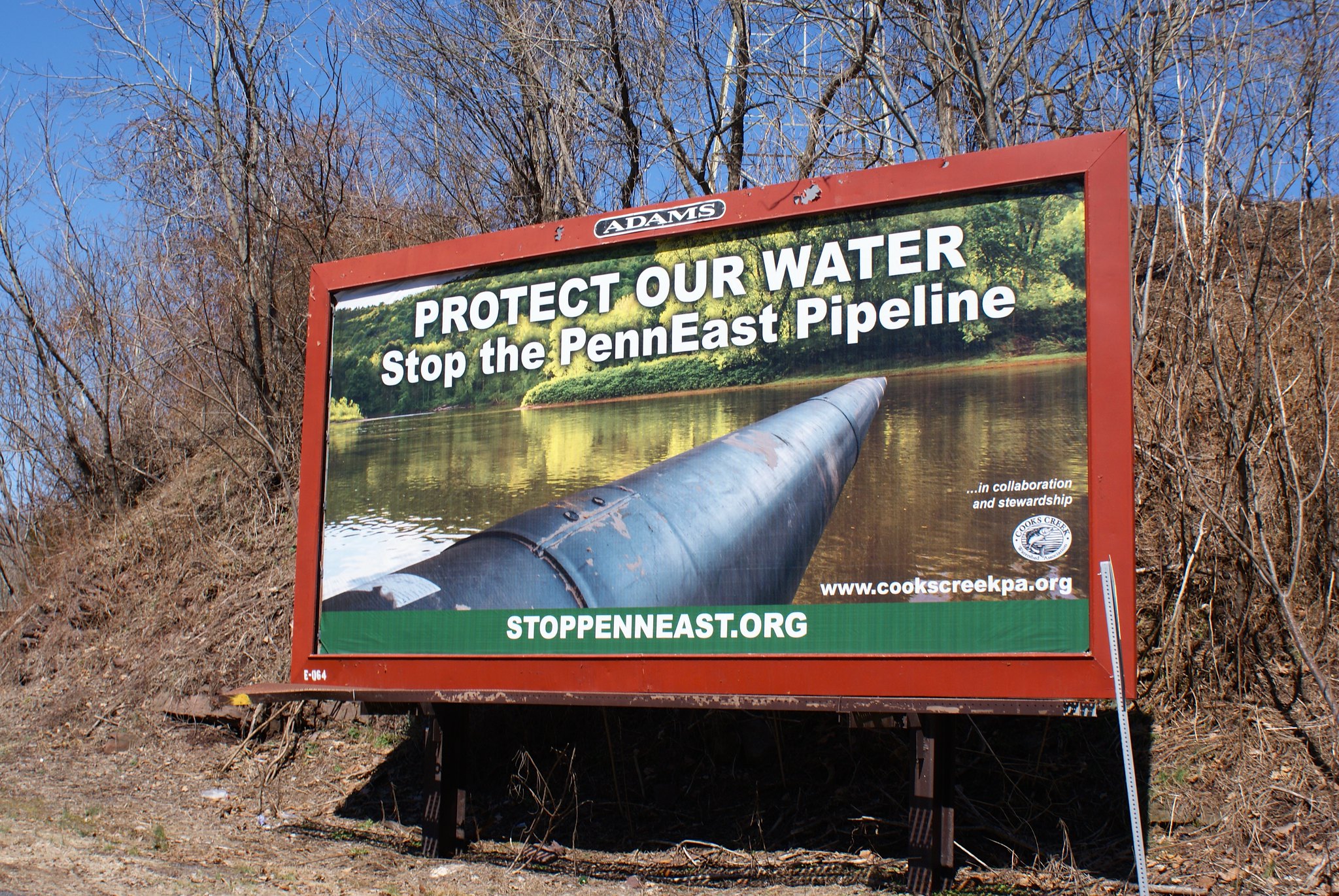
But I see new hope blooming in Pennsylvania, springing up in our midst right alongside the Spring daffodils. In an unprecedented some townships in the state have enacted formal resolutions against the pipeline. The Cooks Creek Watershed Association worked in concert with Concerned Citizens of Durham Townsphip against the Pipeline, Concerned Citizens Against the PennEast Pipeline of Williams Township, and stoppenneast.org to get a billboard against the pipeline installed on route 12.

Most recently, William G. Dohe, the Chairman of the Environmental Advisory Council of Easton, Pennsylvania, has filed a comment with the FERC declaring their organization is formally opposed to the pipeline. Mr. Dohe writes:

After careful review of information available to date, the Environmental Advisory Council of Easton, Pennsylvania wishes to record our opposition to the proposed PennEast Pipeline. We are concerned that the proposed Environmental Impact Statement (EIS) will be incomplete and not adequately weigh the direct economic benefit of PennEast Pipeline Company LLC to the risks and costs to the communities that will be forced to play its host.

The council then enumerates a list of specific areas of concern they want the FERC to force PennEast to address:

  • Carbon absorption.  “What is the total amount of carbon absorption lost due to the cutting of trees in the pipeline’s path? What is the net increase in GHGs attributable to this loss of vegetation?”.
  • Blast zone.  “What is the radius of likely property damage and loss of life, should the pipeline explode? This should be based on the total amount of gas under pressure proposed for the pipeline. A map should be prepared indicating what properties adjoining or in proximity to the pipeline will be subject to increased risk of property damage and bodily harm”.
  • Local usage.  “What percentage of the proposed pipeline gas will be delivered to the host communities versus the total amount of gas transported? How much gas will be delivered domestically versus shipped to overseas markets?
  • Global warming.  “How much does the gas transported by the pipeline contribute to GHGs (in metric tonnes per annum) and global warming?”
  • Leaks and other emissions.  “How much gas (and what kinds thereof) will be emitted (leaked or
    vented) from the pipeline, or its facilities along the route?
  • Construction runoff.  “During construction, what types of construction-related run-off is expected – including solids, silts, and chemicals – and what streams/rivers and aquifers will be affected?
  • Sinkholes.  “What impacts will the pipeline have on our karst soils, and specifically, what will be the increase in potential sinkholes from its construction?”
  • Historic site impact.  ” What historic resources will be affected by the pipeline? A map indicating all colonial era as well as pre-colonial era resources (such as tribal lands and burial areas) should be included.”
  • Audits.  “An independent audit of PennEast Pipeline Company’s “Economic Benefits Study” by Drexel should be conducted and actual long-term economic impacts be considered.”
  • Clean Air and Water Act regulations.  “A list of all Clean Air and Clean Water Act regulations from which the gas industry supplying the pipeline, as well as from which the pipeline itself are exempt, should also be provided so that the public can fully understand their short- and long-term- risks

Let’s hope that the FERC takes heed of this and similar submissions and forces PennEast to submit detailed studies and analysis of all of these topics.  On the issue of economic benefits in particular I would go even further than Mr. Dohe’s request for an audit of PennEast’s Drexel University study.  I would demand that an independent study be conducted, paid for by PennEast but selected by a neutral third party, which considers the true economic impact to our communities including all of the negative impacts the construction will entail in our region, including but not limited to loss of business due to construction near businesses, loss of tourism dollars in affected tourist destinations, funds spent by local, county, and state governments to study and respond to PennEast and FERC’s scoping process which could have been spent on more constructive projects, economic impact of traffic issues during construction, and permanent economic losses incurred by properties and landowners along the permanently cleared 50′ right of way.

The EAC’s submission is available below:

EAC FERC Submission
EAC FERC Submission Alternate Site


PennEast gives us some numbers – and they’re not good

PennEast has been doing a number of filings recently to the FERC eLibrary site. Lots of detail that people have complained is missing is finally out there.

Unfortunately, little of it seems to contain good news. Here’s one example here:

http://elibrary.ferc.gov/idmws/common/opennat.asp?fileID=13847929

The document is too big to analyze in a single post, but it has some depressing numbers we can highlight for a start.

Table 8.3-1 shows “Existing residences and buildings within 50 feet of the Construction Workplace”. It goes onto list 160 buildings that are within 50 feet of the construction area.

160 BUILDINGS!

Many of these are residences. 70 houses are listed, which makes up 43% of the list. My house and many others aren’t listed because we’re “only” 200′ or so from the construction zone. Try to to imagine how much bigger that 200′ proximity list would be….

Some are businesses. “Casinos stables”, “Auto dealership”, The “All About Fun” part equipment store. I somehow imagine that All About Fun won’t be as fun with heavy earth movers trundling around 50′ from them.

Not surprisingly the lost of income to these businesses was not included in the Drexel University study PennEast commissioned that showed so much money flowing into the region thanks to them.

Table 8.4-1 lists federal, state, county, municipal, and private conservation lands crossed by the pipeline. There are 44 of them.

Table 8.4-2 shows private conservation easements violated by the pipeline. 61 lands that were believed to have been permanently preserved forever will have a 100 foot to 125 foot wide swath cut through them, and an 8′ deep ditch dug into them, and a 3′ wide high pressure pipeline welded and placed there.

Table 8.2-6 lists the “additional temporary work space” areas required by the project. These are on top of the existing pipeline right of way and 100′ to 125′ construction easement.

There are 49 pages of temporary work spaces listed. Not 49 sites – 49 pages of sites. Call it roughly 585 individual temporary sites.

Table 3.5-1 lists species along the route that one or more organizations have indicated require special treatment, are of concern, or which are outright endangered. There are 52 individual species listed.