Delaware Township takes PennEast to task

Delaware Township NJ filed a pair of FERC filings this week reprimanding PennEast for their ridiculously sub-par job in responding to scoping comments. They specifically held their toes over the fire for a number of scoping comments PennEast either ignored, completely misunderstood, or mangled behind comprehension. In one letter the Township committee laments:

Delaware Township reviewed PennEast’s March 13, 2015 submission and found that the majority ofresponses by PenneEast were boilerplate/canned responses. In additions, several of the issues raised by Delaware Township were not even addressed by PennEast. Delaware Township spent considerable time and resources preparing these scoping comments so having PennEast ignore and not acknowledge Delaware Township’s concerns is extremely disingenuous and disheartening.

They then enumerated comments that were not addressed, including:

  • Cultural and historic items.  “PennEast failed to address/acknowledge that comments had been submitted regarding the presence ofhistoric structures or sites.”
  • Conserved land.  “[We] made detailed senarate submissions on February 24, 2015 regarding the lands in the township that were conserved with public finds. Yet, PennEast failed to document that Delaware Township had made any comments.”
  • Abandoned Mines.  “PennEast apparently did not read the Delaware Township’s Quarry Compliance’s submission dated February 23, 2015. In this submission, the Delaware Township Quarry Compliance Committee provided information about an active quarry located in close proximity to both proposed routes of the pipeline. “Active” means that the operations, which include blasting of the diabase rock, are ongoing and not “historic” or “abandoned”. The Delaware Township Quany Compliance Committee had requested that PennEast be required to conduct an engineering/safety study on the effect on the blasting at this active quarry would have on the proposed pipelines. PennEast’s response failed to acknowledge this active quarry nor did PennEast propose to conduct an engineering/safety study on the effects of the blasting on the proposed pipeline.”
  • Eminent Domain.  PennEast failed to address/acknowledge that comments had been submitted by Delaware Township regarding eminent domain.
  • No Appendix A!  “And finally, on March 26, 2015 PennEast made a submission to FERC responding to scoping comments that were submitted between March 7, 2015 and March 20, 2015, including those raised at the five scoping meetings. In this submission, PennEast indicated that their responses are in Appendix A. However, there is no Appendix A that was posted on the FERC website. How can interested stakeholders review PennEeast’s submission when FERC has not posted the submission in its entirety?'”

In the second letter Delaware Township blasts PennEast for not only ignoring the Rosemont Rural Agricultural District but regularly getting its name wrong when it mentions it in passing. They begin:


On December 9, 2014 the Delaware Township Committee sent a letter to the Federal Energy Regulatory Commission (FERC) regarding the township’s specific concerns about the proposed project’s intention to carve a footprint though the Rosemont Rural Agricultural District (ID¹4591).PennEast Pipeline LLC was copied on this letter.

In the December 9, 2014 letter, the township detailed how the Rosemont Rural Aericultural District (ID¹4591) was listed on both the New Jersey Register of Historic Places and entered into the National Park’s Service’s National Register of Historic Places.

The Delaware Township Committee sent additional detailed comments to FERC regarding the Rosemont Rural Agricultural District (ID¹4591)in a February 24, 2015 submission. Again, PennEast Pipeline LLC was copied on this submission.

Then the double barreled shotgun comes out:

But despite being provided with this information, PennEast continues to refer to this4
historic district as the “Rosemont Ridge Agricultural Development District” as referenced in PennEast’s March 13,2015 submission.

In addition, PennEast indicated in their February 9, 2015 and the March 6, 2015 Monthly Progress Reports that “Other concerns are being addressed through route alternatives or ongoing studies. For example the New Preferred Alternative route avoids areas of concern raised by the Historic District of Mt. Airy…..” And the Preferred Alternate route now avoids the Mt. Airy Historic District.

Delaware Township has raised concerns about the proposed pipeline carving a footprint through the Rosemont Rural Agricultural District (ID¹4591)yet it appears these concerns were/have not addressed by PennEast. Not only does the 10/7/14 original route carve a footprint through the Rosemont Rural Agricultural District (ID¹4591) but the 1/16/15 Preferred Alternate route continues to cut a footprint through the Rosemont Rural Agricultural District (ID¹4591).

Has PennEast not been reading the letters submitted by the Delaware Township Committee? Why has PennEast not addressed our concerns?

Delaware Township rightly points out that PennEast is messing up this process on multiple levels. They can’t even get simple things like official names and designations correct. Even worse, their responses are piecemeal. PennEast trumpets them “saving” the Mt. Airy Historic District in West Amwell, but at the same time they completely ignore the Rosemont Agricultural District in next door Delaware Township. It is infuriating to everyone involved that a company that commits so many gross errors is potentially being entrusted by the federal government to safely build a 3′ wide 100+ mile long high pressure natural gas pipeline through our communities.

The township closes by saying:

The Delaware Township Committee considers any siting of a pipeline through the Rosemont Rural Agricultural District (ID¹4591)to be an unacceptable and permanently intrusive, discordant, and disruptive influence on an area that has been recognized by state and federal historic authorities as an unique setting that serves as a window into our nations’ rural agricultural past.

The Delaware Township submissions are available below:

Delaware Township Submission 1
Delaware Township Submission 1 Alternate Site

Delaware Township Submission 2
Delaware Township Submission 2 Alternate Site

Pipeline route change in West Amwell in pictures

As I mentioned previously the most recent pipeline re-route made one small change in West Amwell. It was originally slated to go diagonally across the horse farm across the street, cross Hewitt Road, go through an open field and then hook up again with the power line easement.

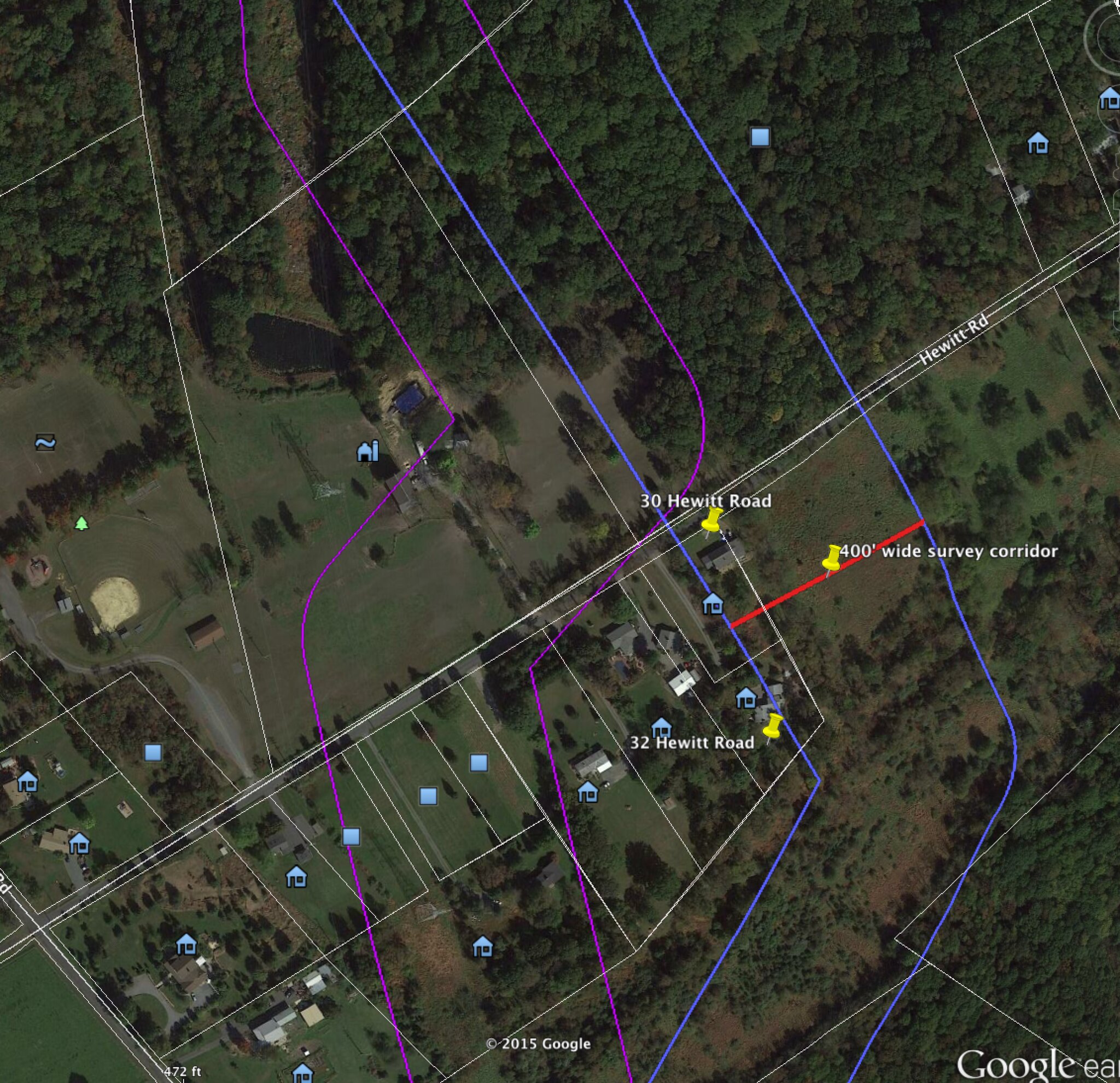
They changed that route because the open field was not actually an open field, a house was built there in the past year. So they re-routed to avoid the new house. In doing so they’re now routing to the east of the horse farm through a heavily wooded area, crossing Hewitt Road and then going very close to my neighbor’s house and my house. A picture says a thousand words so here’s the old route vs. the new:

Sorry the map is a little busy. The purple parallel lines are the “survey corridor” for route from January 2015. The blue parallel lines are the new route as of March 30th. The white lines are people’s property lines.

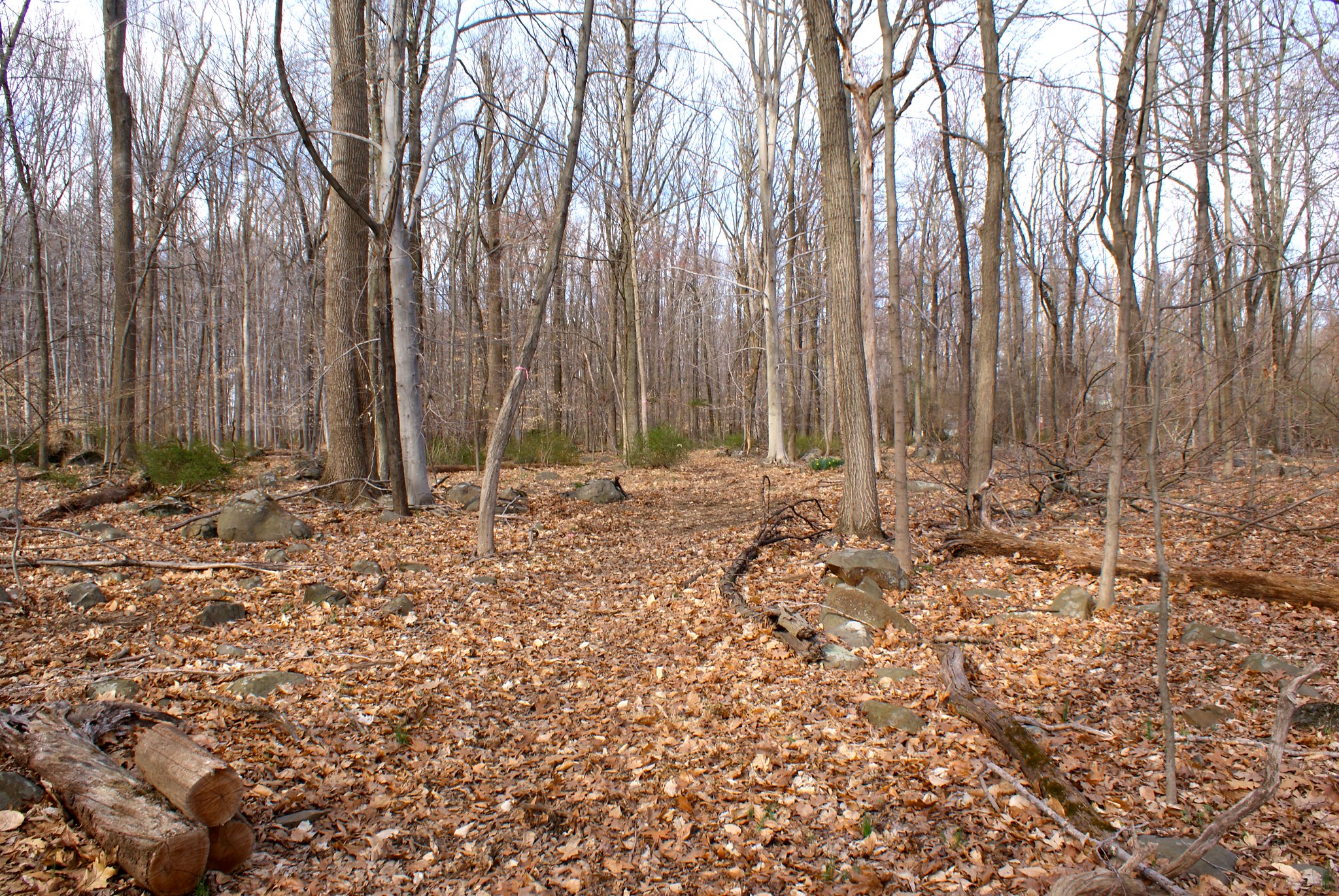
After the survey folks said they found a bunch of cool stuff to the North east of Hewitt I went back to see what sort of goodies there were. This shows the terrain the new route will be going through that PennEast believes is superior.

Old road behind Hewitt Road
As I mentioned in another post an old road was found behind the houses on that side. Originally people thought might have been a cobble stone road from the 1700s but the archeologists were not able to substantiate that. They speculate it still could have been a road dating back that far, possible used to access the stone quarry holes in the area.

Quarry Holes

When I last met the archeologist he said the number of quarries found between Hewitt Road and Old Route 518 was now up to 61. Those are 61 holes from the 1700s or earlier where people would manually dig and chisel out stone for use in construction.

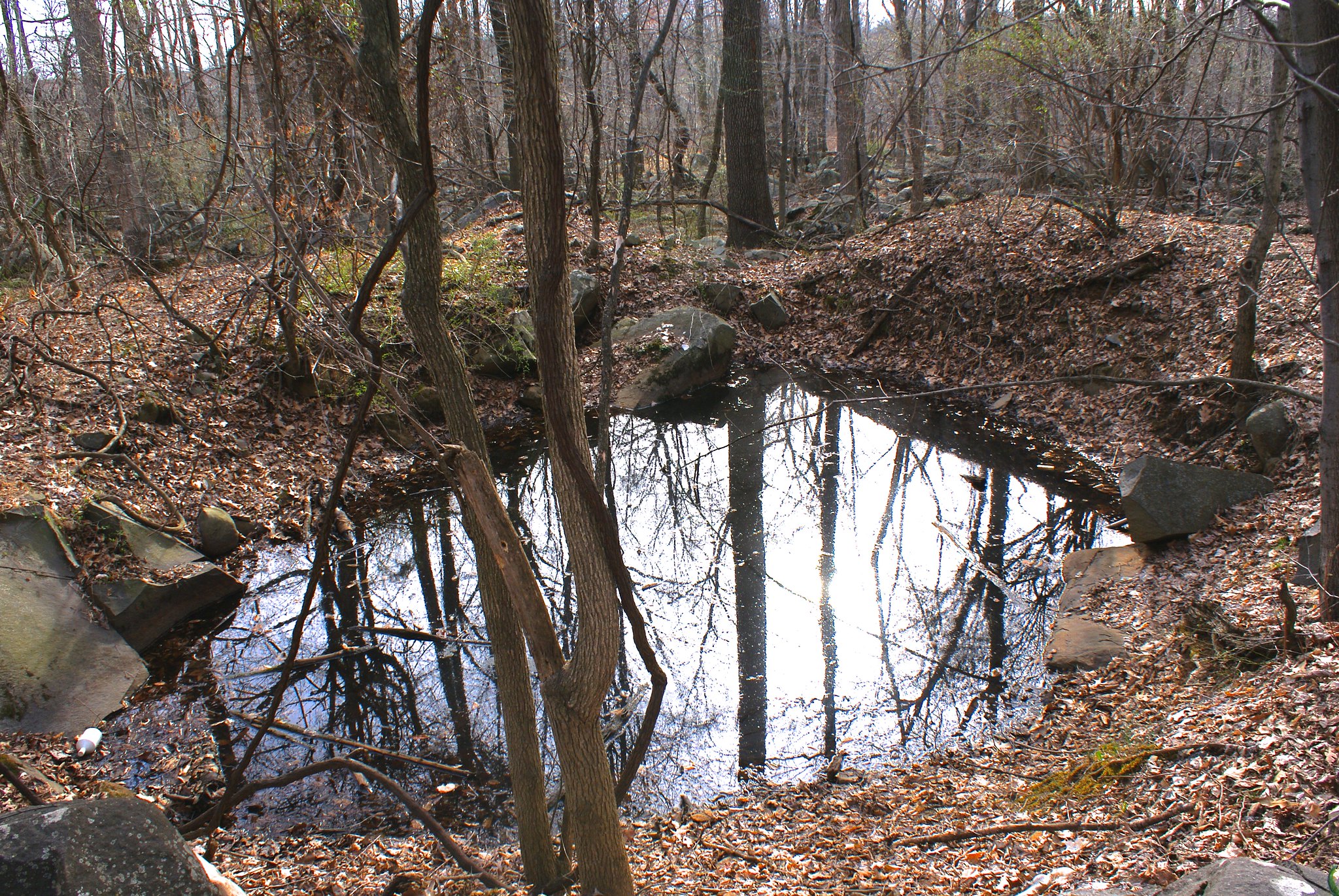
Many of these quarry holes are right on the new pipeline route. This is the biggest one I found:

Here’s the other side of that hole.

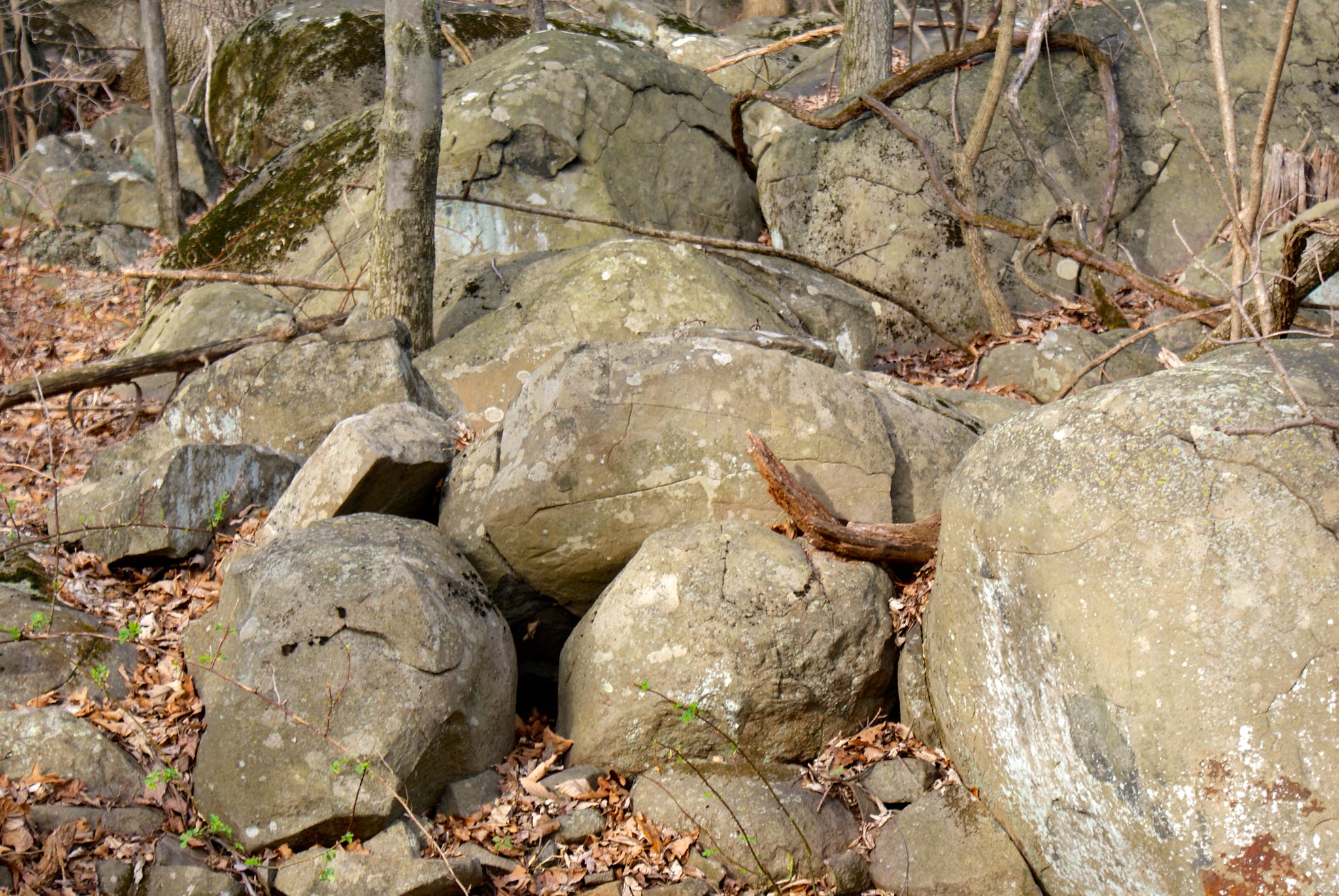
Boulders everywhere
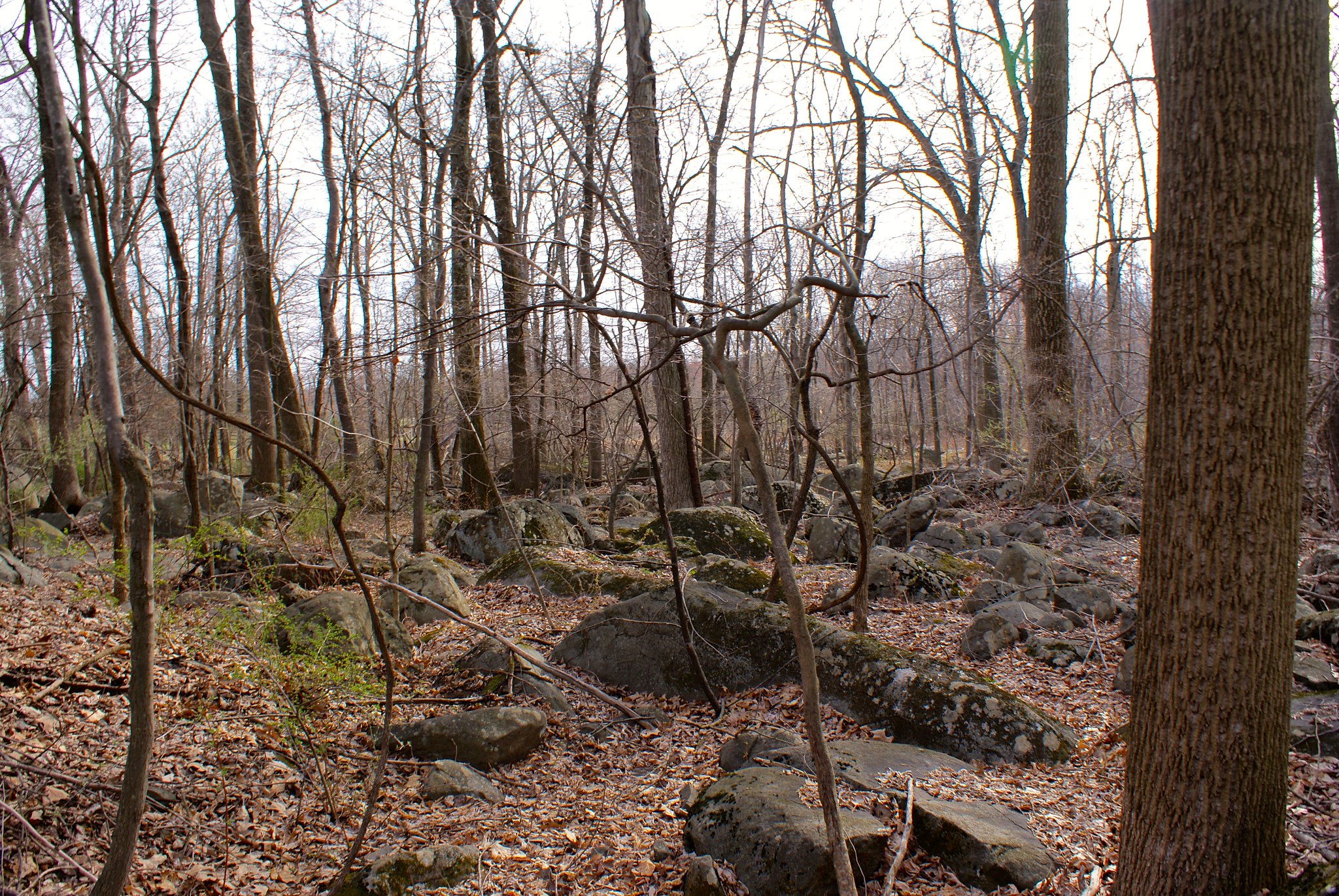
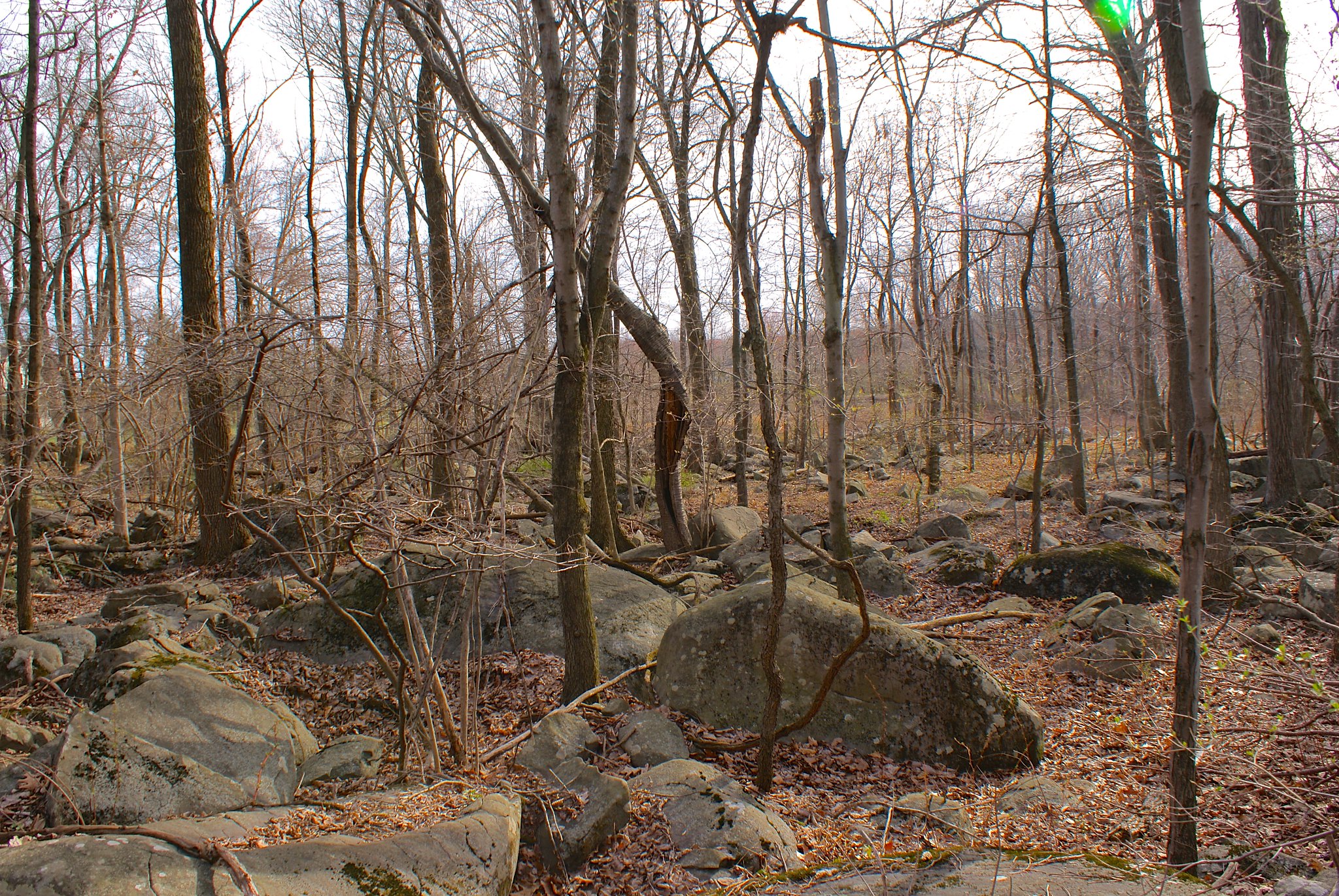
Further to the north east the boulders get thick. Really thick. You could walk a quarter mile just jumping from boulder to boulder without ever touching the ground.

Some of the boulders are REALLY big:

And the boulder field just goes on and on and on…

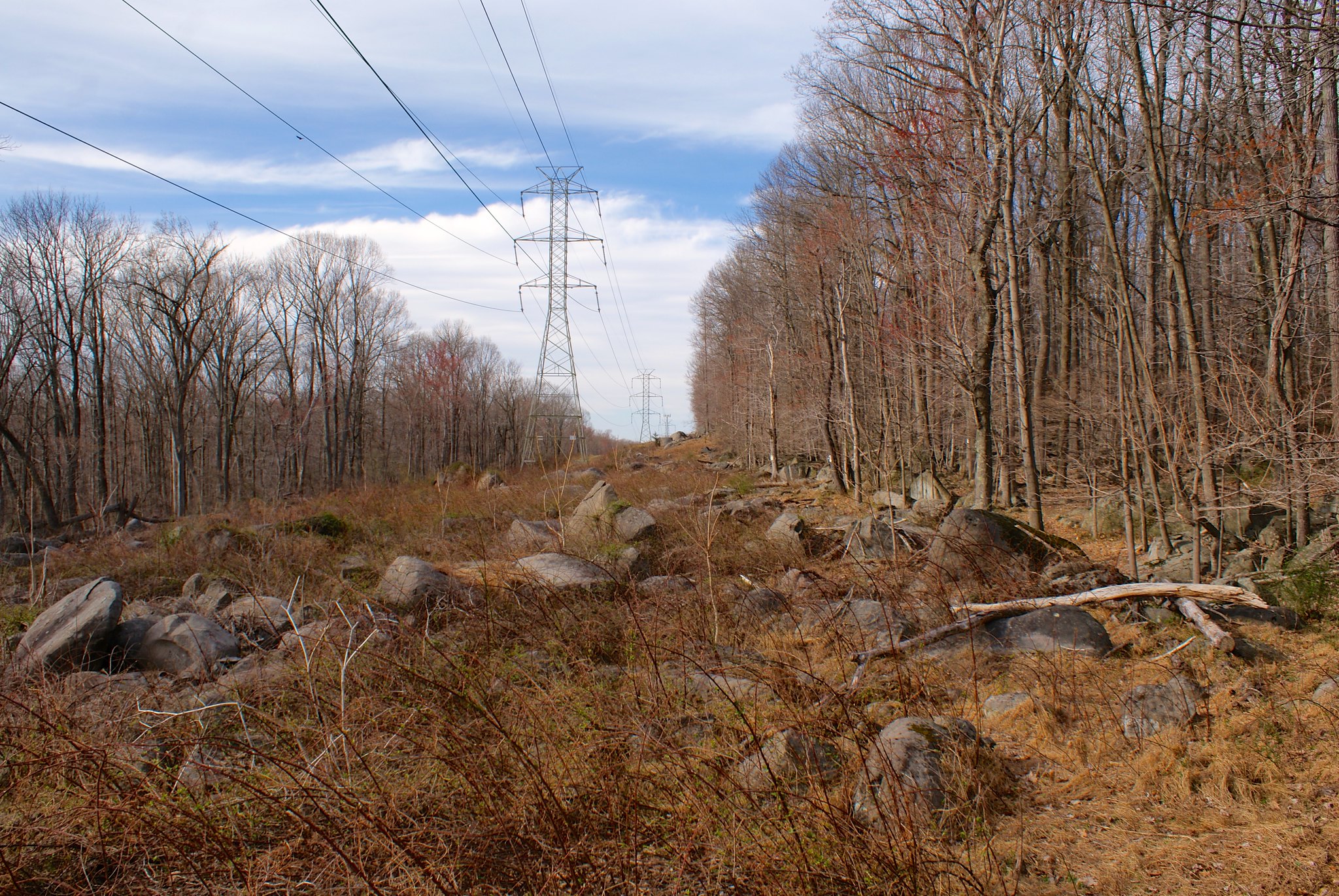
Powerline easement
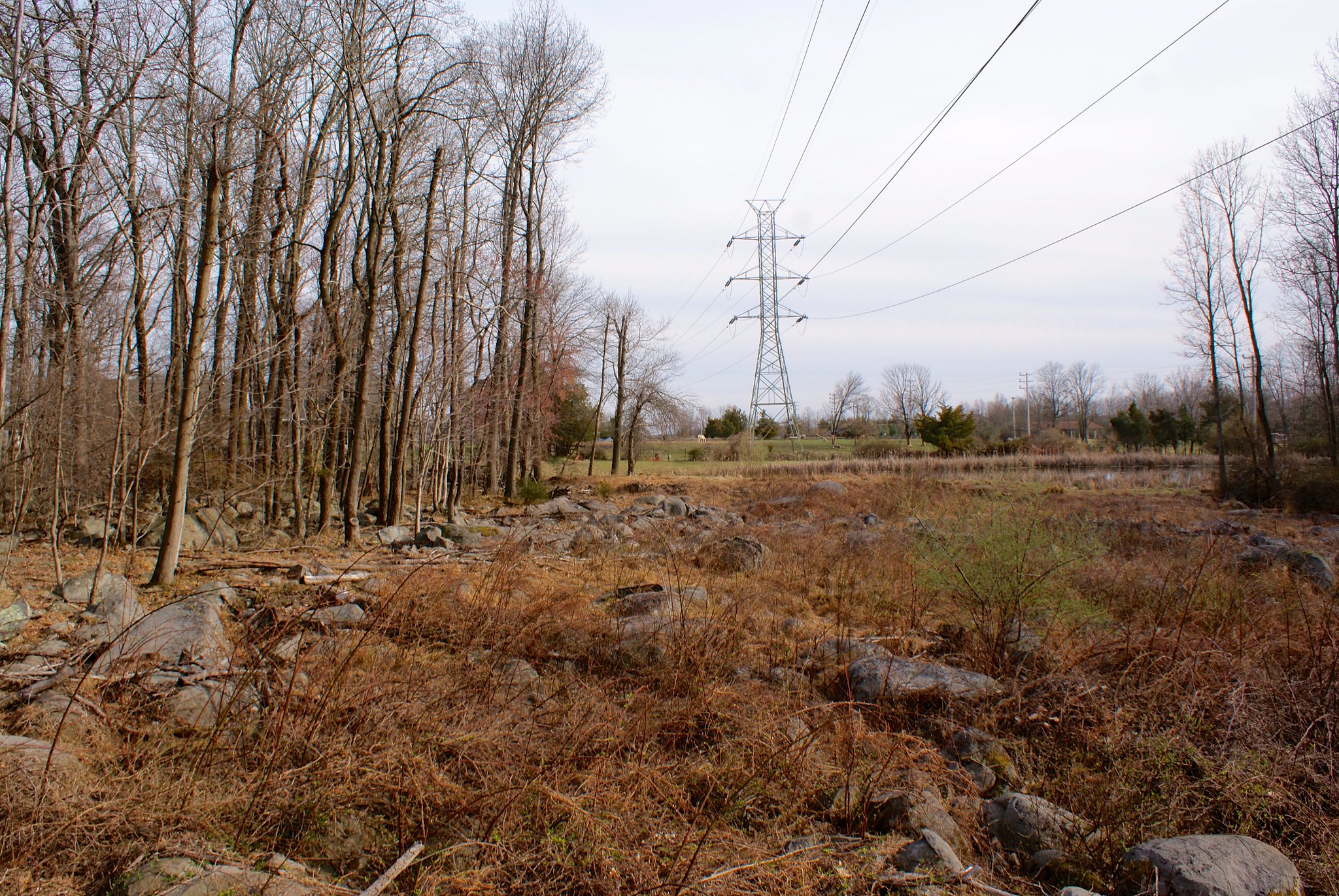
Eventually you come out to the power line easement. You can see more slopes and yet more boulders. Construction along here is going to a noisy, messy affair.

A view from the easement towards the horse farm which the route now misses. The small structure you see to the right in the picture behind the trees is the picnic area for Hewitt Park. So even though the pipeline is further from the park it still comes very close and it’s still well within the blast zone.

Other quarry holes
Perhaps the coolest one I found was this one:

What makes it so cool is the chisel marks along the top of rock on the left. Here’s a closeup:

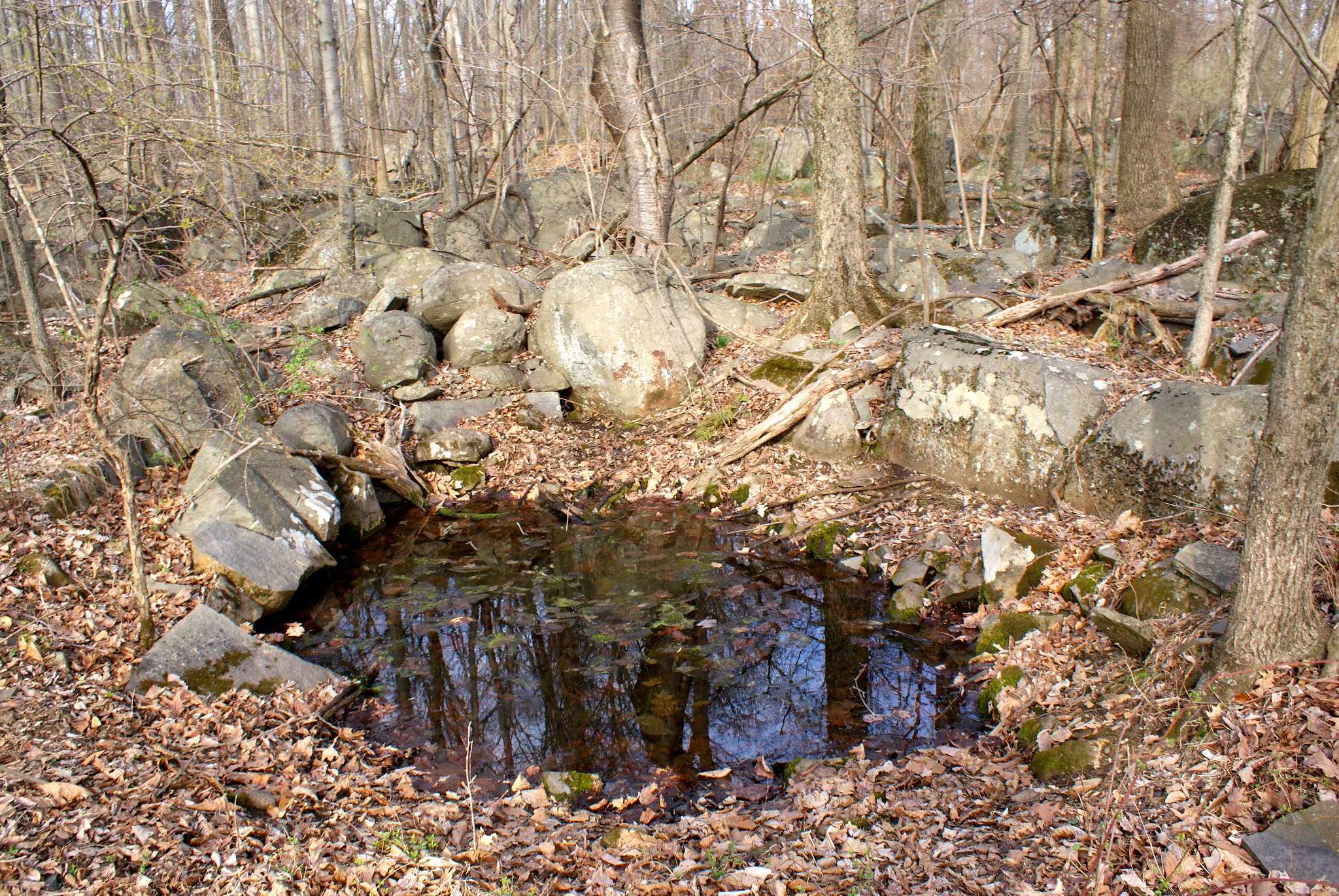
Yet another hole I stumbled on. I’ve been told these holes also serve as vernal pools and they’re the reason why we have so many salamanders and some other species in the area. Vernal pools are specially protected for the unique habitats they provide:

Some cracked boulders next to one of the pools.

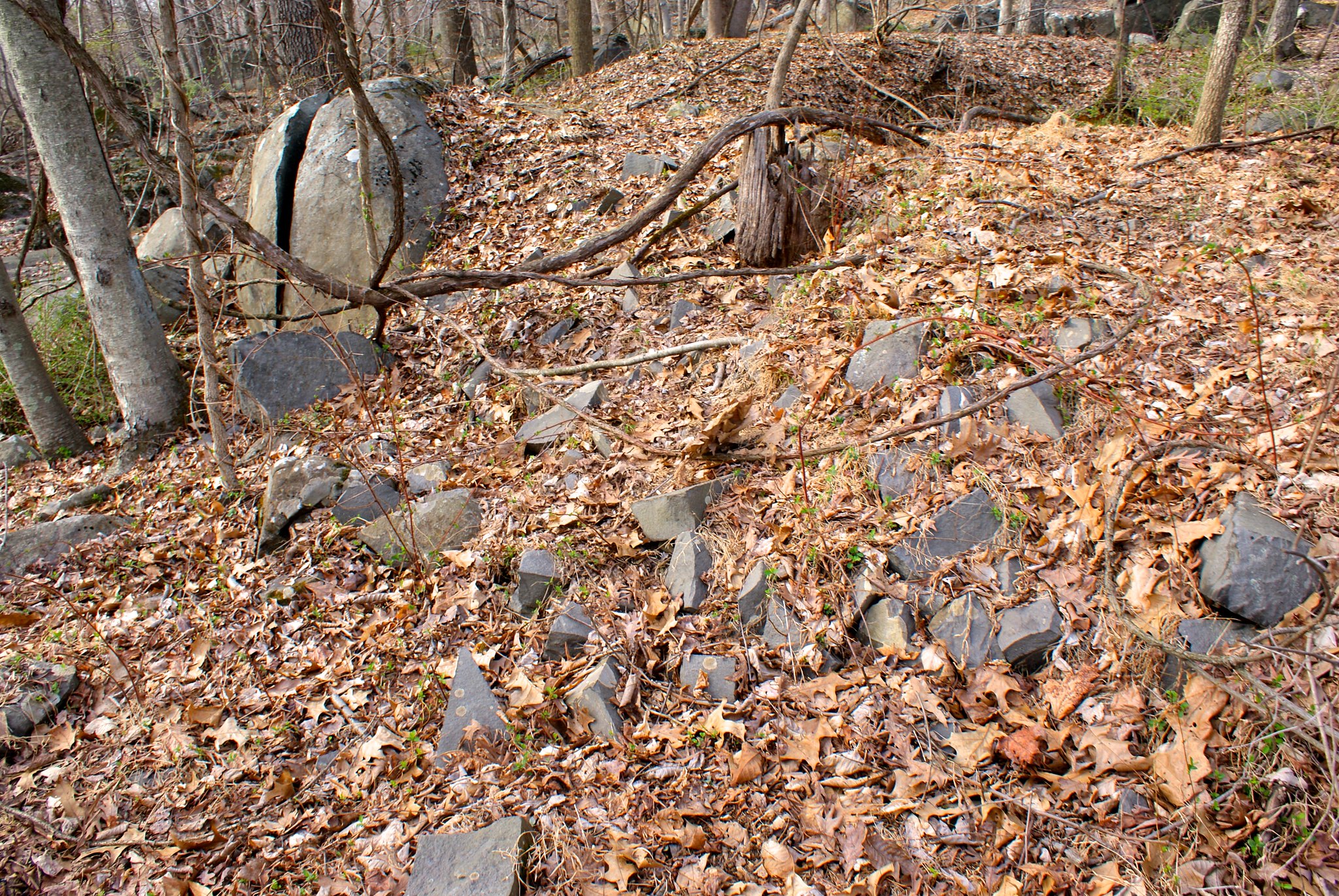
Tailings from the big hole. In the background to the left is a big boulder cracked down the middle like an egg:

PennEast meeting at Razzberry’s in Frenchtown, NJ – Part 2

Part 1 of this series focused mostly on the pre-meeting portion of the event. That was where people talked one-on-one with various PennEast reps about their concerns and issues.

For the rest of the meeting we all sat at our tables while PennEast gave their pitch, with many, many questions intervening.

A High School Student humbles PennEast
One questioner that blew me away entirely was Alexandra Switzler. In total her family had three generations represented at the meeting – herself, a high school student (!), her mom Angele, and her grandmother Vaughana. Alexandra spoke near the end of the meeting but she absolutely floored the entire assembly.

The words by themselves are strong enough:

I don’t give a damn about the money. This is my family. Yeah we’re losing 2/3 of our property value. I can understand how it’s horrible. But you’re coming in here with construction, you’re coming in here with all these horrible things, and putting my family in danger. And you’re expecting me to be OK with that because of money?

I’m young. I’m young and I understand I’m just a high school student right now. But this wrong. And this unity in…you can come in here with your fancy dinners, and you can come in here with your cheap coffee, and you can give us much coconut milk as you want. But that’s not going to change any of the unity we have here. Because this is our home.

But the video showing how emotional she was really demonstrates her impact on the room even better:

People are aware of the process now and not going to be tricked by PennEast’s banter

Alissa Harris asked at the start of the meeting how many people had NOT been to a Penn East presentation or scoping session. Only one person held up their hand. Everyone else in the room had by now had extensive contact with PennEast and FERC and done their research. You could see Alissa was very unhappy to have only 1 mark in the crowd to pitch to.

PennEast reps are either not aware of the facts, or deliberately deceitful
They started the formal session with their presentation but it was the same old presentation they’ve given many times before. Early into it when they kept talking about NJ and PA I raised my hand. I asked both representatives (Alissa and Mike), “Can you comment on the proposed MARC II pipeline from Crestwood Partners? They issued a press release that said they would be connecting the MARC II to PennEast to send gas to New England”.

This resulted in vehement denial by both PennEast representations. The look of shock and fury on both faces was obvious. Alissa said “Absolutely not!”. Mike shook his head and said “Not true, not true”. When I pressed him he said “That’s your opinion, not a fact”. When I tried to press them further Patricia very quickly said “We have a lot of ground to cover let’s move on”.

This tactic was used several times during the meeting by Alissa to get past questions they didn’t want to answer. Many times she rushed into the “next topic” to shut people up.

By the way, the aforementioned information is available in this press release:

http://www.stagecoachstorage.com/ExternalFiles/SitesIP/stagecoach/notices/MARCIINon-BindingOpenSeasonPosting.pdf

The document states:

“The MARC II Pipeline will be a new 30-mile, 30” pipeline connecting the CNYOG MARC I Pipeline with the PennEast Pipeline and Transco’s Leidy Line. MARC II will connect the abundant supplies of natural gas directly connected to the existing CNYOG system with major regional end-user markets downstream of existing transportation bottlenecks, providing reliable, cost-competitive supplies of natural gas to consumers in the Mid-Atlantic and New England markets“.

The Purpose and Need is “our member companies are willing to buy gas from ourselves”

Mike from PennEast described the pipeline “purpose and need” as a “chicken and egg” process. How do you build a pipeline without gauging interest? And how can you gauge interest without having a pipeline to sell space on? They say to get around that they do a non-binding “Open Season” to gauge interest. If they get enough interest then they have justification for the pipeline. They make it very clear that to their eyes if they deliver on the “Open Season” promises then they have all the justification they need.

The problem of course is that the Open Season “Buyers” are mostly their other pipeline “midstream” partners. They’re justifying the pipeline by saying they’ll sell the gas to..themselves.

Rush, rush, rush and get the damn thing in the ground as fast as you can
Mike from PennEast mentioned that construction times run from April 1st to late October. They’re constrained to those months due to migratory species migration times. Most likely they also can’t dig effectively when the ground is frozen. The pipeline will be built in 4 or 5 concurrent “sprints” according to him- that is, they will be building five sections at once simultaneously. In addition the major river horizontal drilling will be done independently as well (Delaware, Lehigh, Susquehana). Their projected construction time is 7 months – exactly April 1st to late October. There was no mention of what would happen if they were late. If they hit delays do you think PennEast will wait 5 months for the next season to open up? Or do you think they’ll speed things up even more to hit the end of October Deadline?

Angele makes an impact
Angele Switlzler is well known to me. Or at least her writing is. She posts many comments to the FERC eLibrary as “Emma Switzler” (she’s got a lot of names!). She also is part of the three generations present at the meeting, her self, her daughter Alexandra mentioned above, and her mom Vaughana. Angele had a number things to say to PennEast that they did not receive very well.

I am concerned about safety. Recently the millennium pipeline, that has only been in service since 2008 had a leak, a 42 inch pipeline, the leak was only discovered because of bubbling in the creek. It didn’t become a major incident because the guy that discovered wasn’t smoking a cigarette. How many of us are going to feel really great about a backyard barbecue?

PennEast had no response to this. Later on she asked:

I am very scared about the arsenic that might be released into our wells. You say not to worry, but we have a famous geologist that predicts it is possible. When you have a state like California that we are going to need to help out because they support our food, and yet you guys are putting at risk our water!

What she’s referring to above is a Princeton University professor who wrote several detailed presentations to the FERC outlining the arsenic problem in Northern Hunterdon County, and how the pipeline construction could release a highly toxic version of arsenic into people’s drinking wells. PennEast assures us that this won’t be a problem – and if it is they’ll just keep getting us water somehow to “mitigate” any issues.

Finally, later in the meeting after several people had talked in very reasoned tones and insisted that PennEast people were just doing their jobs, and maybe disruptions were bad, Angele gave us her own take on the situation:

In what culture is it appropriate for victims to respond to their pillagers and marauders, the people who are going to leave them with a bomb on their property, politeness is not an appropriate response. You are classifying my family and my kids as second class citizens because you will be too cheap to put in the maximum thickness of pipe because your companies have done a cost benefit analysis that decides it is better to pay off our families if we are killed, if we have any family left than give us the safest pipeline possible.

At yet another exchange with PennEast, PennEast Mike offered her a chance to tour a pipeline route. He said he’d be happy to show her an existing pipeline that had been place for a couple of years. Alissa started talking about contacting people to get permission, but at the end of the exchange when it was somewhat loud Mike muttered “we own the right of way, we don’t have to ask anyone permission” while shaking his head. I don’t think many people heard him but he basically was offering guided tours on people’s land without even asking them or warning them first.

Hopefully they will get permission anyway though, and Angele has indicated she will take him on the tour if it’s real. If nothing else she can interview people who have endured pipeline construction and get an insiders take on what the construction is really like and how they deal with all the issues.

No dirt is removed from the site
When discussing restoration a gentleman in the audience asked “What happens to all of the displaced dirt from where the pipeline is placed. It’s 3’ wide, where does it go?”. Jeff England from PennEast replied “No soils is removed. It’s all compacted in place”. When asked for clarification around wetlands he said “We don’t compact there, instead the dirt is feathered into larger area”. Since the pipeline has to be at least three feet below the surface this means they’re distributing dirt from 3′ below the surface back up at the surface again. This dovetails with things I’ve heard about the topsoil never being the same after pipeline construction and yields plummeting.

PennEast reps get agitated

Around this point Patricia repeatedly got flustered and angry at questions and started cutting people off regularly. She clearly wanted to just give a nice clean presentation to a bunch of country hicks he didn’t know any better and probably still have manure between her toes. She obviously hated how informed the audience was and took it out on us on several occasions.

Deceptive pictures used to mislead the public

At one point in the presentation they were showing how effective restoration was with a series of pictures of pipeline routes several years after construction. Or at least that’s what they claimed. A gentleman raised his hand and said to go back a few slides. After a bit they found the correct slide. He shouted “How old is that picture?”. Mike said he didn’t know. The man then asked, “How big is that cut? Does that look like 50’ to you?”. Someone replied “No, maybe 25 if that.”. The man then asked “What size pipeline was put in there?” Mike replied he didn’t know but it may have been a smaller one. The flustered man shouted “Why are you showing us this picture? This is nothing like the requirements for a 36” pipeline!”.

There was much discussion back and forth and at the end the PennEast reps were abashed at being called out on such an obviously deception. In selling their 3′ wide pipeline it looks like they tried to show us the impact of a 16″ or 12″ pipeline and just pretend it was a 3 footer.

How wide is the construction zone?

During the above exchange Patricia said the construction easement would be 125’ – a contradiction to the official 100’ cited in their documentation. Was this an accidental slip by her? I’ve heard others say 125’ is more realistic.

What the heck is a Woodlands Assessment?
A man said “My lands are Woodlands Assessed. It’s my living.” Another man declared he had one too, and described how this impacted his taxes on a yearly basis – an $8,000 bill vs. a $30,000. PennEast didn’t understand his question. They had never heard of Woodlands Assessed. The man pushed on how he would get paid by PennEast to compensate and they couldn’t answer.

Related to the above I asked the question, “Do you ever make payments in perpetuity for issues that are variable over time, or do you only do one-time payments”. For example in this case taxes can vary year to year depending on property values and changes in law.

Jeff England responded that they only do one-time payments. So you’re basically guaranteed to get an unfair payout unless property values never change and neither do any laws.

PennEast can’t see the 800 pound gorilla in the room

I asked the question “Why don’t we address the 800 pound gorilla in the room: eminent domain. So far in this presentation there’s been on mention whatsoever of eminent domain at all. Can you address that now?”. Mike from PennEast hemmed and hawed and refused to give any answer. He did say “We don’t do eminent domain, the government does”. He was called out on that evasion by several people. I finally said “If you don’t want to discuss eminent domain that’s OK. Just say so.” Mike responded “We feel that this is not the proper time in the process to discuss eminent domain”. This was the most important thing on people’s minds at the meeting and they flat out refused to even mention it.

An appeal to reason
An extraordinarily eloquent and soft spoken man stood up and explained that he understood that the PennEast employees were just people doing their job. There was no ill will between them as people. But every town in Hunterdon county has voted a resolution against this pipeline. He said, “Perhaps you should recognize that we have irreconcilable differences. We will never accept what you’re asking of us”.

This was Vince DiBianca, I contacted him today and he expanded on his statements and his recollections of what he said:

This pipeline is nonsensical in almost every aspect. It damages our fragile planet’s Eco-system. We do not have the demand for the supply. The final product is being “exported” and offers little value to the communities being disrupted. It is transporting fracked gas which is highly undesirable. It is disrupting the most peaceful, picturesque communities in our state. The vast majority of the citizens are against it. Employment opportunities are grossly overstated and short-term. It would be better all-around if we created more permanent jobs while developing needed clean & renewable energy sources. It is dangerous to both the water and soil.

Not the least of which is it is proposed to come straight down my driveway on my property which houses my family, many animals and 1775 buildings. The construction process will be horrendous for my family, the forest will be ransacked and the animals (alpaca, llama, horses that I have on my property) dislodged . Property value will be decreased.

There are more reasons. Suffice it to say, our ommunity is absolutely resolute in its opposition to this pipeline project. We will continue to band together to fight this in every way possible including whatever legal means are necessary. We’ve already contacted eminent domain lawyers for their advice.

This is just not right. How much more loudly can people speak and stand up for their rights? Who’s listening?

Access roads not part of scoping

There was a discussion about construction access roads described by Jeff England. He said as a general rule if there is a “mile plus” between existing access points they will need to build temporary construction access roads. This is done “for the safety of the workers so they can get out of an area if a situation arises”. This was a somewhat accidental admission that pipeline construction is dangerous to all parties involved, including the people doing the construction.

They also mentioned that all of these sites are determined after the scoping period closes so the public has zero official say in it.

An eloquent, moving lesson in history and the rights of the people in America
I hope someone recorded this woman. She was an older woman, frail of stature by with a vibrant air about her, who made what may have been the most eloquent speech of the night. She spoke of the landowners being forced to be part of PennEast’s solution, when none of them ever wanted to be involved with PennEast’s problems to start with. She spoke of eminent domain and the way it’s been perverted over the years. She spoke of the Constitution and how eminent domain is such a clear violation of its spirit and letter. She finished discussing how negotiations always must involve trust on some level or they will never work. Given the way PennEast has treated landowners how could they ever believe that trust on any level could be achieved?

This one was one of several speeches that visibly rocked PennEast representatives back on their heels. They’re not all drones and not all evil energy executives. Some of them are doing this just as a job, and you could see the impact some of these stories and narratives were having on them. I doubt any one story would make a difference to them but the cumulative impact on them must be real. I think it shocks the more honest PennEast employees to their bones when they hear people of this caliber criticizing the very core of their existence and what they’re doing to people in the way of their plans.

Why oh why does it have to be so big?

A man stated that several construction projects of similar scope were done on much smaller easements. They asked why PennEast’s ROW has to be so much larger than those. He cited recent permanent right of ways that were down to almost 25′ for an equivalently sized pipe. PennEast predictably had no answers.

We’ve been here before

A woman stated that we as a community are not looking at pipeline issues for the first time. The region has extensive experiences with pipeline proposals and construction and can extrapolate future pipeline issues from what they’ve personally witnessed in the past. They mentioned Leidy and Pilgrim pipeline as two examples where the pipeline had been destabilized in a very short time and that PennEast hasn’t shown any evidence that their construction methods are any better. She concluded that PennEast’s constant assurances don’t match the hard-won experiences we’ve had with other pipeline companies.

Well, one day we’ll actually secure the right away. We’re working on that…
She said that she did not believe PennEast’s assertions that they had secured a right of way from JCP&L, and so she called up the JCP&L manager in charge of their easements. The land management manager there said they had never spoken to PennEast. She turned to Mike and said “Mike, I’ll tell you right now. You’re a liar”. Mike hemmed and hawed (as he is wont to do) and admitted that maybe he had slipped up a bit and that they were “still negotiating” with the power company on the easement. So even though they call this their “preferred alternate route” they still don’t even have a guarantee they can colocate like they claim they can.

The eldest Switzler family, Vaughana, spoke several times. On one occasion she said “You’re going to ruin a big part of my life here….You invite me here and I can’t even raise my voice to defend my life and my family’s lives”.

On the latter part she was referring to her run-in with the state troopers at the event. She had gotten very emotional and started yelling at the PennEast reps. A state trooper took her aside and told her to keep it civil. She understandably was not happy with this – as she implies, this isn’t a Sunday social she’s at, she’s fighting for her family here.

In another part of the night she said:

I have had two real estate agents tell me that my property will be reduced by 1/3 in value and that value will never be restored, nobody wants to buy a farm with a pipeline on it. This is an investment for my family.

At another she spoke of the other members of her family not present. A number of them have severe health issues and PennEast is going to impact them severely. In particular she talked of her son.

My son had a traumatic brain injury from the 82nd airborne, defending people like you, and you are going to take away the only place he has peace, walking his dogs.

We know very little of New Jersey

In a rare candid interlude two of the PennEast reps admitted, “We know very little of New Jersey. It’s all new to us. We’ve never heard of these programs”. This happened after repeated questions about the Woodlands Assessment tax issue.

Both Alissa and Mike and Jeff England went into great detail about how they don’t know much of anything about the various laws and issues in our state. Pretty much everyone in the room was shaking their head with their mouth open. These people presume to build this massive pipeline in our state and they don’t know jack squat about anything.

What a great way to end a meeting “We haven’t a fracking clue what we’re doing here, but trust us anyway!”.

PennEast really is lousy at picking routes

Update: I have both the on-site archeologist’s contact info plus the Principle Investigator’s as well. The archeologist called the PI at their office and she was so excited by the finds she had to come down and take a look for herself! If you’d like to contact them please send me an email and I’ll give you their information:

thecostofthepipeline@gmail.com

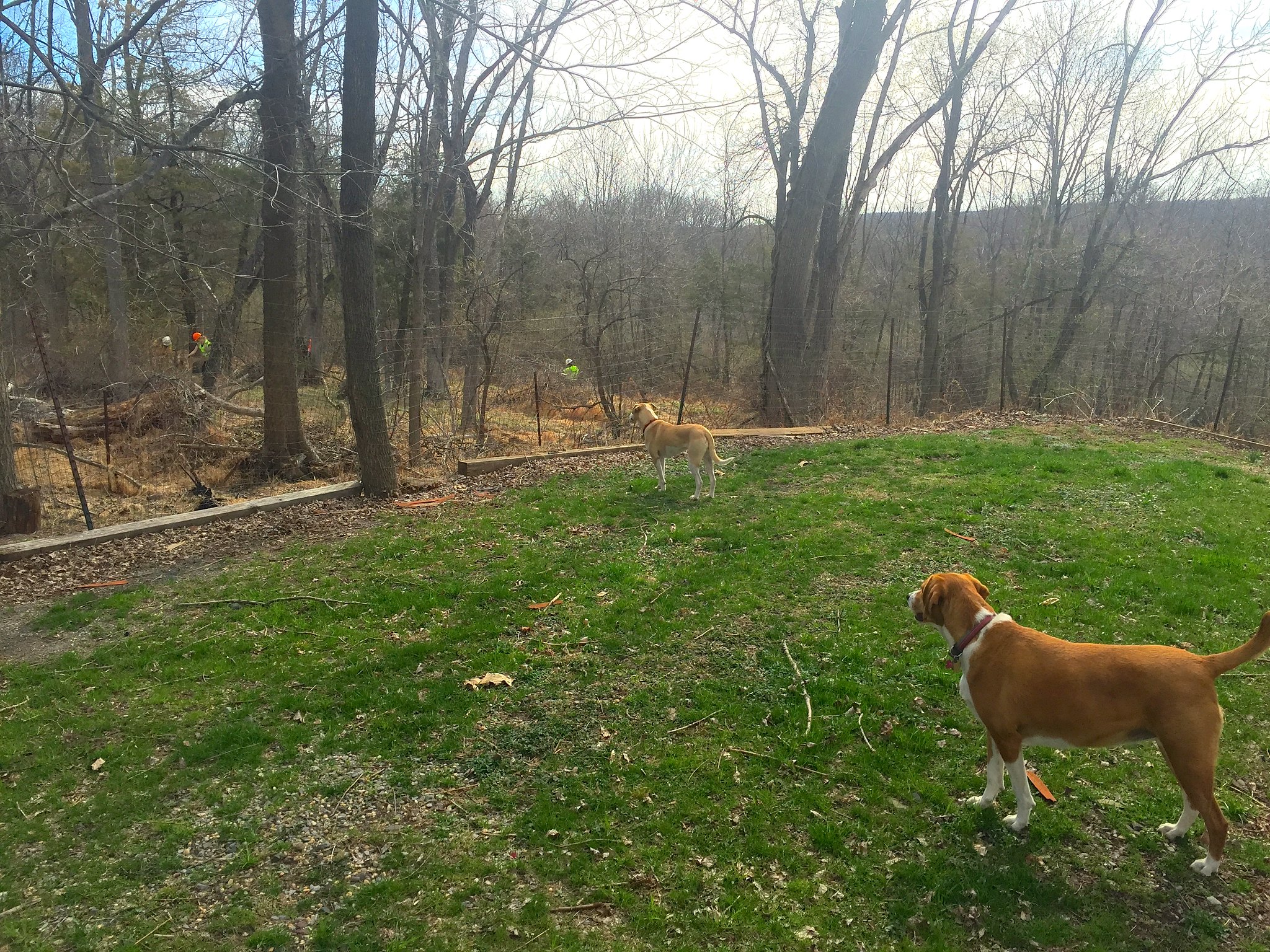
So I ended up having to work from home today because my dogs wouldn’t come in. Surveyors for the pipeline were surveying next door and my dogs kept running to-and-fro barking and generally going nuts. And they conveniently forgot all their “come when called” training, so I was stuck for it.

This turned out to be a blessing in disguise. I got a little bit worried when I saw they were surveying very close to my fence line:

Some people on Facebook were asking questions about who they might be exactly and where they were from so I took a stroll up our 275′ driveway to find out.

As it turns out the head of the survey group was a very pleasant and informative guy. The team worked for URS and was doing an archeological and historical survey on the route. This is not part of the main pipeline survey team but instead is what PennEast calls “Red Tape” surveys – the pain in the ass (to them) regulations they must abide by when planning the route.

He indicated that PennEast generally hates them because they constantly find problems with the route. “Up in Reigelsville PA we found right on top of the route was an old tavern from the 1700s. The roof was intact but the windows were all gone. But the root cellar was 100% intact, I’ve never seen that before. It’s of incredible historical value to find intact features like that. We immediately had PennEast move the route away from there”.

We started talking about my area and he broke out into a huge grin. He looked absolutely gleeful and said “We have some bad days. Some days you’re in a swamp up to you knees and you know you’re not going to find anything. But today – today is a good day! We’ve found 50 rock quarries back there [west of Hewitt Road] dating back to the 1700s. And that’s not all. One of your neighbors mentioned a cobble stone road. That’s incredibly rare, we’ve never found an intact one before. We’re trying to find it now”.

As he said this a woman from the survey team came over from the woods. “We found it!”.

If anything the URS manager looked even more excited. “You found the road?”.

“Yeah,” she replied. “You can’t see it for all the trees but one of our guys is standing right on it. It’s not very far from here at all!”.

He then gave instructions to clear off about 5 meters of it for further study.

“An intact cobblestone road from the 1700s, that’s something. There are researchers who are going to be interested in this”.

I started chatting with him some more and mentioned that the PennEast people told me they just pick the route using Google Earth and finding the straightest lines they can. He laughed and shook his head and basically went into great detail about how dumb the route planning is. He said he has mixed feelings about the job, he clearly didn’t like helping pipeline companies in any way but at the same time he’s is helping out tremendously in saving areas of historical value from construction. We started talking about the construction process, and he said “Yeah, if they took the route through here all of the features we’re talking about would be completely obliterated”.

He continued, “And you know, we’re seeing the closer we get to Philadelphia the more stuff we’re finding. It’s simply incredible the things we’re seeing in the past few days!”.

It’s not clear what the end result of this will be. “Sometimes they move the route, other times they don’t”. When they don’t we at least have the power to pause the whole process. We then go in try to uncover and save whatever we can, and most importantly we document exactly where in the soil we find it. More than the item itself the exact location is extremely important to fix it’s historical significance”.

We can only hope that URS finds more and more of these sites and puts yet another kink in PennEast’s plans! This pipeline is not a “done deal” and this is just one of many obstacles PennEast is going to have to overcome to get their way. They’ve got a mountain to climb and we’re all helping to build it higher and higher every day. Keep it up everyone!

Last night’s PennEast meeting at Razzberry’s in Frenchtown, NJ – Part 1

This is part 1 of my posting about last night’s informational meeting for landowners put on by PennEast at Razzberry’s in Frenchtown, NJ. Part 2 will cover events later in the evening.

There were two state trooper cars there when I arrived. Apparently there were peaceful protests at the lunch session. Normally that wouldn’t cause issues but apparently the owner of Razzberry’s took issue with them, freaked out a bit and called the troopers in. I heard the issue was straightened out without significant issue, people ensured they were off her property when protesting and then kept it up.

For the evening session there were no protestors but the cops were still there just in case.

Prior to the meeting there was a chance for individual landowners to consult with the land management people. This involved sitting a computer and seeing how the route impacted their property. Unfortunately the primary computers setup for this showed nothing but blurry blobs along the route with no details, so it was difficult for them to figure out any features along the route. I began asking them why the most recent re-route at the end of March changed the routing so that the pipeline was now wrapping around two sides of my property.

The woman at the computer didn’t know, and called over another more knowledgeable person to help. He didn’t know either. I was then shuttled over to another “special” computer with a better setup with a third “expert” and a forth person working the computer

As an aside – the “special”-ness of the computer is that it had the full route info loaded on Google Earth. Why they didn’t do that on all of them? Because the Google Earth route files are jam packed with tons of information not available to the public, including the exact JCP&L easement areas as compared to the pipeline survey corridor. I caught onto this pretty quickly and stared long and hard at the power line easement vs. the pipeline route as they were showing me features. What it showed in the southern part of West Amwell and the Baldpate areas was that the pipeline route is very clearly not going along the existing cleared areas but will require much more cutting to widen the area. I asked expert #3 about and he responded affirmatively. “Yeah, we can’t put the pipeline right under the electrical towers so we are going to have to put the pipeline adjacent to them”. I asked him if it would fit within the current cut areas, and he responded “No. We’re trying to minimize it but we are going to have to cut a wider path in many areas to accommodate construction”.

Back to my question about the re-routing – the “special” computer apparently had a terrible internet connection and could only show fuzzy blobs like the other ones. Finally the shuttled me to a third computer system manned by a fifth person operating it. The original 2nd person I talked to was now consulting with the 3rd, and indicated “I’ll bet there’s some physical feature here that’s the reason”. I started explaining everything in the shot and they looked baffled. They called over a 6th person who was the “true expert on all things routing”. He shook his head and said “I have no idea why that re-route was done”.

In the end the 1st person took down my name and phone number, and the 3rd person then promised they would research the issue and get back to me immediately. He apologized about 15 times why saying all of this.

While going through this process I over heard other people talking to the land management folks. One said “I’m sorry, we don’t know much at all about the route. It’s all just done via aerial imagery in programs like Google Earth. Then in this process we find out from the public where we went wrong”.

The PennEast staff made it abundantly clear throughout the night that they knew almost nothing about important features along the route, and specifically said that NJ was “new to them” and they were “still learning”.

While the team of 6 were debating the issue around my property, I asked them other questions along the route near me as well. I asked expert #3, “Do you guys know you have the pipeline going less than 200 feet from Lambertville’s water supply, the Swan Creek Reservoir?”. He replied, “Yes, we’re aware of that. But we have a variety of techniques to minimize the impact and keep everything safe”.

I shot back, “You do know this is very hard diabase rock right at the surface, right?”. He looked a bit sheepish and said, “Uh, yeah, that’s going to be tough”.

I asked about the C1 streams they’d be crossing, and he said that almost all of them would use the dry “damming” technique. He said horizontal drilling underneath features would only be do for full blown rivers like the Delaware and under major roadways. He gave a song and dance about why horizontal drilling wouldn’t be used more often, “Well that takes longer, and the longer we stay in an area the great the chance of, well, things going wrong”. In reality the reason, of course, is that it costs a lot more to horizontal drill. But it was worth hearing his explanation as his was the first slip of many that night – an admission that things can and do go wrong with pipeline construction. This also means that streams are going to be diverted during construction, which is not a good thing (and why horizontal drilling is preferred).

I mentioned that we live in a very rural area with few roads, and said that closing just a few could close off entire areas from being able to leave their houses. Expert #6 nodded his head when I mentioned this and gave expert #3 a knowing look which basically telegraphed “I told you this was going to be an issue”. He said that they would try to horizontal drill under “major” roads but didn’t seem able to indicate what constitutes a “major” road (somehow I doubt our little Hewitt Road qualifies).

Towards the end of this part of the meeting I heard a distance on the other side of the room. A woman was getting very emotional and was yelling at the PennEast representatives. The gist was that PennEast was stone walling her and putting her family at risk, including her five grandchildren, but putting them all within the blast zone. The State Troopers later took her aside and warned her to stay civil and not “disrupt” the meeting. They explained this was a private venue and they would remove her if she continued to be a nuisance.

I was a bit on the fence about this. On the one hand it made some sense. It was a private venue and the owner had already demonstrated that they were twitchy about any disruptions at all. But at the same time these meetings are a mandatory part of the FERC review process. PennEast has to do these as part of FERC regulations. So that put a different spin on it in my mind – given the emotionally charged topic, and given that this pipeline is being put in our properties against our will – I think some outbursts of emotion and outrage are appropriate and to be expected.

Part 2 will go into the next formal presentation part of the meeting. This part was a true tour de force by PennEast of deception, inaccuracies, and downright incompetence. PennEast called factual documented issues with their justification “opinions”. They refused outright to discuss eminent domain at all. They cut people off “in the interest of time” (as if you can rush something this vitally important to people affected by it). They were caught out showing misleading pictures of post-pipeline construction. They were shown to have never followed up on answers they had promised way back in February. They even admitted that NJ was “new to them” and that they had never heard of many of the programs and issues that the audience was bringing up. It was still a “learning process” – which is a disquieting thing to hear from people who claim to be “experts” at building pipelines.

In general the PennEast “leaders” were shown time and time again by the audience to be either surprisingly clueless or exceptionally deceptive (I suspect it’s a mix of both). At the same time the audience gave exceptionally clear testimony about issues, and at times gave incredibly moving accounts of the pipeline’s impact on them, their families, and in the community.