Swan Creek Reservoir Impacts Part II

I visited the vicinity of Swan Creek Reservoir again, this time by way of the Rock Hopper Trail.  This is an awesome trail that starts off Route 518, wends through the DEP lands to the north west of 518, goes right by the reservoir, and then hooks off toward Rock Road.
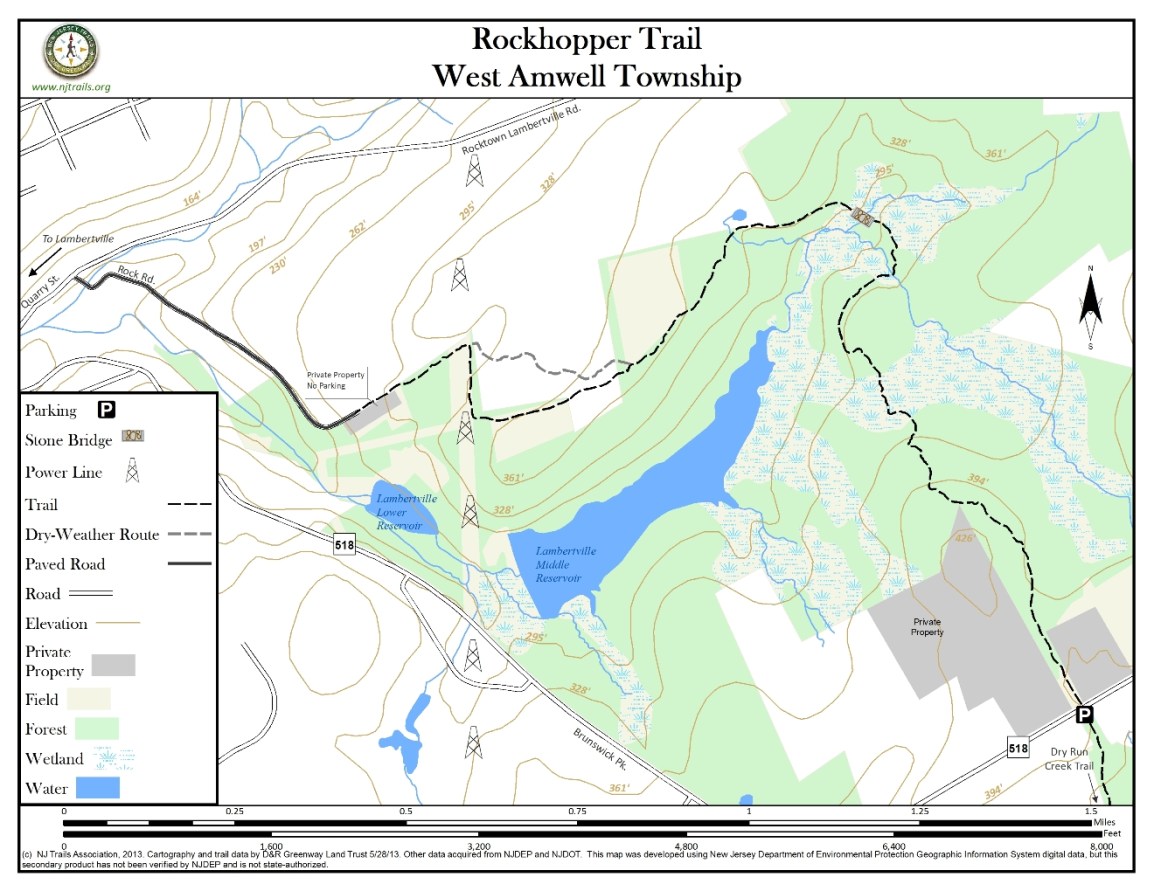
rockhopper2

You can read all about the Rock Hopper over at NJ Trails:

http://njtrails.org/trail/rockhopper-trail/

I highly recommend the hike, it’s around 4 miles round trip (if you don’t take a short cut like I did), and has highly varied terrain.  Many hikes get a little monotonous over time.  Not this one – it changes every few hundred yards.  You’ll see lots of very old hand quarried stone quarries, old stone walls, varying slopes and trees, a whole lot of amphibians and a small stone bridge that’s still standing.

The draw for those concerned about PennEast is that Rock Hopper goes right near the ridge where PennEast’s preferred route is proposed near the Reservoir.  And this is all open land, so you can explore at will.

 
Here’s a Map My Run snapshot of the trail.

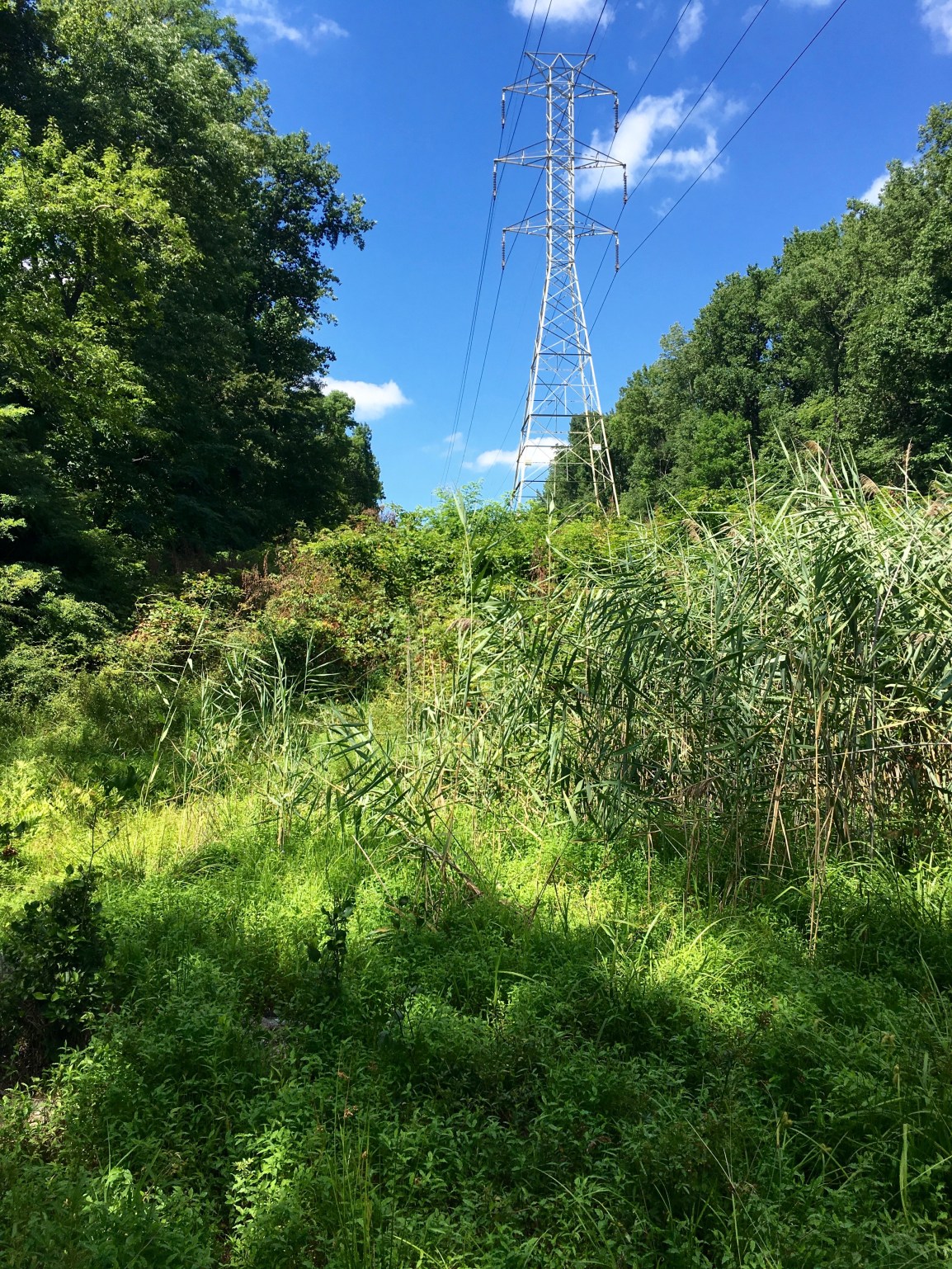
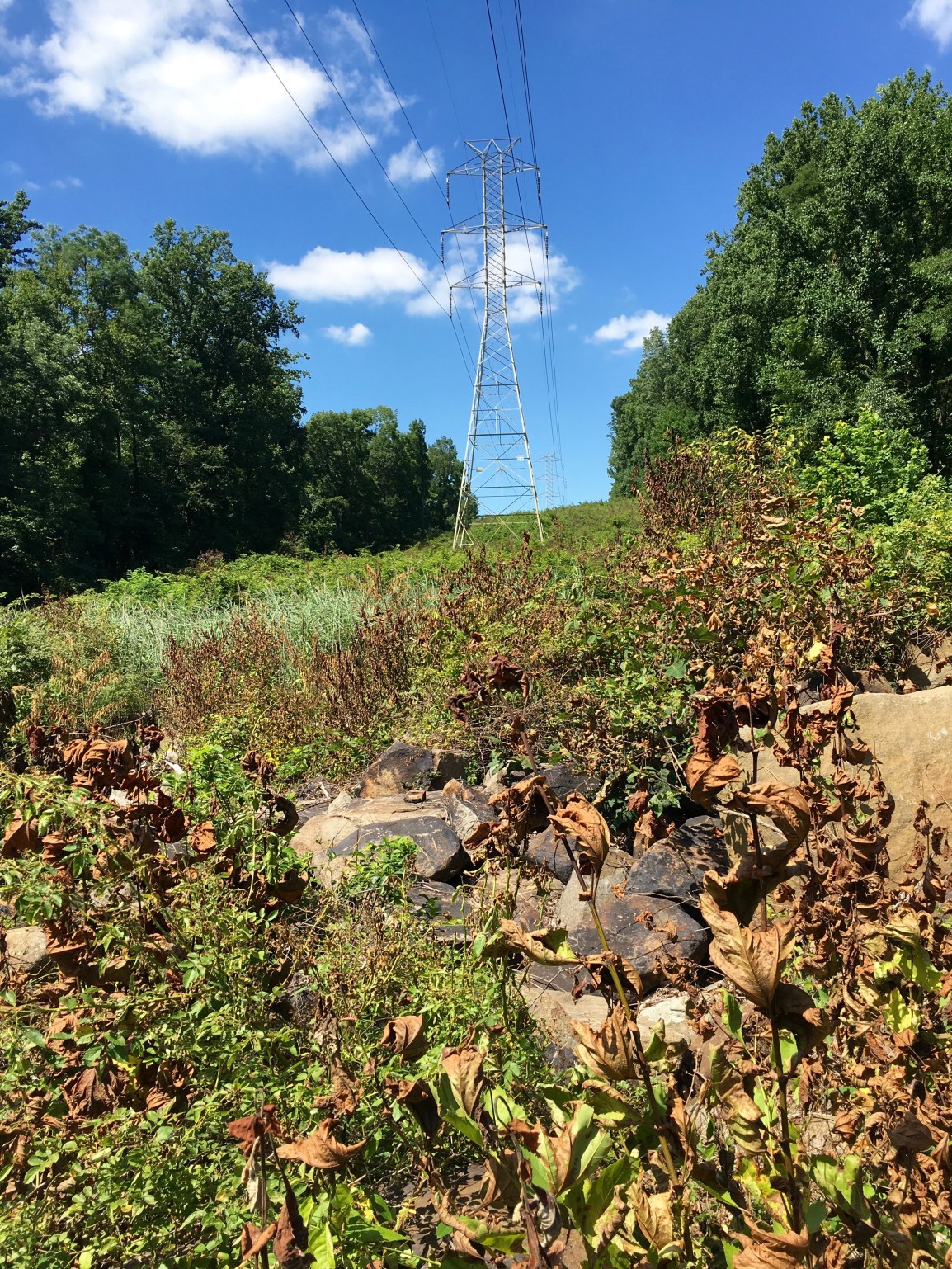
Here is near where the trail comes out into the power line cut. The pipeline is not going into the cut – it will be fully within the trees to right of this picture. So imagine this cut doubling in size.

Here is a view of the reservoir itself.

And the dam:
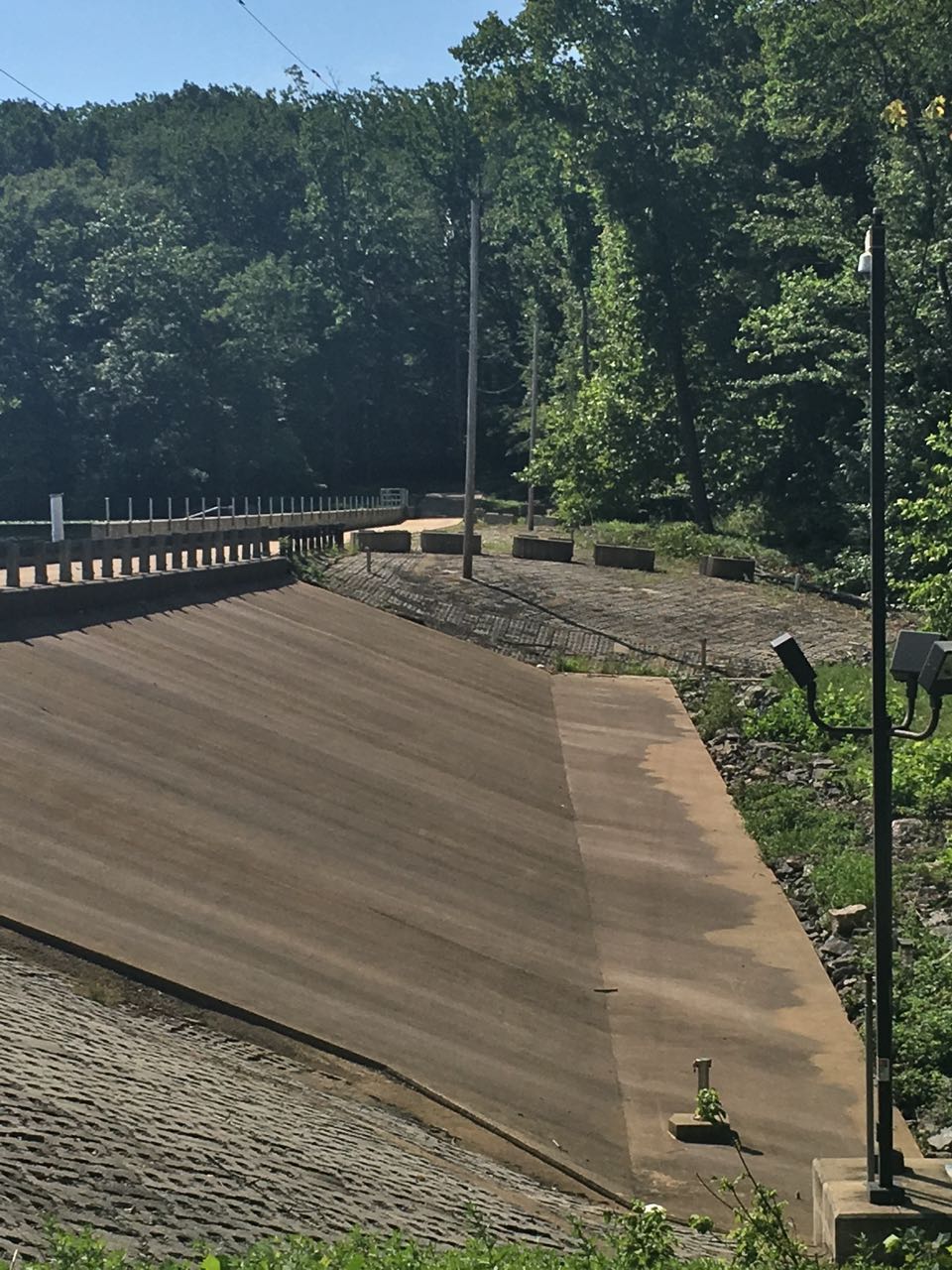
That damn is only 122 yards from the centerline of the pipeline. In an area where bedrock is right at the surface, so they’ll have to blast down to 7′-9′ to actually install the pipe.

As mentioned the construction will not be within the cut, but to the West of it instead. This is unfortunate not only because of the tree cover that will be cut down to the dirt, but also because it is going down the side of the slope instead of just straight down. This makes erosion issues far worse than they would otherwise be. So once again, imagine all those trees on the left of this picture being taken out for the pipeline cut in addition to what’s already been taken for the power lines.

To really bring home the fact that none of this is “co-location”, but is in fact a massive widening of the right of way, I went into the woods and showed my GPS relation to the pipeline, and then snapped a picture of that spot. Here’s one:
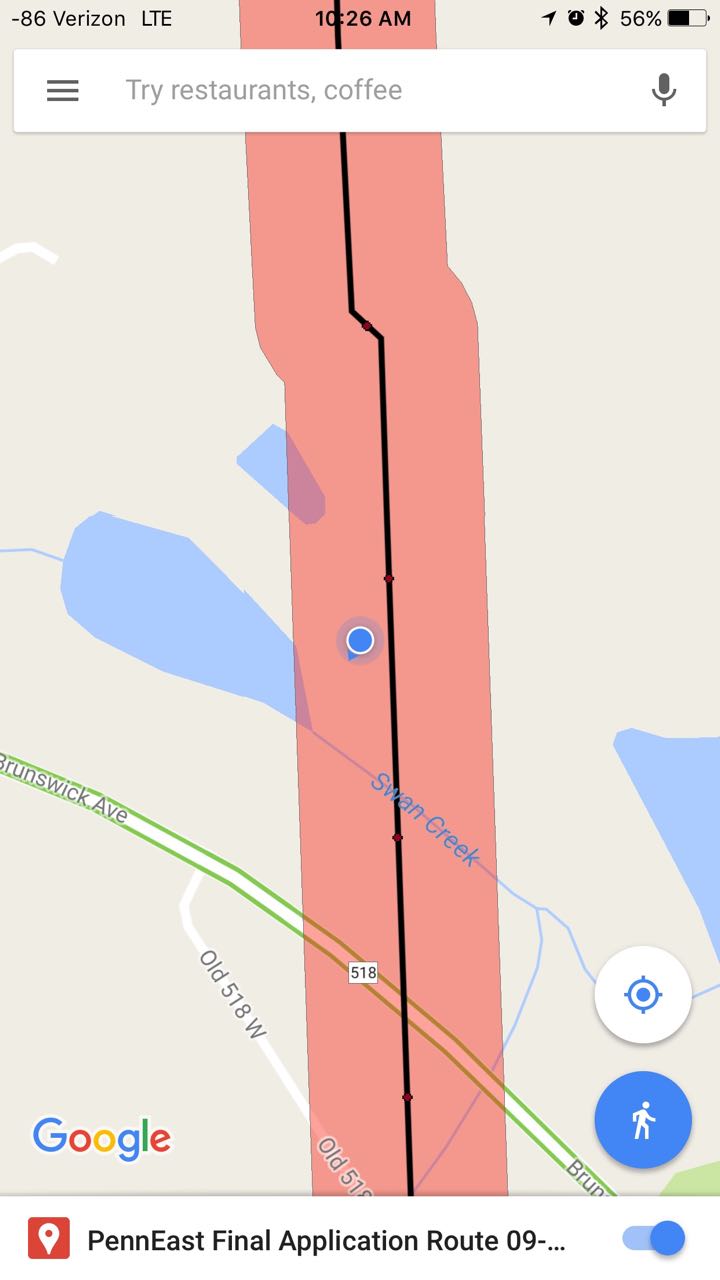
And here’s what’s at that location:

As you can see, that’s not co-located. That’s a green field route through old growth trees. The tree pictured above, along with countless others, will be taken out by construction.

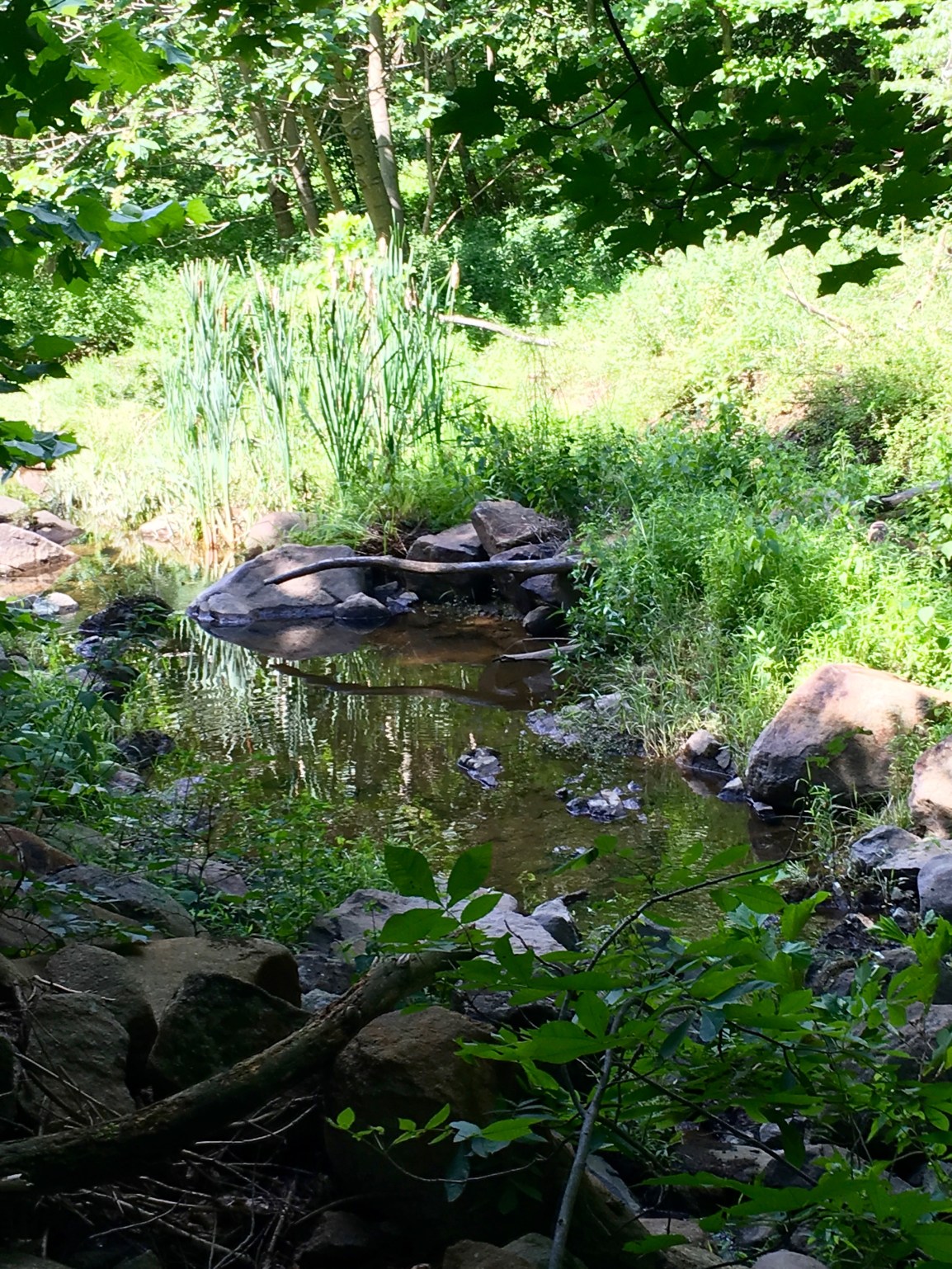
This little mini dam is in the same spot. I’m guessing this was man made going back well beyond 50 years. It won’t exist if PennEast is built. How are they going to mitigate this exactly?

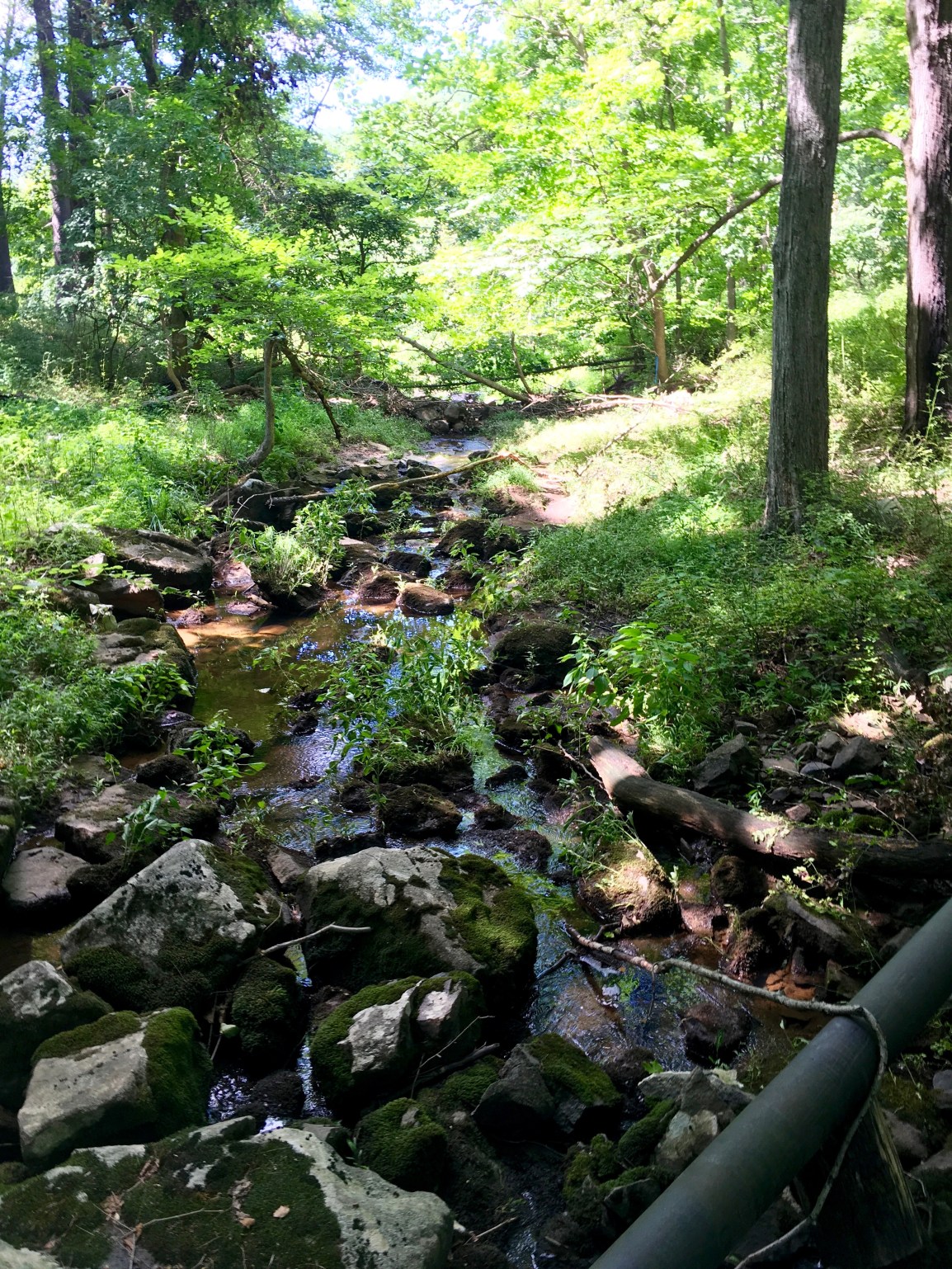
Here is another spot on top of the center line. It shows the impacts to the creek and surroundings.

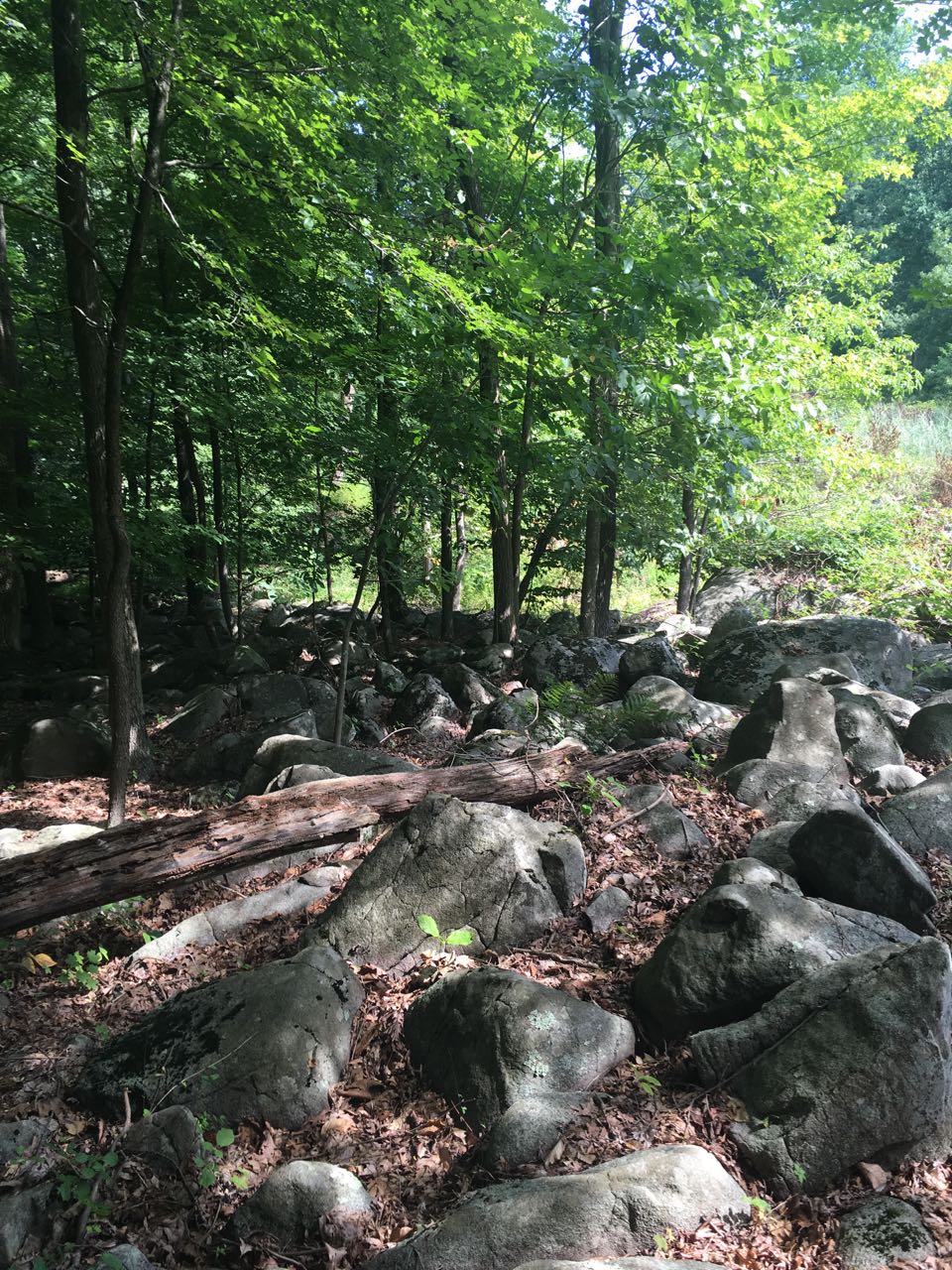
And lest you think they might get away with plain old digging in this area, here’s what the creek bed looks like. Yeah, that’s diabase bedrock. No way they’re getting through this without blasting.

All About the DEIS and Commenting On It

People are running around like their hair is on fire over the DEIS, and with good reason.  It’s thousands of pages long, there’s only about four weeks left in which to comment, everyone’s away on vacation, and the FERC site is about as reliable as a 1980 Ford Pinto.

And hey, no pressure, but we’re trying to get 10,000 comments on the docket.

To try to help out, in cooperation with the CAP groups we’ve repurposed the http://pipeinfo.org site to be DEIS Central.

HTTP://PIPEINFO.ORG

Click the LEARN HOW TO HELP link on the site and you’ll be brought over to the main DEIS workshop page.

The page will tell you:

  • How YOU can help!
  • WHY IT MATTERS.  Why do we care about this?
  • What we’re trying to achieve
  • Topics and boilerplate you should include to ensure your name is heard loud and clear
  • Detailed presentations for the OCD among us (I’m a founding partner of OCD-R-Us)
  • Instructions on filing electronically
  • Dates and locations of DEIS commenting work shops
  • Complete copies of the DEIS
  • Copies of several 3rd party documents that you should reference: the Delaware Riverkeeper’s suit against FERC involving PennEast, the Skipping Stone lack-of-need study, and the NJCF detailed intervenor comments.
  • Sample topics and text.

We will be adding to the site constantly, so if you’re stuck or forget something, just go to:

HTTP://PIPEINFO.ORG

HELP US GET THIS THING VIRAL!  WE WANT 10,000 comments on that DEIS at a minimum.

Note: if you think something is missing from http://pipeinfo.org, send an email to thecostofthepipeline@gmail.com and we’ll get it added immediately.

Note 2: So far the site has never gone down (Fingers crossed).  The files are backed by Amazon Cloud Services and so is highly available and blazingly fast.  Tell us about an important PennEast related file and we’ll get it on pipeinfo in a jiffy so you won’t have to rely on the old creaky FERC hamster-driven website for critical data.


Pics of the proposed route near Swan Creek Reservoir

The following are pictures of the proposed route near the Swan Creek Reservoir.  The reservoir is owned and run by Suez S.A., and serves as the drinking water for the majority of the residents in Lambertville.

If you look at just one picture in this series, look at this one.  This is how steep the slope is – the slope they will be DOUBLING in width, and be blasting down to 7-9 feet through dense diabase bedrock.  Only a couple of hundred feet from the reservoir dam.

IMG_1767

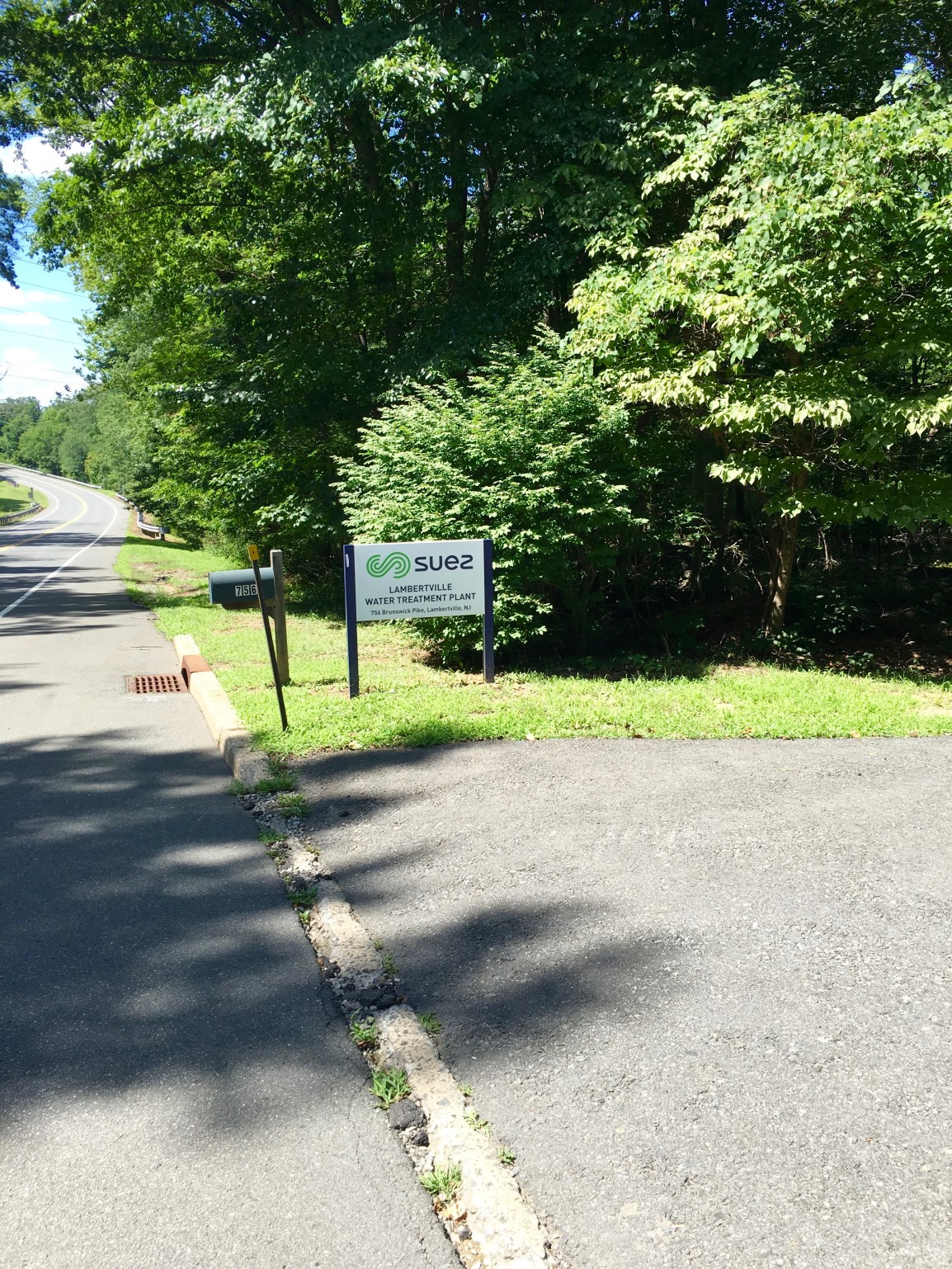
This is the Suez Entrance on 518, the dam and reservoir is a few hundred yards in from the road.

IMG_1757


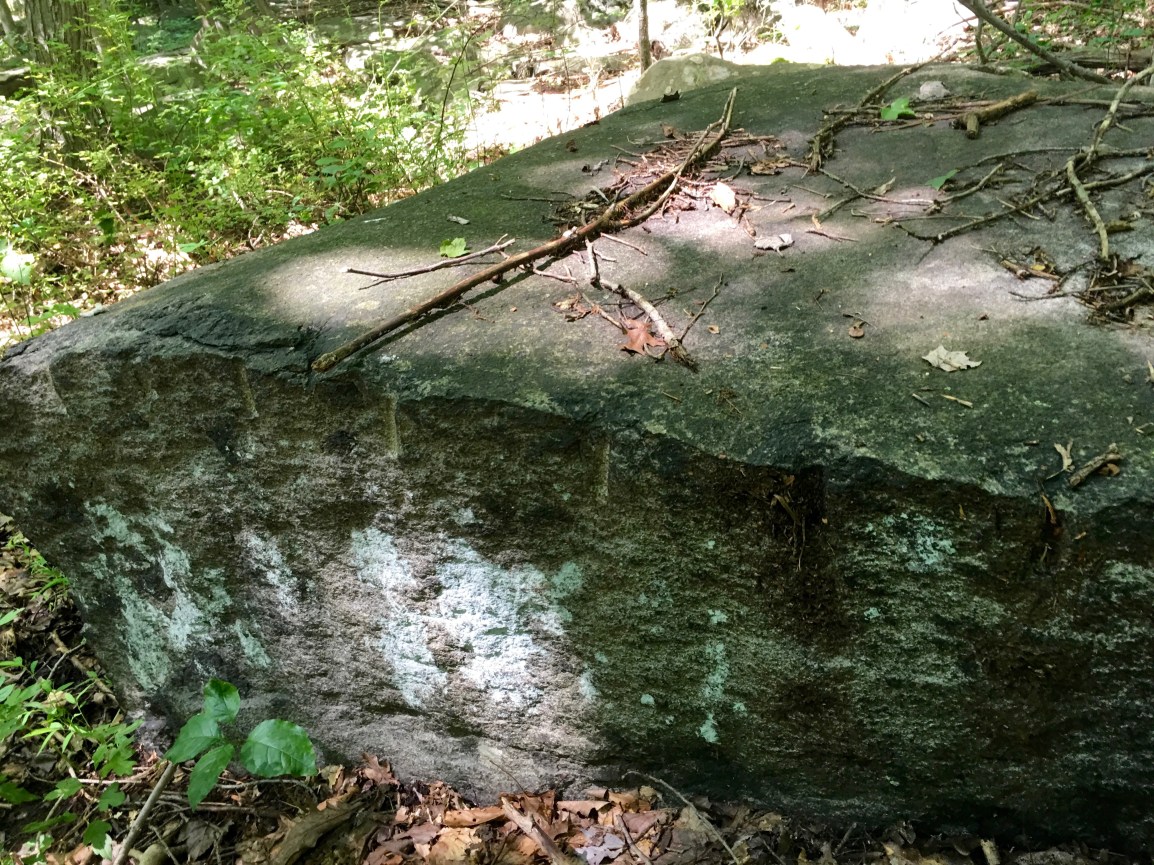
There are quarry pits back here, just like I documented on the other side of 518 near Hewitt Road.  These goes back to the revolutionary war times when they chiseled out stone by hand.  Here you can see the chisel marks on a stone.

IMG_1760

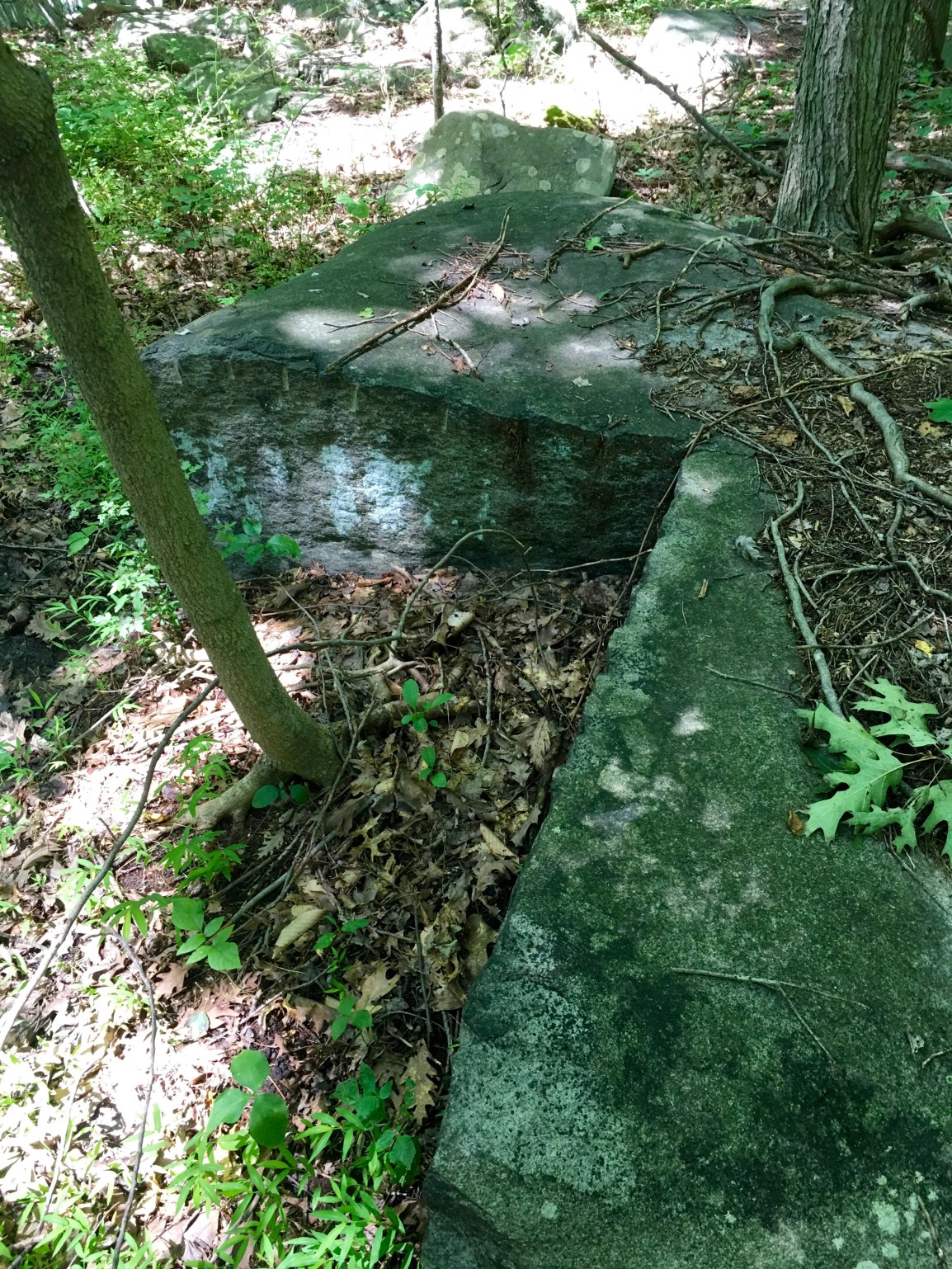
Here is a zoomed out version, you can see someone cut a nice square out of the rock.

IMG_1759

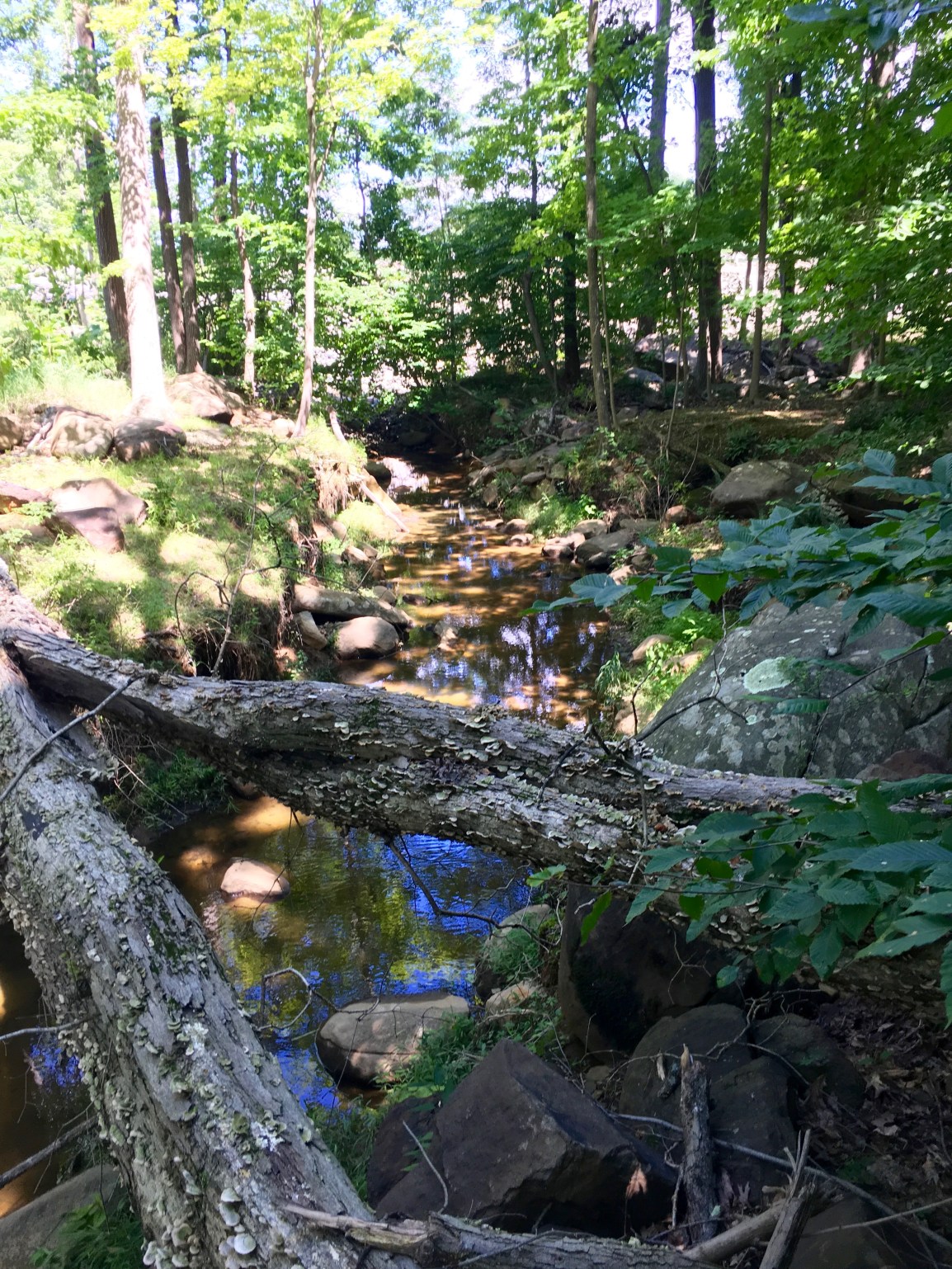
And here is Swan creek near the reservoir.  The reservoir is the bright open sky in the background.  As you can see from the depth of the banks it can REALLY get rolling during intense rains or if they do a release from the dam.

IMG_1764

Here is the existing cut.  The pipeline doesn’t go here – oh no!  They are going to more than double this existing clear cut, but cutting out the trees on the left of this picture.

IMG_1767

This is what Swan Creek looks like where it’s traversing the existing clear cut area.

IMG_1768

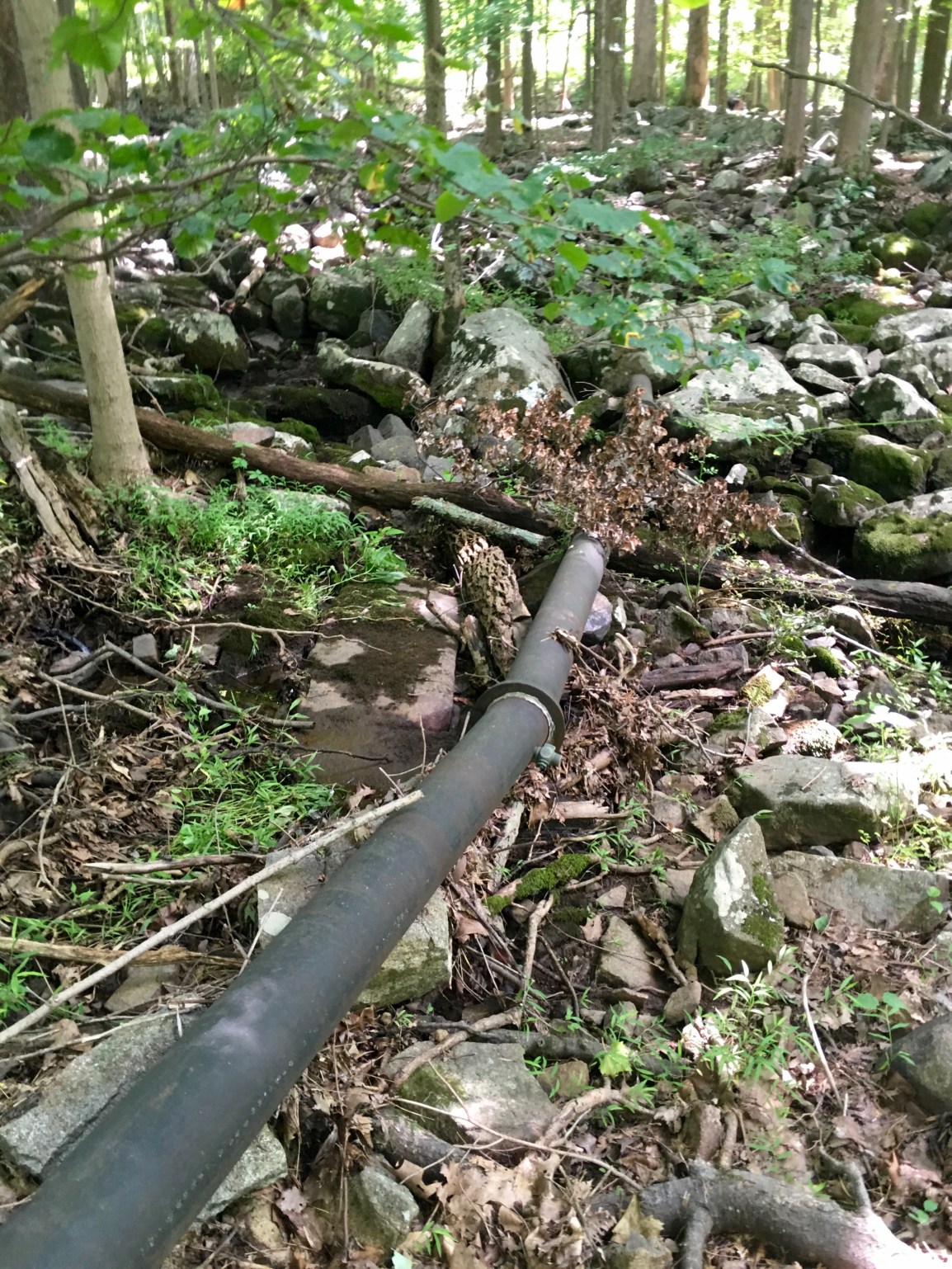
This is back in the trees where they will be cutting down to the dirt and trenching through the stream.  You can see a questionable drainage pipe going through here.

IMG_1775

Another angle of part of the drainage connections here.

IMG_1777

There’ll be trenching about here.

IMG_1781

And these wetlands are immediately downstream from the trenching area.

IMG_1778

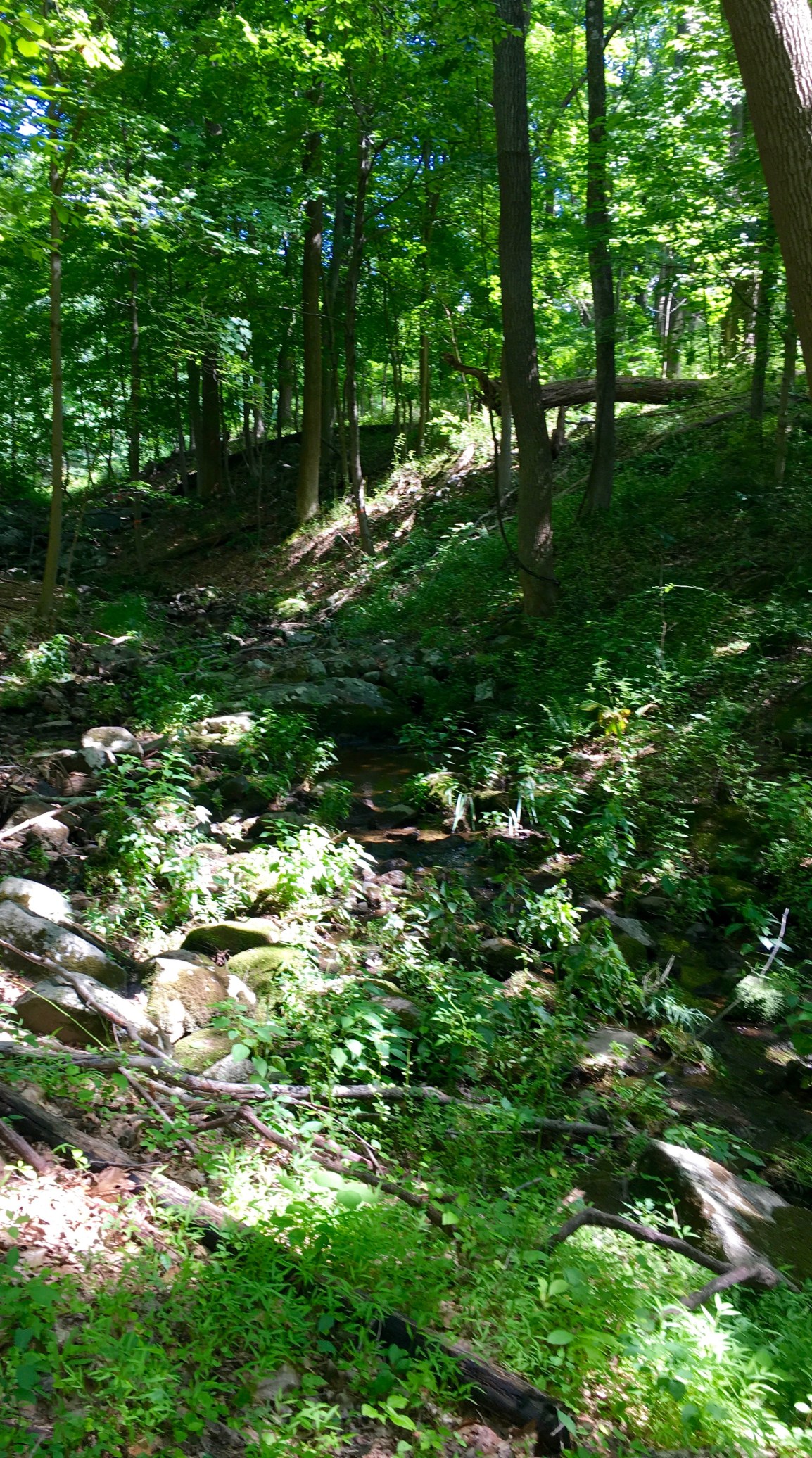
And here’s the other side of the cut.  This is all massive boulders, wetlands, the stream itself, vernal pools, and old growth forest.  All of it will be cut down to nothing. A big fat doubled corridor for erosion, silting, flash floods, and whatever else the pipeline has in store for us.

IMG_1770

Welcome Aboard Lambertville!

Many people have noticed that Lambertville has not been very involved with the fight against PennEast.   While they were one of the first towns to pass a resolution against the pipeline in the Fall of 2014, since then they have gone radio silent and have not been seen on the FERC docket or elsewhere.

A number of groups and individuals have been working tirelessly for months to try to change that, and their efforts have finally come to fruition.

On Monday, August 1st, Lambertville City held a special township committee at the Acme building that was focused almost exclusively on the PennEast pipeline and what the city can do about it.

In it the Mayor and city council members agreed to the following:

  • The City of Lambertville will be intervening on the FERC docket in opposition to the project
  • A pipeline committee will be formed to investigate the pipeline and advise the city council.
  • The pipeline committee will meet with the Suez company, who owns and operates the Swan Creek Reservoir that supplies the drinking water for the bulk of Lambertville residents.
  • The City will consider expending money for experts to comment on the DEIS and otherwise oppose the pipeline, in the range of $10,000-$15,000.  This last point was somewhat tentative.

The city pipeline committee consists of:

  • Jeff Titel, director of the NJ Sierra Club and Lambertville Resident.
  • Sue Begent,  Lambertville Resident and tireless organizer of the newly formed Lambertville Coalition Against the PennEast Pipeline Consortium (Lambertville CAP).
  • Myself (I’m not a Lambertville resident but with my house 1.2 miles from the city line I’m close enough!).
  • A member of the city counsel and three other Lambertville residents who volunteered from the crowd.

Speaking of crowds, the Acme meeting area was packed to capacity with residents opposed to the pipeline, and they cheered when the Mayor and council agreed to begin taking action.

Many thanks to Sue Begent for jump starting this whole process. And to Jeff Titel and Toni Granto of NJ Sierra Club for supporting and help guide the entire effort.

Please consider supporting the NJ Sierra Club, they have been front and center in the fight against PennEast and many other projects in the area.  For more information please check out their website:

http://www.sierraclub.org/new-jersey


“No experience Required”

I filed the following comment on the FERC docket today.  I’m illustrating it here to show just how much is wrong with the DEIS.  Here’s a critical multi billion dollar project that will impact until thousands of lives, and we have a guy with a 2014 BA in Chemical Physics in charge of the Cumulative Impacts section.  His prior jobs according to him were Physics Grader and Nature Director at a kid’s camp.

Yeah, Tuft’s is a good school, and one day Mr. Atmer might make a fine individual to help shape environmental policy and make decisions on matters like this.  But a year and a half out of school isn’t that day.  Things like being a TA in class need to drop off your resume first.

http://elibrary.FERC.gov/idmws/file_list.asp?accession_num=20160801-5192


Comment on Tetra Tech Qualifications

My name is Michael Spille, I am commenting on the DEIS for the PennEast Pipeline project, docket CP15-558. I am an intervenor in this matter and also an impacted landowner on the preferred route.

Cumulative Impacts are one of the most vital areas in NEPA regulations. By requiring analysis of cumulative impacts NEPA ensures that infrastructure projects cannot pile into a geographic region and, taken together, cause undue harm to the natural environment that may not be evident by looking projects individually in isolation.

Appendix J of the DEIS lists the preparers of the DEIS. The sole Tetra Tech employee listed in charge of accessing Cumulative Impacts is one Thomas Atmer.:

Atmer, Thomas
B.A., Environmental Studies; Chemical Physics, 2014, Tufts University

Mr. Atmer has listed his C.V. on the site LinkedIn, which is a web site dedicated to people providing work histories and connecting with others from past and current companies and within their industries. His LinkedIn profile is shown below (https://www.linkedin.com/in/thomasatmer):

==============================================================
Assistant Environmental Scientist
Tetra Tech
May 2015 – Present (1 year 4 months)Boston, MA

Researcher
Robbat Research Group
May 2013 – August 2014 (1 year 4 months)Barnum Hall, Tufts University

My work within the Robbat Research Group is largely gravimetric analysis but also gas chromatography mass spectrometry (GC-MS) and high performance liquid chromatography (HPLC). The main purpose for our team is to develop cleaning solutions that are more environmentally benign than those conventionally used by households, industry, and public works.

Physics Grader
Tufts University
September 2013 – December 2013 (4 months)Medford, MA
Graded weekly problem sets for Physics 11 at Tufts University. The course covers introductory calculus-based Newtonian mechanics.

Nature Director
Camp Thoreau
June 2011 – August 2011 (3 months)Concord, MA
Instructed children aged five through thirteen in nature skills, crafts, and first aid. Supervised counselors and counselors-in-training.

==============================================================

Mr. Atmer has been employed by Tetra Tech for only just over a year. Prior to that he lists experience in the Robbat Research Group within his university (Tufts) “to develop cleaning solutions that are more environmentally benign than those conventionally used by households, industry, and public works”. It is unclear whether this work was done as a student or compensated professional.

His other prior work includes that of Physics Grader and Nature Director at a children’s camp in Concord, MA.

His Top Skills as affirmed by colleagues on the LinkedIn site are “Microsoft Excel”, “Laboratory Skills”, “Photography”, and “Photoshop”.

It is clear that Mr. Atmer is vastly under qualified to undertake a detailed analysis of cumulative impacts of a $1.2 billion pipeline project in the state with the highest population density in the nation, New Jersey. This section of the DEIS should be withdrawn and turned over to a qualified person with adequate experience to perform such an undertaking.

One would hope that such an individual would score “environmental science” higher than their Photoshop skills.

DEIS Commenting

The whole region is buzzing with the news that the PennEast DEIS is out.  The issuance of the Draft Environmental Impact Statement is a critical moment in the project timeline.  Not just for PennEast, but for us as well.  The 45-day comment period on the DEIS forms the technical legal record and is the basis for any objections against FERC or the project if the worst happens.

So it is really, really, really important that we get as many people commenting on this as we can.

We are gearing up seminars across the region to teach people how to comment technically on the docket, and educate them on potential topics to talk about.  The seminars are being held at the following times and locations:

DEIS Comment Workshops                 

Tuesday, August 2, 7-9 pm
Prallsville Mills
33 Risler St, Stockton, NJ

Tuesday, August 2nd, 6:30 PM-8:30PM
Towamensing Fire Dept.,  
State Rte. 209 (near the Intersection of Trachsville Hill Rd.)
Towamensing Twp, PA

Thursday, August 4, 6:30-9 pm*
The Holland Township Municipal Building
61 Church Rd., Milford, NJ

Monday, August 15, 7-9 pm*
Stony Brook-Millstone Watershed Association
31 Titus Mill Rd., Hopewell, NJ

Workshop Agenda

The agenda for all these workshops are identical and simple.  The overarching purpose is to help people exercise their rights and learn how to physically comment on the docket, to teach people how to comment effectively, and to provide some sample topics to speak to.

To that end, this will be a hands on workshop.  Bring your Laptop/Tablet with you!  We will be showing people how to comment on the docket electronically, live and in color. We will walk individuals through the commenting process, now to login to FERC, post eComments and how to post larger documents.

If you don’t have a computer, don’t panic!  We have plenty, and you can use ours to get your comments in.

We will have wi-fi.  So don’t worry about that either.

So the agenda will be simple:

  • Description and live demo of how to comment
  • Brief discussion of major categories to consider commenting on
  • Go write your comments!

You say you already know how to comment to FERC?

Have you been doing this PennEast thing for well-nigh two years now?  Can you navigate the FERC site in your sleep (and have nightmares of doing exactly that?).  Have you memorized “CP15-558”?  Then feel free to dive right in and comment.

You can get the DEIS files at http://pipeinfo.org if you haven’t done so already.  It’s 20x faster than FERC and it has yet to go down, ever.

Some tips on commenting:

  • Identify yourself and your interest to FERC right at the top. The format I use is:
    My name is XXXX, I am a [Intervenor][and Impacted Landowner][Concerned resident] regarding docket CP15-558-000 for the PennEast Pipeline.  I live in the town of [Town, State].   I am commenting on the PennEast Draft Environmental Impact Statement (DEIS).

    In other words – if you an intervenor or impacted landowner, say so.  It raises your status up.  And also be CRYSTAL CLEAR that you’re commenting on the DEIS.

    Here’s a sample:

    My name is Mike Spille, I am an intervenor and impacted landowner regarding docket CP15-558 for the PennEast pipeline.  I live in the town of West Amwell, NJ.  I am commenting on the PennEast Draft Environmental Impact Statement.

    The “No-Action” alternative in the DEIS is overly narrow, has no citations of fact, and does not conform to NEPA regulations and precedents.  In fact, the No-Action alternative is a bare four paragraphs in length.  The only “fact” referenced is the existence and names of the shippers on the project. And no other facts or citations are offered to back up any of the assertions there in.

    In fact the No-Action alternative is nothing but empty rhetoric. This does not constitute the “hard look” that NEPA calls for.  This is empty boilerplate with no substance.  This DEIS should be withdrawn by FERC, and not offered again until it actually satisfies NEPA and truly takes a “hard look” at all aspects of the project, including the No-Action Alternative.

  • Try to keep one major overarching topic per submission.  In the past FERC and PennEast have taken people’s lengthy submissions covering many topics, and ignored half of them.  Don’t let that happen to you!  Pick a topic (safety, water, what have you) and stick to just that topic for your submission.  Then make another one.  And another one.
  • If you get stuck in writing, don’t sweat it.  We all get writers block.  But the good news is that we’re not writing a best selling novel.  We’re writing stuff for bureaucrats to read.  So they won’t mind if you’re not the next Steven King.

    On tip if you’re stuck: bullet points.  Just put out bullets of the major points you want to make.  If you can’t get past the bullets, then just submit those.  But you’ll be surprised – many times the act of putting bullets down in writing gets the juices flowing and you’ll find that stress melting away and a natural way forward.

Comment topics

If it helps, here are the major sticking points for me in regards to the DEIS and the PennEast proposal as a whole.  These aren’t definitive by a long shot – these are just the things I see as obvious candidates for comments.

  • The DEIS is incomplete and it is unfair to put it before citizens in such a state
  • The comment period is too short, especially during summer vacation seasons
  • FERC outages exacerbate the short comment period!
  • There is no demonstrated public need for this project.  Numerous studies show this project is being undertaken for the private gain of 6 companies and not for the good of the people of NJ and Eastern PA.
  • The DEIS indicates a 2017-inservice date when PennEast themselves have admitted they cannot be inservice before 2018.
  • 70% of impacted landowners in NJ have refused all attempts at surveying their land.  This implies 70% of the land or more in NJ will have to be seized via eminent domain.  70% eminent domain is an atrocious figure that should be appalling to any agency, and doubly so given the demonstrated lack of public need
  • Direct economic tourism impact on Lambertville/Frenctown/Millford and other towns not being considered adequately
  • Indirect tourism impacts (hikers, bikers, equestrians, etc) also not considered adequately, including major areas such as Appalachian Trail, Baldpate, Lehigh River, Delaware River, etc. not considered adequately
  • Impact on conservation programs (who will preserve land if companies like PennEast can take it?) not addressed by DEIS
  • Traffic considerations during construction (school bus routes, small roads and bridges, few alternative road choices) not addressed properly in DEIS
  • Personal impacts!  Their house, their farm, their business, their families, their lives
  • Impacts to local features near them (Baldpate, Goat Hill, Gravel Hill, Alexuaken Creek Preserve, Copper Creek Preserve, Delaware River, Swan Creek Reservoir, on and on…)
  • Drinking water,  wells, septic.  Drinking water,  wells, septic.  Drinking water,  wells, septic.  Drinking water,  wells, septic.  Drinking water,  wells, septic.   (you get the idea)
  • Concerns about Arsenic and Radon not addressed in DEIS
  • Trenching through people’s driveways, farm access roads not addressed in DEIS
  • Deliberate nearness of proposed route to homes, route no adequately defended in DEIS
  • Deliberately ignoring NJ safety rules in favor of inadequate Federal standards – we get a pipe that has a 50% smaller safety margin then we would otherwise have
  • Major studies controverting PennEast studies are not mentioned in the DEIS (Delaware Riverkeeper Network, NJCF/Stony Brook Millstone WaterShed Association, West Amwell Citizens Against the Pipeline, Skipping Stone, Labyrinth Consulting and others).
  • The Tetra Tech employees researching the DEIS are under qualified and the DEIS is obviously not done competently
  • Cumulative impacts are not properly considered (Southern Reliability Link, Garden State Expansion, BL England conversion, Blue Mountain resort Expansion, Marc II Pipeline, future Spectra plans
  • The “No Action” Alternative is incomplete, has no citations or facts, and does not conform to NEPA.
  • The other Systemic Alternatives are incomplete, have no citations of fact, and do not conform to NEPA
  • No market studies were included in the DEIS, only the existence of shippers (the infamous Concentric “you could have saved $890 million if we had a time machine” report is not mentioned anywhere in the DEIS).

There now.  That should get you started.

Go to it!